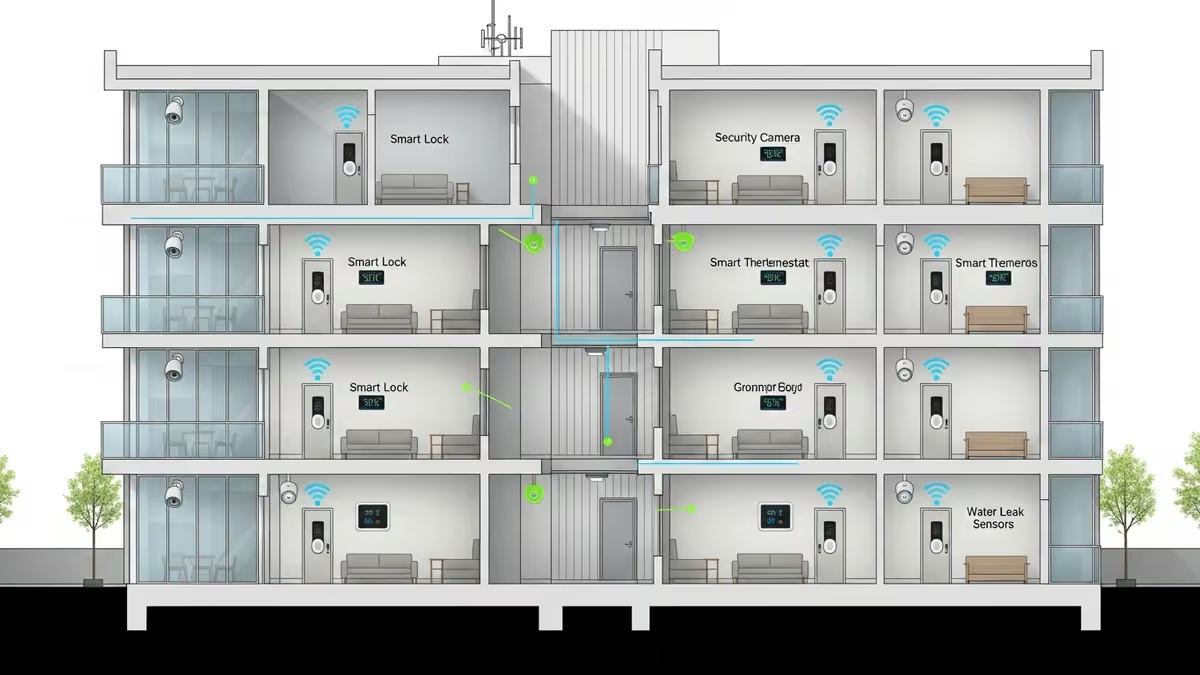
Smart home integration for rental properties has evolved from a luxury amenity into a practical investment strategy. Property owners and managers are discovering that smart home integration rental properties delivers measurable returns through tenant attraction, operational efficiency, and risk mitigation. Whether you manage single-family homes, multi-unit apartments, or commercial buildings, intelligent automation systems reduce maintenance costs, enhance tenant satisfaction, and position your properties competitively in today’s market.
Why Smart Home Integration Matters for Rental Properties
Modern tenants expect convenience, security, and control. Smart home technology delivers all three. When you implement smart home integration across your rental portfolio, you’re not just installing gadgets—you’re creating an ecosystem that works for both residents and property managers.
The competitive rental market demands differentiation. Properties with integrated smart systems attract higher-quality tenants, command premium rents, and experience lower vacancy rates. Beyond tenant appeal, these systems generate immediate operational savings through automated climate control, leak detection, and remote monitoring.
Tenant Attraction & Retention
Today’s renters—especially millennials and Gen Z professionals—actively seek properties with modern amenities. Smart locks, video doorbells, intelligent thermostats, and integrated security systems are no longer novelties; they’re expected features. Properties offering these conveniences report higher occupancy rates and longer lease terms.
- Keyless entry: Tenants appreciate the convenience and security of smart locks
- Remote climate control: Renters can adjust temperature from anywhere, improving comfort and energy awareness
- Video doorbells: Enhanced security and package monitoring reduce theft and anxiety
- Integrated security: Professional monitoring and smart sensors provide peace of mind
Operational Cost Reduction
Smart home automation directly reduces property management expenses. Automated systems handle routine tasks, detect problems early, and provide real-time visibility into property conditions—all without manual intervention.
- Predictive maintenance: Temperature and humidity sensors alert you to HVAC issues before they become expensive repairs
- Water leak detection: Early warning systems prevent costly water damage and mold remediation
- Energy optimization: Smart thermostats reduce utility costs by 10-15% through automated scheduling and learning algorithms
- Remote monitoring: Eliminate unnecessary property visits by checking conditions remotely
Core Smart Home Systems for Rental Properties
Not all smart home features are equally valuable for rental properties. Focus on systems that deliver immediate ROI, enhance security, reduce maintenance costs, and improve tenant experience. Here’s what works best:
Security & Access Control
Smart locks and access control systems are foundational for rental properties. They eliminate the need for physical key management, enable remote access for maintenance and showings, and provide audit trails of who entered when.
- Keyless entry reduces lock-change costs between tenants
- Temporary access codes for contractors and maintenance staff improve security and accountability
- Remote unlock capability streamlines emergency access and showings
- Activity logs provide documentation for security incidents
Surveillance & Monitoring
Professional-grade security cameras and video doorbells deter theft, document incidents, and provide evidence for disputes. For rental properties, they’re both a tenant amenity and a liability protection tool.
- Video doorbells enable package monitoring and guest verification
- Common area cameras reduce theft and vandalism
- Cloud-based recording ensures footage is preserved even if equipment is damaged
- Mobile alerts notify you of motion or activity in real-time
Climate & Environmental Control
Smart thermostats and environmental sensors optimize comfort while reducing energy waste. For multi-unit properties, zone-based climate control prevents disputes over temperature preferences.
- Programmable schedules reduce heating/cooling costs when units are vacant
- Humidity monitoring prevents mold growth and moisture damage
- Temperature alerts notify you of HVAC failures before tenant complaints
- Tenant-controlled thermostats improve satisfaction without increasing utility costs
Flood & Water Detection
Water damage is one of the costliest rental property claims. Smart leak detection systems catch problems at the source—under sinks, near water heaters, in basements—before they cause structural damage.
- Sensor placement under appliances and in vulnerable areas provides early warning
- Automatic shutoff valves can stop water flow immediately upon detection
- Mobile alerts enable rapid response, minimizing damage
- Insurance companies often offer premium discounts for monitored leak detection
Smart Home Integration for Different Property Types
Single-Family Rental Homes
Single-family rentals benefit most from comprehensive smart home integration. With one tenant controlling the entire property, you can implement full automation without coordination challenges.
- Smart locks eliminate key management between tenants
- Whole-home climate control optimizes comfort and energy efficiency
- Comprehensive leak detection protects the entire structure
- Integrated security systems provide professional monitoring
Multi-Unit & Apartment Buildings
Multi-dwelling properties require a different approach. Focus on common area automation, individual unit access control, and centralized monitoring that doesn’t require tenant participation.
- Smart locks on individual units provide keyless entry and access management
- Common area lighting and climate control reduce building-wide utility costs
- Centralized leak detection across all units prevents cascading water damage
- Intercom systems improve communication and security
Commercial Rental Properties
Commercial tenants expect professional-grade systems. Smart integration demonstrates property quality, supports tenant operations, and reduces landlord liability.
- Access control systems manage employee and visitor flow
- Environmental monitoring maintains optimal conditions for sensitive operations
- Energy management systems reduce operating costs and support sustainability goals
- Integrated security and surveillance meet commercial security standards
Implementation Strategy: Getting Smart Home Integration Right
Start With High-ROI Systems
Don’t try to automate everything at once. Prioritize systems that deliver immediate value: smart locks, leak detection, and climate control. These three categories address the biggest pain points—security, maintenance costs, and tenant comfort.
Choose Integrated, Not Siloed
The worst smart home implementations are collections of disconnected devices. Your smart lock, thermostat, cameras, and sensors should communicate through a unified platform. This integration enables automation rules, simplifies management, and provides the data visibility that drives cost savings.
Work with system integrators who specialize in rental properties and understand how to design cohesive ecosystems. Yanke Digital’s custom smart home integration services focus on creating unified systems tailored to your property type and management workflow.
Plan for Scalability
If you manage multiple properties, your smart home infrastructure should scale efficiently. Centralized monitoring, cloud-based management, and standardized device selections reduce complexity and support costs as your portfolio grows.
Ensure Tenant-Friendly Design
Complex systems frustrate tenants and generate support calls. Your smart home integration should be intuitive—tenants should be able to control their environment without extensive training. Provide clear documentation and responsive support for technical issues.
Measuring ROI from Smart Home Integration
Smart home integration delivers measurable financial returns. Track these metrics to quantify your investment:
- Utility cost reduction: Compare pre- and post-integration energy bills. Smart thermostats typically reduce HVAC costs by 10-15%
- Maintenance cost savings: Document prevented repairs through early leak detection and HVAC monitoring
- Vacancy reduction: Monitor how smart amenities affect lease-up time and occupancy rates
- Rent premium: Track whether smart-enabled units command higher rents than comparable non-automated units
- Tenant retention: Measure lease renewal rates and compare to properties without smart integration
- Insurance savings: Many insurers offer premium discounts for monitored security and leak detection systems
Most property owners see positive ROI within 2-3 years, with ongoing savings extending the value indefinitely.
Common Challenges & How to Avoid Them
Tenant Resistance to New Technology
Some tenants hesitate with unfamiliar systems. Overcome this by providing clear setup instructions, video tutorials, and responsive support. Design systems that work intuitively without requiring tech expertise.
Integration Complexity
Mixing incompatible devices creates management nightmares. Avoid this by selecting platforms and devices that work together seamlessly. Partner with experienced integrators who understand compatibility requirements.
Ongoing Support & Maintenance
Smart systems require ongoing support. Budget for software updates, device replacements, and technical support. Professional maintenance services ensure your systems run reliably and tenants receive responsive support.
Data Security & Privacy
Smart systems collect sensitive data about occupancy, access, and usage patterns. Ensure your systems use encrypted connections, secure cloud storage, and comply with privacy regulations. Choose vendors with strong security track records.
The Future of Smart Rental Properties
Smart home technology continues evolving. Emerging trends include AI-powered predictive maintenance, voice-activated controls, advanced air quality monitoring, and integration with renewable energy systems. Properties that implement smart integration today position themselves for tomorrow’s market expectations.
The competitive advantage of smart home integration rental properties will only increase as tenant expectations evolve and operational pressures intensify. Properties without these systems will face higher vacancy rates, increased maintenance costs, and difficulty attracting quality tenants.
Getting Started With Smart Home Integration
Ready to transform your rental properties with smart home integration? The first step is assessing your current situation and identifying high-impact opportunities.
- Evaluate your properties: Identify pain points—frequent maintenance issues, high vacancy rates, tenant complaints—that smart systems can address
- Define your goals: Are you prioritizing cost reduction, tenant attraction, or risk mitigation? Your goals shape your technology choices
- Partner with experts: Work with system integrators who understand rental properties and can design solutions that scale across your portfolio
- Start small, scale up: Implement high-ROI systems first, then expand as you see results and build operational expertise
Yanke Digital specializes in custom smart home integration for residential, multi-family, and commercial rental properties. Our team designs unified systems that reduce costs, attract tenants, and simplify management. Learn how our custom design and integration services can transform your rental portfolio.
Smart home integration for rental properties isn’t a future trend—it’s a present-day competitive necessity. Properties that embrace intelligent automation today will capture market share, reduce operational costs, and build tenant loyalty that extends lease terms and increases profitability. The question isn’t whether to integrate smart technology, but when to start.