
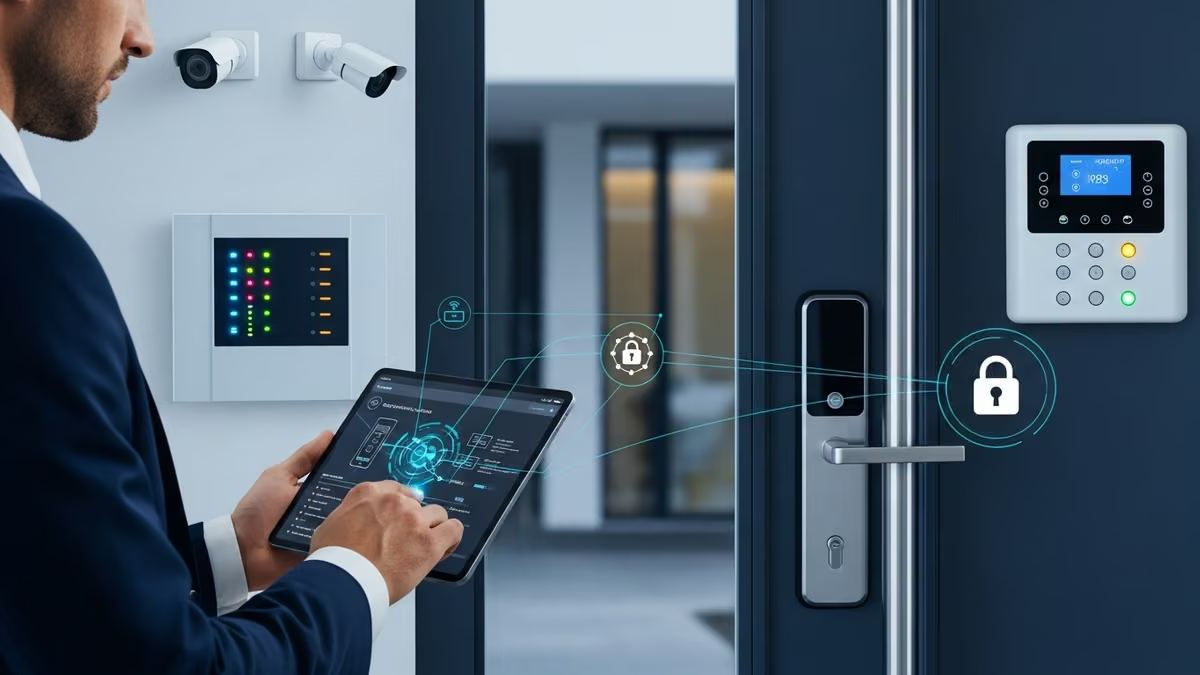
A smart lock security audit is one of the most overlooked yet critical steps in evaluating your home or business access control system. Many property owners install smart locks and access control devices without fully understanding their vulnerabilities, integration gaps, or whether they’re truly meeting security needs. This comprehensive guide walks you through conducting a thorough smart lock security audit, identifying access control weaknesses, and ensuring your keyless entry systems are working together seamlessly.
What Is a Smart Lock Security Audit?
A smart lock security audit is a systematic evaluation of your current access control infrastructure. It examines how individual smart locks, intercoms, keyless entry systems, and security devices integrate—or fail to integrate—across your property. The goal is to identify security gaps, compatibility issues, and opportunities for improvement.
Unlike a basic security assessment, a smart lock security audit focuses specifically on:
- Device compatibility and integration
- Authentication methods and vulnerabilities
- Access logs and audit trails
- Network security and encryption
- User management and permission controls
- Backup systems and failover capabilities
- Maintenance and support gaps
For residential properties, a smart lock security audit ensures your family is protected. For commercial buildings and multi-dwelling units, it’s essential for compliance, liability, and operational efficiency.
Why Your Access Control Needs an Audit
Many property owners assume that installing modern smart locks automatically means they have secure access control. The reality is more complex. Without a proper evaluation, you may face:
- Compatibility Silos: Smart locks from different manufacturers that don’t communicate with each other
- Weak Authentication: Relying solely on PIN codes or proximity cards without multi-factor verification
- No Audit Trails: Inability to track who accessed what, when, and from where
- Network Vulnerabilities: WiFi-enabled locks without proper encryption or security protocols
- Single Points of Failure: No backup access methods if your primary system fails
- Incomplete Coverage: Doors and entry points that lack smart lock integration
- User Management Chaos: No centralized system for granting, revoking, or monitoring access permissions
A comprehensive smart lock security audit identifies these issues before they become security liabilities.
Key Components of a Smart Lock Security Audit
1. Inventory Your Current Access Control Devices
Start by documenting every device in your access control system:
- Smart locks (brand, model, installation date)
- Intercoms and video doorbells
- Keypad entry systems
- Proximity card readers
- Biometric scanners
- Security cameras with access integration
- Central control hubs or panels
- Network infrastructure (routers, WiFi extenders)
This inventory becomes your baseline for the rest of the smart lock security audit. You’ll reference it when evaluating compatibility and identifying gaps.
2. Evaluate Device Compatibility and Integration
Not all smart locks and access control devices play well together. During your audit, assess:
- Platform Compatibility: Do your devices work with a unified control platform (Apple Home, Google Home, Alexa, or proprietary systems)?
- Communication Protocols: Are devices using compatible standards (WiFi, Bluetooth, Zigbee, Z-Wave)?
- Centralized Management: Can you manage all access from a single dashboard or app?
- Real-Time Synchronization: Do access changes propagate instantly across all devices?
If your smart locks operate in isolated silos, you don’t have true access control—you have disconnected devices.
3. Assess Authentication Methods
Strong access control relies on robust authentication. Evaluate your current methods:
- PIN Codes: Are they unique per user? Can they be changed remotely? Are old codes deactivated?
- Mobile Access: Do users unlock via smartphone? Is the app encrypted and secure?
- Biometrics: Are fingerprint or facial recognition systems integrated?
- Multi-Factor Authentication: Do users need multiple verification methods (PIN + mobile, for example)?
- Temporary Access: Can you issue time-limited codes for guests or contractors?
Single-factor authentication (PIN only, for example) is a significant vulnerability in any smart lock security audit.
4. Review Access Logs and Audit Trails
A critical component of access control evaluation is the ability to track access events. Your audit should verify:
- Are access logs being recorded for every entry?
- Can you view who accessed which door, at what time, using which method?
- Are logs retained for a sufficient period (typically 90 days minimum)?
- Can you export logs for compliance or investigation purposes?
- Are failed access attempts logged?
- Is there an alert system for unusual activity?
Without comprehensive audit trails, you have no way to investigate security incidents or prove compliance with access control policies.
5. Examine Network Security and Encryption
Smart locks connected to WiFi or the internet are only as secure as their network. During your access control evaluation, check:
- WiFi Security: Is your network using WPA3 or at minimum WPA2 encryption?
- Device Encryption: Are communications between locks and hubs encrypted end-to-end?
- Firmware Updates: Can devices receive security patches automatically?
- Cloud Security: If using cloud-based access control, is the provider SOC 2 or ISO 27001 certified?
- Local Network Isolation: Are smart locks on a separate network segment from general WiFi?
Weak network security can render even the best smart locks vulnerable to unauthorized access.
6. Identify Backup and Failover Systems
What happens when your primary access control system fails? A thorough smart lock security audit includes:
- Do locks have mechanical keys as backup?
- Is there a hardwired access control panel independent of WiFi?
- Do locks have battery backup for power outages?
- Is there a secondary authentication method if the primary system goes down?
- What’s the procedure for emergency access?
A single point of failure in your access control system can lock you out of your own property.
Common Smart Lock Security Vulnerabilities
During your access control evaluation, watch for these common security gaps:
Weak or Default Credentials
Many smart lock systems ship with default admin passwords. If these aren’t changed immediately, your entire access control infrastructure is at risk. Audit all user accounts and ensure strong, unique passwords are in place.
Outdated Firmware
Smart locks with outdated firmware may have known security vulnerabilities. Your audit should verify that all devices are running current firmware versions and have automatic update capabilities enabled.
Excessive Access Permissions
In many access control systems, users have more permissions than they need. A principle of least privilege should apply—employees should only have access to areas necessary for their role.
No Deprovisioning Process
When employees leave or contractors finish work, are their access credentials immediately revoked? A smart lock security audit should reveal whether you have a formal deprovisioning process.
Lack of Integration with Security Systems
Smart locks should integrate with your broader security ecosystem—cameras, alarms, intercoms, and monitoring systems. Isolated locks create blind spots in your access control evaluation.
Smart Lock Audit for Different Property Types
Residential Homes
For single-family homes, a smart lock security audit should focus on:
- Front door, back door, and garage access points
- Guest access management (temporary codes for visitors)
- Family member permissions and notifications
- Integration with home security systems and cameras
- Backup access methods if WiFi fails
Multi-Dwelling Units (Apartments & Condos)
Multi-dwelling access control evaluation requires:
- Individual unit-level access control
- Common area access (lobbies, elevators, parking)
- Visitor management and temporary access codes
- Maintenance and emergency personnel access
- Centralized management for property managers
- Audit trails for liability and dispute resolution
Commercial Buildings
Commercial access control audits are more complex and should include:
- Department-level access restrictions
- Time-based access (9-to-5 vs. after-hours)
- Visitor and contractor management
- Integration with HR systems for automated deprovisioning
- Compliance with industry standards (healthcare, finance, etc.)
- Detailed audit trails for security investigations
- Integration with video surveillance and alarm systems
How to Conduct Your Smart Lock Security Audit
Step 1: Gather Documentation
Collect all device manuals, system diagrams, user lists, and access control policies. This documentation is essential for a thorough access control evaluation.
Step 2: Create a Device Inventory
Document every smart lock, intercom, keypad, and access control device. Include manufacturer, model, firmware version, and installation date.
Step 3: Test Authentication Methods
Verify that all authentication methods (PINs, mobile access, biometrics) are working correctly. Test temporary access codes and guest permissions.
Step 4: Review Access Logs
Pull access logs from the past 30 days. Look for unusual patterns, failed access attempts, or unauthorized entries. Verify that logs are being retained properly.
Step 5: Test Network Security
Verify WiFi encryption, check for firmware updates, and confirm that devices are communicating securely. Consider a professional network security assessment if you’re uncertain.
Step 6: Evaluate Backup Systems
Test mechanical backups, battery backup systems, and alternative access methods. Ensure that emergency procedures are documented and staff are trained.
Step 7: Document Findings
Create a comprehensive report of your smart lock security audit findings, including vulnerabilities, recommendations, and a prioritized action plan.
When to Call in Professional Help
While you can conduct a basic access control evaluation yourself, certain situations warrant professional expertise:
- Complex Multi-Building Systems: If you manage multiple properties with interconnected access control, a professional audit is essential.
- Compliance Requirements: Healthcare, financial, or government properties often require certified security audits.
- Integration Challenges: If your smart locks don’t integrate well, a professional system integrator can design a unified solution.
- Security Incidents: If you’ve experienced unauthorized access or suspect a breach, hire professionals immediately.
- New Installation: Before deploying a new smart lock security system, have professionals design and validate it.
At Yanke Digital, we specialize in comprehensive smart lock security audits and custom access control design. We evaluate your current system, identify vulnerabilities, and implement integrated solutions that work seamlessly across your entire property.
Creating Your Access Control Improvement Plan
After completing your smart lock security audit, prioritize improvements based on risk and impact:
Priority 1: Critical Security Gaps
Address vulnerabilities that pose immediate security risks—weak authentication, unencrypted communications, or missing audit trails.
Priority 2: Integration and Compatibility
Consolidate isolated smart locks into a unified access control system. This improves both security and user experience.
Priority 3: Operational Improvements
Implement better user management, automated deprovisioning, and access control policies that align with your organization’s needs.
Priority 4: Future-Proofing
Design your access control system with flexibility in mind. Choose platforms and devices that support future expansion and integration with emerging technologies.
Best Practices for Ongoing Access Control Management
A smart lock security audit is not a one-time event. Maintain your access control system with these ongoing practices:
- Monthly Access Reviews: Review user permissions and access logs monthly to catch anomalies early.
- Quarterly Firmware Updates: Keep all devices updated with the latest security patches.
- Annual Comprehensive Audit: Conduct a full smart lock security audit annually to identify new vulnerabilities.
- Immediate Deprovisioning: Remove access for departing employees on their last day.
- Incident Response Plan: Document procedures for responding to unauthorized access or security breaches.
- Staff Training: Ensure all users understand how to use the system securely and report suspicious activity.
Smart Lock Security Audit Checklist
Use this checklist to ensure your access control evaluation is comprehensive:
- ☐ Inventory all smart locks and access control devices
- ☐ Verify device compatibility and integration
- ☐ Test all authentication methods
- ☐ Review access logs for the past 30-90 days
- ☐ Confirm network security and encryption
- ☐ Test backup access methods
- ☐ Verify firmware is current on all devices
- ☐ Review user permissions and access levels
- ☐ Check deprovisioning procedures
- ☐ Confirm integration with security cameras and alarms
- ☐ Document all findings and vulnerabilities
- ☐ Create prioritized action plan
- ☐ Schedule follow-up audit in 12 months
Transform Your Access Control Today
A comprehensive smart lock security audit reveals vulnerabilities you didn’t know existed and opportunities to strengthen your access control system. Whether you’re protecting a residential home, apartment building, or commercial facility, understanding your current security posture is the first step toward meaningful improvement.
If you’re ready to evaluate your access control system or implement a unified smart lock solution, contact Yanke Digital. Our team specializes in designing custom access control systems that integrate seamlessly with your property’s security infrastructure. We’ll conduct a thorough audit, identify vulnerabilities, and implement solutions tailored to your specific needs.
Don’t leave your security to chance. Schedule a consultation with our access control experts today and discover how a professional smart lock security audit can protect your property and give you peace of mind.