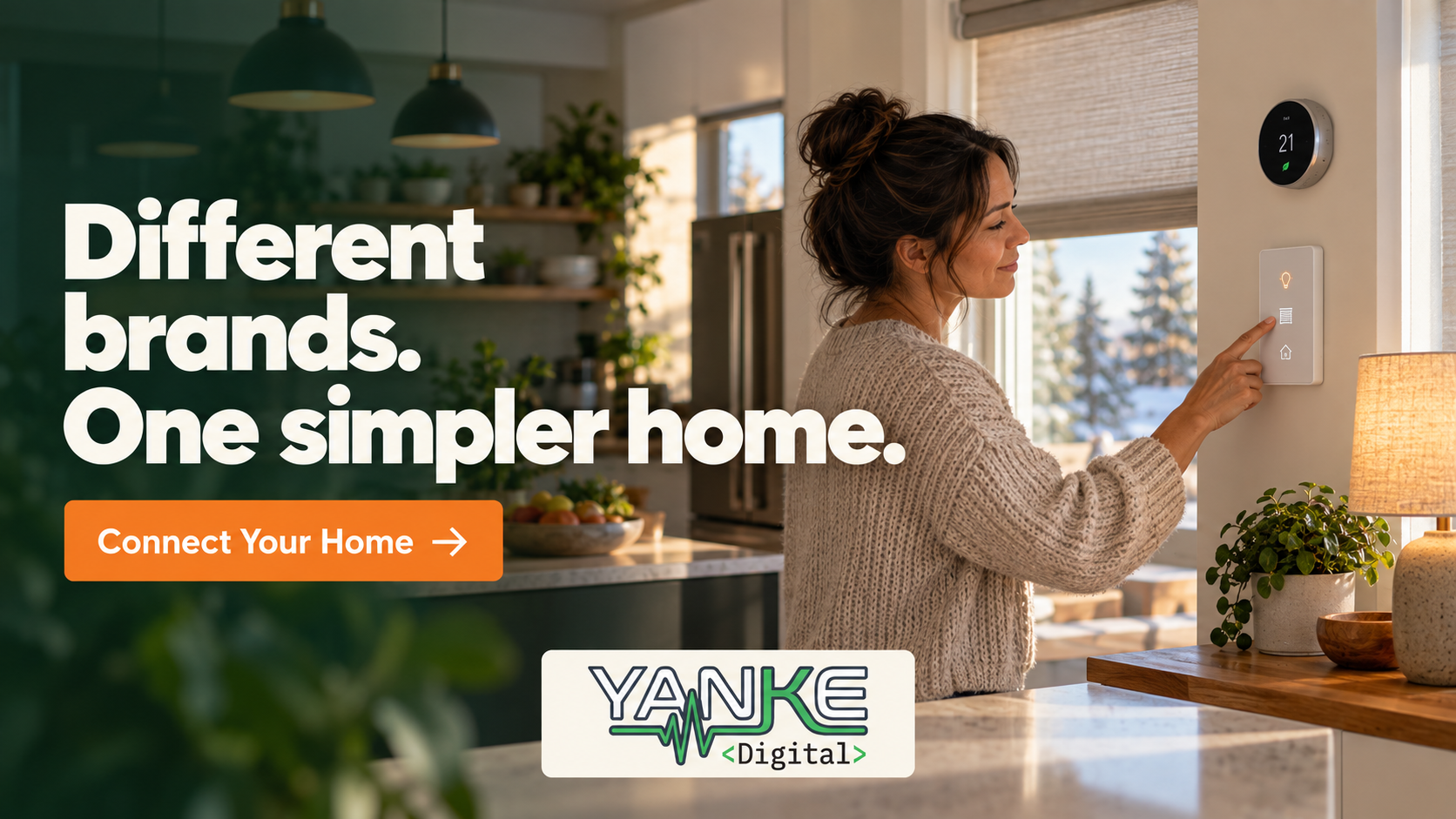
Different brands, one app. Yes, it’s possible.
A smart lock from one company. Lights from another. A thermostat, a doorbell, a few plugs and some speakers from three more. Every one of them came with its own app, and now your phone has a folder called "Home" that you dread opening.
You’re not stuck with that. Different brands can often be brought together into one place, with shared routines like "lock the doors and turn off the lights at bedtime" that work across all of them. The tools that make this possible are platforms like Apple Home, Google Home, Amazon Alexa and Home Assistant, the newer Matter standard, and bridges that translate between devices.
The honest part: "often" isn’t "always." Some devices play nicely, some only partly, and a few won’t cooperate at all. Knowing where those lines fall saves a lot of frustration.
And there’s one question that matters more than which app you pick. Most people never ask it. We’ll get there.
The platforms
Apple Home, Google Home and Amazon Alexa are the big consumer ecosystems. Each lets you see compatible devices in one app, control them by voice and build routines. They’re polished and easy to live with. Each supports a different set of devices, though, and the depth of control varies by brand.
Home Assistant is an open-source home automation platform that runs on a small computer in your home. It integrates with a very wide range of devices and services, supports detailed automations, and can run much of its logic locally rather than in the cloud. It’s powerful and flexible, and it takes more setup and care than the consumer apps.
Many homes use more than one. Home Assistant can work behind the scenes while family members use the Apple Home or Google Home app they already know, depending on how it’s set up.
Matter: a common language
Matter is an industry standard backed by many major smart home companies. The idea is simple: a Matter-certified device should work with any Matter-compatible platform. Matter runs over WiFi, Ethernet and Thread, a low-power mesh network.
It’s a real step forward, especially for new purchases. A few honest caveats:
- Not every device category or feature is covered yet. Some advanced features may still need the manufacturer’s app.
- Older devices may never get Matter support, though some receive it through updates or a bridge.
- Thread devices need a Thread border router, which many recent smart speakers and hubs include.
- Implementations differ, so two "Matter" devices may not behave identically on every platform.
Bridges and hubs
A bridge connects devices that speak one language to a platform that speaks another. Some lighting systems use their own hub. Zigbee and Z-Wave devices need a compatible hub or radio to talk to your platform. Some bridges expose older devices to Matter. Bridges add a box to the setup, but they’re often what makes the whole thing work.
Where integration hits limits
To keep expectations realistic:
- Some brands only allow control through their own app or cloud.
- Some features (camera recording settings, firmware updates, advanced lock settings) may stay in the manufacturer’s app even after integration.
- Cloud-dependent devices can stop working, or change behaviour, if the company changes its service.
- Not every device will show up on every platform.
None of this is a reason to give up. It’s a reason to check before you buy, and to plan the system rather than collecting devices one by one.
Before you buy the next device
Ask:
- Does it support Matter, or the platform I use?
- Does it work locally, or only through the cloud?
- Which features are available outside the brand’s app?
- Does it need a hub or bridge?
- Will it fit the routines I actually want?
The question that matters most
Here’s the question most people skip: who is this for?
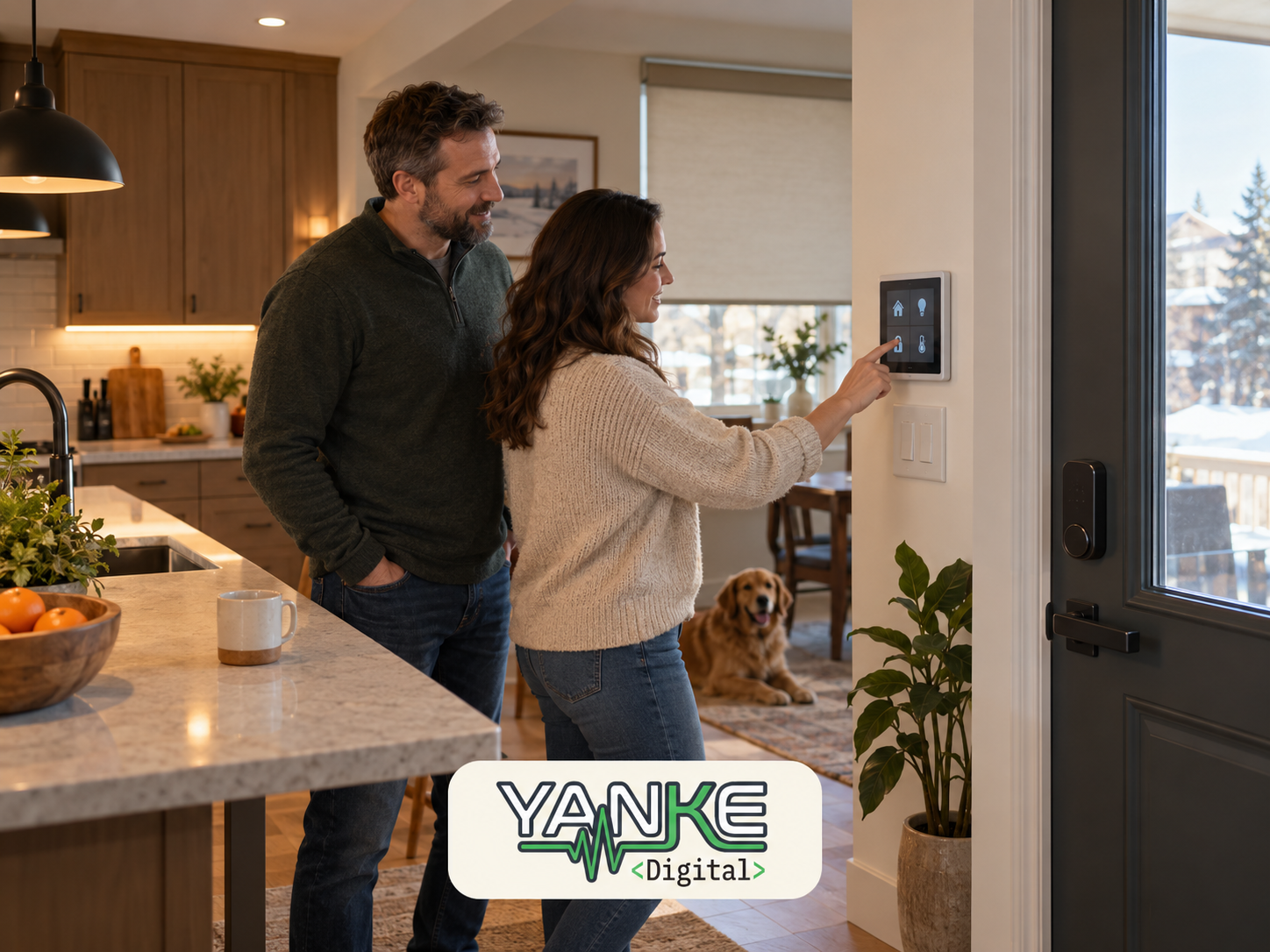
The best integrated system isn’t the one with the most devices or the cleverest automations. It’s the one everyone in the house can use without thinking. If your partner, your kids or your parents can’t turn on the lights or unlock the door, the system has failed, no matter how elegant it is under the hood.
So pick the app and controls around the people. Maybe that’s a wall touch panel in the kitchen, voice control for some, and the phone app for whoever likes to tinker. Integration is the plumbing. Ease of use is the point.
Bringing it together with Yanke Digital
Making different brands work together is a big part of what we do for homes in Saskatoon and across Saskatchewan. We work with Home Assistant, Apple Home, Google Home and Amazon Alexa, and we build custom automation routines plus mobile, touch-panel and voice controls. Compatibility always depends on the specific devices, so we check rather than promise.
We start with what you already own. We review your existing devices, wiring and everyday frustrations, and work out what can stay. Then we lay out equipment, compatibility, installation and pricing together, so you can prioritize.
We connect everything, test the routines, and then sit down with the people who’ll use it day to day. Support is there afterward.
One home, one place to control it
Call 1-888-698-8001 to talk about the devices you have, or start in our free project planner. No contact details needed to try it.
Find out more on our smart technology page.