Circadian rhythm lighting is transforming how commercial buildings support employee wellness, productivity, and comfort. By aligning artificial light with natural daylight patterns, circadian rhythm lighting commercial buildings create environments that enhance focus, reduce fatigue, and improve overall occupant health. For property managers and facility leaders in multi-tenant buildings, offices, and commercial spaces across Saskatchewan, understanding this technology is essential to staying competitive and supporting your workforce.
This guide explores how circadian rhythm lighting works, why it matters for modern commercial buildings, and how to implement a system that delivers measurable wellness benefits.
What Is Circadian Rhythm Lighting?
Circadian rhythm lighting is a dynamic lighting control system designed to mimic the natural progression of daylight throughout the day. Rather than maintaining constant brightness and color temperature, circadian rhythm lighting adjusts light intensity and color (measured in Kelvin) to align with the body’s natural 24-hour biological cycle.
Your body’s circadian rhythm regulates sleep-wake cycles, hormone production, and alertness. When artificial lighting conflicts with this rhythm—such as bright blue light in the evening—it disrupts melatonin production and sleep quality. Circadian rhythm lighting commercial buildings solve this by:
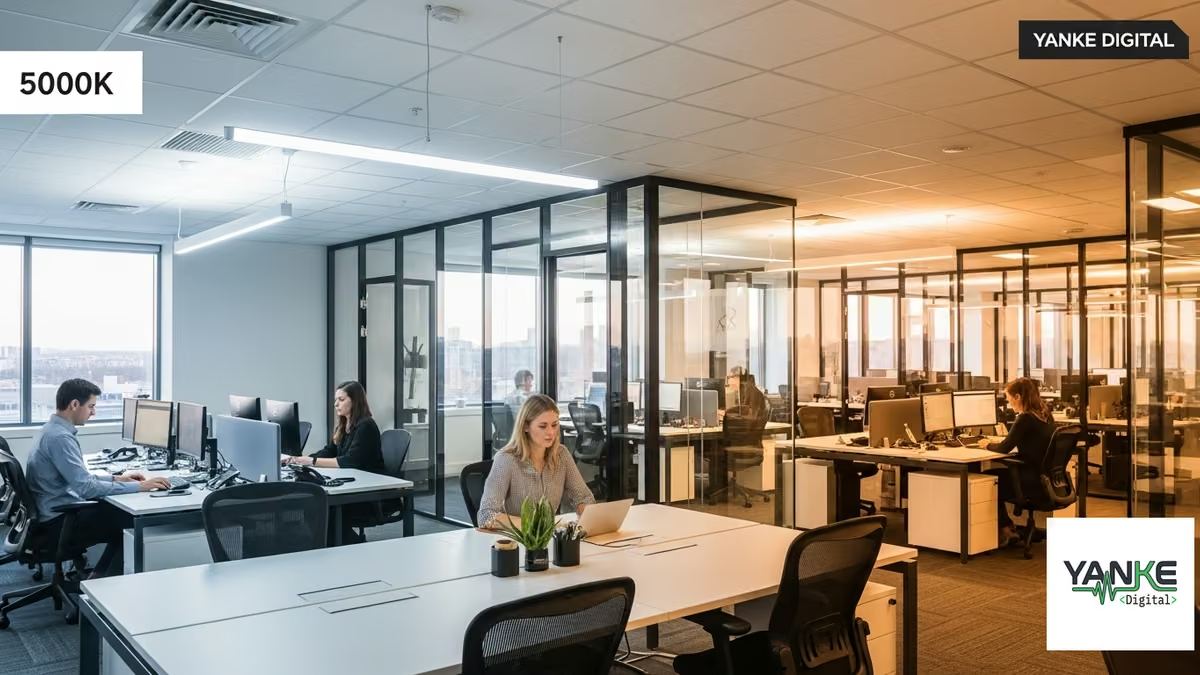
- Delivering cooler, brighter light (5000K–6500K) during morning and midday hours to boost alertness and energy
- Gradually shifting to warmer, dimmer light (2700K–3000K) in afternoon and evening to support natural wind-down
- Reducing blue light exposure after sunset to protect sleep quality
- Adapting automatically based on time of day, season, and occupancy
This isn’t just comfort—it’s biology-backed building design that supports human performance.
Why Circadian Rhythm Lighting Matters for Commercial Buildings
The business case for circadian rhythm lighting in commercial buildings is strong. Research consistently shows that proper lighting design improves employee wellness, reduces absenteeism, and boosts productivity.
Employee Wellness & Health
Employees working in spaces with circadian rhythm lighting report better sleep quality, reduced eye strain, and improved mood. For multi-tenant buildings and office complexes, this translates to higher occupant satisfaction and retention. Tenants increasingly expect wellness-focused amenities—circadian rhythm lighting is a competitive differentiator that justifies premium lease rates.
Productivity & Performance
Proper light exposure during working hours enhances focus, reaction time, and cognitive performance. Studies show that employees in well-lit environments with dynamic lighting control demonstrate measurably higher productivity. For commercial buildings housing knowledge workers, this ROI compounds across hundreds of occupants.
Energy Efficiency
Modern circadian rhythm lighting systems use LED technology with intelligent dimming and occupancy sensors. By reducing unnecessary lighting during low-occupancy periods and optimizing brightness based on natural daylight, these systems can reduce energy consumption by 20–30% compared to traditional fixed lighting.
Regulatory & Sustainability Alignment
Building codes and green certification standards (LEED, WELL) increasingly recognize circadian rhythm lighting as a wellness and sustainability feature. Implementing these systems supports compliance and enhances your building’s market positioning.
How Circadian Rhythm Lighting Systems Work
A complete circadian rhythm lighting system integrates hardware, software, and controls to deliver adaptive light throughout the day.
Core Components
- Tunable LED Fixtures: Lights capable of adjusting both brightness (0–100%) and color temperature (2700K–6500K) independently
- Daylight Sensors: Measure ambient natural light and adjust artificial lighting to avoid overexposure or insufficient illumination
- Occupancy Sensors: Detect presence in spaces to optimize lighting schedules and reduce waste
- Control System & Software: A centralized platform that manages lighting schedules, integrates with building automation, and allows manual override when needed
- Integration with Building Automation: Connection to HVAC, security, and other systems for holistic building intelligence
Typical Daily Lighting Schedule
- Early Morning (6–8 AM): Gradual ramp-up to bright, cool light (5500K–6500K) to support alertness and circadian alignment
- Midday (9 AM–3 PM): Peak brightness and neutral-to-cool color temperature (4000K–5500K) for optimal focus and energy
- Late Afternoon (3–6 PM): Gradual transition to warmer tones (3500K–4000K) as natural daylight decreases
- Evening (6 PM+): Warm, dimmed light (2700K–3000K) to minimize circadian disruption and support melatonin production
These schedules can be customized by building type, occupancy patterns, and geographic location (daylight hours vary seasonally).
Implementing Circadian Rhythm Lighting in Multi-Tenant & Commercial Buildings
Deploying circadian rhythm lighting across a commercial building requires thoughtful planning, integration, and ongoing management.
Phase 1: Assessment & Design
Begin with a comprehensive audit of your current lighting infrastructure, occupancy patterns, and building zones. Different areas—open offices, conference rooms, hallways, break rooms—may require different lighting strategies. A custom design ensures that circadian rhythm lighting aligns with your building’s specific use cases and tenant needs.
Phase 2: Hardware Installation
Replace or retrofit existing fixtures with tunable LED luminaires, install daylight and occupancy sensors, and establish the control infrastructure. For multi-tenant buildings, this often happens zone-by-zone to minimize disruption. Professional installation ensures proper calibration and integration with existing building systems.
Phase 3: Software Configuration & Integration
Configure lighting schedules, set occupancy thresholds, and integrate the system with your building automation platform. This is where custom software design becomes critical—your lighting system should communicate seamlessly with HVAC, security, and access control to create a truly intelligent building.
Phase 4: Occupant Education & Support
Educate tenants and employees about the benefits of circadian rhythm lighting and how to use manual controls if needed. Clear communication reduces confusion and maximizes adoption. Ongoing support ensures the system runs reliably and adapts as your building’s needs evolve.
Key Considerations for Commercial Building Managers
Compatibility with Existing Systems
Ensure your circadian rhythm lighting system integrates with your current building automation platform, security systems, and access control. Siloed systems create inefficiencies and missed opportunities for optimization. A unified approach delivers better control, easier maintenance, and smarter decision-making.
Scalability & Future-Proofing
Design your lighting system with growth in mind. As your building evolves—new tenants, renovations, expanded operations—your circadian rhythm lighting should adapt without requiring a complete overhaul. Flexible, modular systems ensure long-term value.
Cost & ROI
Initial investment in circadian rhythm lighting is offset by energy savings, improved tenant retention, and reduced absenteeism. Many buildings see payback within 3–5 years. Additionally, wellness-focused amenities often command higher lease rates, directly improving your bottom line.
Maintenance & Ongoing Support
Like any smart building system, circadian rhythm lighting requires regular maintenance, sensor calibration, and software updates. Partner with a provider who offers 24/7 support and proactive monitoring to ensure your system runs reliably and continues delivering wellness benefits.
Circadian Rhythm Lighting for Different Building Types
Office Buildings
Open-plan offices, private offices, and conference rooms all benefit from dynamic lighting. Circadian rhythm lighting boosts focus during peak work hours and supports natural wind-down in late afternoon—critical for knowledge workers managing complex tasks.
Multi-Tenant Residential & Mixed-Use Buildings
Common areas, lobbies, and hallways in apartment buildings and condos benefit significantly from circadian rhythm lighting. Residents appreciate the wellness focus, and property managers gain a competitive advantage in tenant recruitment and retention. Circadian rhythm lighting also enhances security perception and wayfinding in shared spaces.
Retail & Hospitality
Circadian rhythm lighting in retail and hospitality settings creates welcoming environments while supporting employee wellness during long shifts. Dynamic lighting can also enhance product presentation and customer experience without sacrificing occupant health.
Integrating Circadian Rhythm Lighting with Smart Building Automation
The most effective circadian rhythm lighting systems don’t operate in isolation. They’re part of a larger smart building ecosystem that includes climate control, security, access management, and occupancy analytics.
For example, when your occupancy sensors detect that a conference room is empty, the system can dim lights, adjust HVAC, and log the space as available—all automatically. When employees arrive in the morning, lighting gradually brightens while temperature adjusts to optimal comfort. This integrated approach maximizes energy efficiency, occupant comfort, and operational intelligence.
Custom software design is essential here. Your lighting system should communicate with your building’s other smart systems through a unified platform, creating a truly intelligent, responsive environment.
Measuring Success: Metrics That Matter
To justify your investment and optimize your circadian rhythm lighting system, track these key metrics:
- Energy Consumption: Monitor lighting-related energy use before and after implementation. Most buildings see 20–30% reductions.
- Occupant Satisfaction: Survey tenants and employees about sleep quality, energy levels, and overall comfort. Higher satisfaction supports lease renewal and recruitment.
- Absenteeism & Productivity: Track employee sick days and productivity metrics. Wellness-focused lighting often correlates with measurable improvements.
- System Uptime & Reliability: Monitor system performance and maintenance needs. A well-maintained system should operate reliably with minimal downtime.
- Lease Rates & Tenant Retention: Compare lease rates and turnover before and after implementation. Wellness amenities often justify premium pricing.
Common Challenges & Solutions
Challenge: Occupant Resistance to Change
Solution: Educate occupants about the science behind circadian rhythm lighting and provide manual override controls. Clear communication and transparency build trust and adoption.
Challenge: Integration with Legacy Systems
Solution: Work with a system integrator experienced in retrofitting older buildings. Custom software bridges legacy systems with modern circadian rhythm lighting, avoiding costly replacements.
Challenge: Inconsistent Performance Across Zones
Solution: Proper sensor calibration and zone-specific scheduling ensure consistent performance. Regular maintenance and monitoring catch issues before they impact occupants.
Challenge: Upfront Cost
Solution: Calculate total cost of ownership, including energy savings, tenant retention benefits, and potential premium lease rates. Most buildings achieve ROI within 3–5 years. Phased implementation can also spread costs over time.
How Yanke Digital Designs Circadian Rhythm Lighting Solutions
At Yanke Digital, we specialize in custom smart building design and integration for residential, multi-tenant, and commercial properties across Saskatchewan. Our approach to circadian rhythm lighting goes beyond installing fixtures—we design complete, intelligent systems tailored to your building’s unique needs.
Here’s what sets our circadian rhythm lighting commercial buildings solutions apart:
- Custom Software Design: We don’t rely on one-size-fits-all schedules. Our team designs lighting algorithms specific to your building’s occupancy patterns, geographic location, and tenant needs.
- Seamless Integration: Your circadian rhythm lighting system integrates with security, access control, climate management, and other smart building systems through a unified platform.
- Expert Installation: Professional installation ensures proper sensor placement, fixture calibration, and system optimization from day one.
- Occupant Education: We help your team and tenants understand the benefits and use the system confidently, maximizing adoption and satisfaction.
- Ongoing Support: Our relationship doesn’t end at installation. We provide 24/7 monitoring, maintenance, and support to keep your system running reliably.
- Future-Proof Design: Systems designed with flexibility in mind, ready to adapt as your building evolves and new technologies emerge.
Whether you’re managing a multi-tenant office building, apartment complex, or commercial property, Yanke Digital can design a circadian rhythm lighting system that enhances wellness, improves efficiency, and delivers measurable ROI.
Ready to Implement Circadian Rhythm Lighting in Your Building?
Circadian rhythm lighting is no longer a luxury—it’s a competitive necessity for modern commercial buildings. By aligning artificial light with natural human rhythms, you create healthier, more productive spaces that tenants and employees value.
The first step is a consultation with a system integrator who understands both the science and the business case. Yanke Digital specializes in custom smart building design and integration for properties across Saskatchewan. We’ll assess your current lighting infrastructure, understand your building’s unique needs, and design a circadian rhythm lighting solution that delivers wellness, efficiency, and long-term value.
Schedule a consultation with Yanke Digital today to discuss how circadian rhythm lighting can transform your commercial building. Let’s design a system that supports your occupants’ health and your building’s success.
For more information on how smart building automation enhances commercial properties, explore our commercial building solutions.