
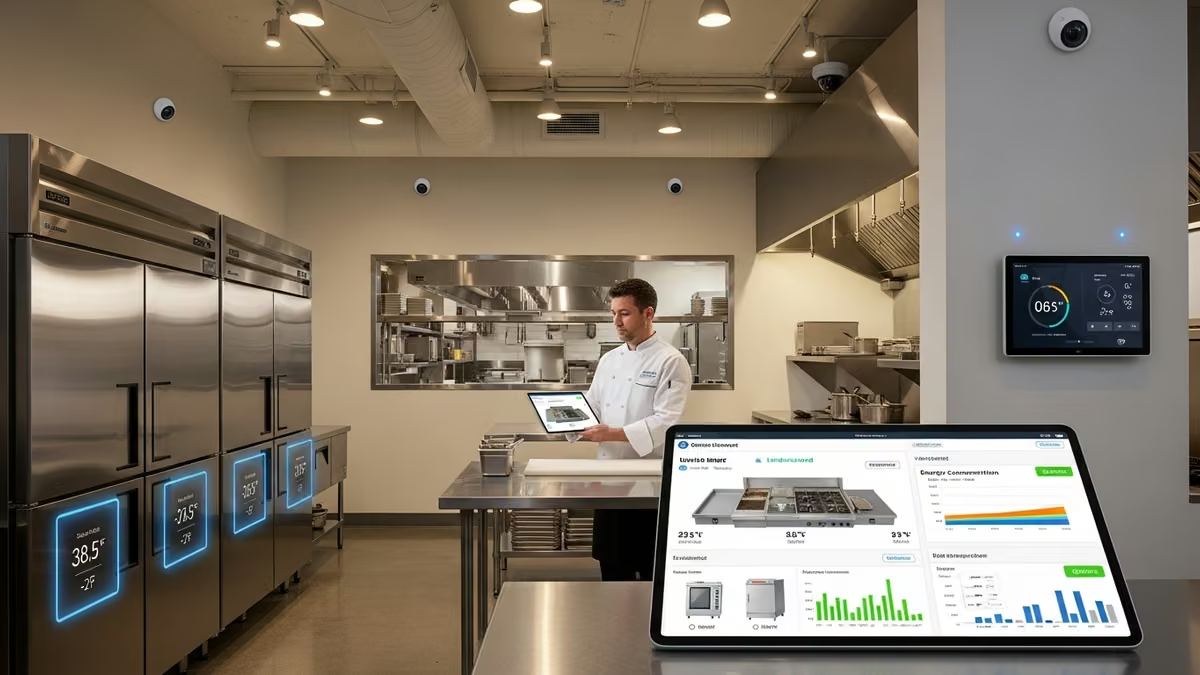
Smart building automation restaurants hospitality environments are transforming how food service operators manage everything from kitchen equipment to guest comfort. Modern restaurants and hospitality venues face mounting pressure to reduce operational costs, improve energy efficiency, and deliver seamless guest experiences—all while maintaining strict health and safety standards. Smart building automation systems integrate your kitchen equipment, climate control, security, and monitoring into one intelligent ecosystem, giving you real-time visibility and control over your entire operation.
Whether you’re running a fine dining establishment, quick-service restaurant, hotel, or multi-unit hospitality group, the right automation strategy can streamline back-of-house operations, reduce waste, enhance guest comfort, and lower your bottom line. This guide explores how smart building automation works in hospitality settings and why custom integration—not off-the-shelf solutions—delivers the best results.
What Is Smart Building Automation for Restaurants & Hospitality?
Smart building automation in hospitality refers to integrated technology systems that monitor and control building operations, equipment, and environments automatically or remotely. In a restaurant or hotel context, this means connecting kitchen equipment, HVAC systems, lighting, security, water systems, and guest-facing amenities into one unified platform.
Rather than managing dozens of separate systems—each with its own interface, alerts, and maintenance schedule—smart automation consolidates everything. Your team gets a single dashboard to monitor cooler temperatures, track energy usage, receive alerts about equipment failures, and adjust climate zones for guest comfort.
- Kitchen Equipment Integration: Coolers, freezers, ovens, and fryers report real-time status and temperature data
- Climate Control: Smart thermostats and environmental sensors maintain optimal comfort across dining areas and back-of-house
- Security & Access: Smart locks, intercoms, and surveillance cameras protect inventory and guest safety
- Water & Flood Detection: Sensors alert you immediately to leaks or overflow risks in kitchens and restrooms
- Energy Monitoring: Real-time visibility into power consumption helps identify waste and reduce utility bills
- Guest Experience Tech: Smart lighting, sound systems, and temperature zones create personalized comfort
Why Smart Building Automation Matters for Hospitality Operations
Cost Reduction & Energy Efficiency
Restaurants operate on thin margins. Energy costs, food waste, and equipment downtime directly impact profitability. Smart building automation systems reduce these costs by:
- Automatically adjusting HVAC based on occupancy and time of day
- Alerting staff to cooler or freezer temperature drift before food spoils
- Scheduling equipment shutdowns during off-peak hours
- Providing detailed energy usage reports to identify waste patterns
- Preventing water waste through leak detection and smart irrigation controls
Studies show that hospitality venues implementing smart building automation see 15–30% reductions in energy costs and significant decreases in food waste and equipment failures.
Operational Reliability & Compliance
Health codes, food safety regulations, and insurance requirements demand precise temperature control and documentation. Manual monitoring is error-prone and time-consuming. Automated systems:
- Continuously log cooler and freezer temperatures for compliance audits
- Alert managers immediately if equipment fails or temperatures drift
- Reduce liability by providing proof of proper food storage conditions
- Simplify staff training by removing guesswork from critical processes
- Enable remote monitoring so managers can respond to issues even when off-site
Enhanced Guest Experience
Guests expect comfort, convenience, and seamless service. Smart building automation supports this by maintaining optimal dining environments, enabling contactless interactions, and personalizing comfort zones. Hotels benefit from smart room controls, while restaurants gain the ability to adjust lighting and temperature by section, creating distinct atmospheres for different dining experiences.
Key Components of Restaurant & Hospitality Smart Building Automation
Kitchen Equipment Integration
The kitchen is the heart of any food service operation. Smart building automation connects coolers, freezers, ovens, fryers, and other critical equipment to a central monitoring system. This enables:
- Real-time temperature and performance monitoring
- Predictive maintenance alerts before equipment fails
- Automatic shutdowns to prevent energy waste
- Historical data to optimize equipment usage patterns
Climate & Environmental Control
Maintaining comfortable dining areas while managing back-of-house heat from kitchen equipment requires sophisticated climate control. Smart thermostats and environmental sensors adjust temperature and humidity automatically based on occupancy, time of day, and guest preferences. This improves comfort while reducing HVAC energy consumption.
Security & Access Control
Smart locks, intercoms, and surveillance systems protect inventory, staff, and guests. Automated access control ensures only authorized personnel enter restricted areas like storage rooms and cash handling zones. Video monitoring provides security and can be reviewed remotely for incident investigation.
Water & Flood Detection
Kitchens and bathrooms are high-risk areas for water damage. Smart flood detection sensors placed near coolers, under sinks, in restrooms, and near water heaters alert staff immediately to leaks or overflow. Early detection prevents costly water damage and mold remediation.
Surveillance & Monitoring Systems
Professional-grade security cameras integrated with your smart building system provide continuous monitoring of dining areas, kitchens, and entry points. Modern systems offer remote viewing, motion detection, and automatic recording, enhancing both security and operational oversight.
Smart Building Automation for Different Hospitality Settings
Full-Service & Fine Dining Restaurants
Fine dining establishments benefit from sophisticated climate zoning that maintains different temperatures for the dining room, kitchen, and wine storage. Smart building automation enables precise control over ambiance—lighting, temperature, and even sound—to create distinct experiences for different sections. Kitchen automation ensures consistent food quality by maintaining exact temperatures for storage and cooking equipment.
Quick-Service & Fast-Casual Restaurants
High-volume operations depend on reliability and efficiency. Smart building automation reduces downtime by monitoring equipment health, alerting managers to maintenance needs before failures occur. Energy management becomes critical in high-traffic locations; automated HVAC and lighting adjustments based on occupancy reduce utility costs significantly.
Hotels & Hospitality Groups
Multi-unit hospitality operations gain centralized visibility across all properties. Smart building automation enables remote monitoring and management, reducing the need for on-site staff to manually check systems. Guest room controls, common area climate management, and facility-wide security integrate seamlessly, improving guest satisfaction and operational efficiency.
Bars, Lounges & Entertainment Venues
Entertainment venues require flexible climate and lighting control to support different events and atmospheres. Smart building automation enables rapid reconfiguration of environments—dimming lights, adjusting temperature zones, and managing sound systems—all from a central interface or mobile app.
How Smart Building Automation Improves Kitchen Operations
Temperature Monitoring & Food Safety
Continuous monitoring of cooler and freezer temperatures ensures food safety compliance. Automated alerts notify staff immediately if temperatures drift outside safe ranges, preventing food spoilage and potential health code violations. Historical logs provide documentation for health inspections and insurance claims.
Equipment Maintenance & Uptime
Predictive maintenance alerts based on equipment performance data help you schedule maintenance before failures occur. This reduces unexpected downtime, extends equipment lifespan, and prevents costly emergency repairs during service hours.
Energy Optimization
Kitchen equipment often runs continuously, consuming significant energy. Smart automation can schedule equipment shutdowns during prep periods, adjust refrigeration cycles based on load, and identify inefficient equipment for replacement. These optimizations reduce energy costs without compromising food safety.
Workflow Efficiency
Integrated systems reduce the mental load on kitchen staff. Rather than manually checking temperatures and equipment status, staff receive alerts when attention is needed. This frees them to focus on food preparation and customer service.
Enhancing Guest Experience Through Smart Building Automation
Personalized Comfort & Ambiance
Smart lighting and climate control systems can adjust based on time of day, occupancy, and guest preferences. Restaurants can create distinct atmospheres—bright and energetic for lunch service, warm and intimate for dinner. Hotels enable guests to control room temperature and lighting, improving satisfaction and reducing complaints.
Contactless & Convenient Interactions
Smart intercoms, video doorbells, and mobile app controls reduce the need for physical contact and manual processes. Guests can request services, adjust room settings, or access information without speaking to staff, improving safety and convenience—especially important in post-pandemic hospitality.
Operational Responsiveness
Managers with real-time visibility into building systems can respond quickly to guest comfort issues. If a dining area becomes too warm, staff can adjust temperature immediately. If a restroom has a maintenance issue, alerts enable rapid response before guests are affected.
Implementing Smart Building Automation: Key Considerations
Start With Your Biggest Pain Points
Don’t try to automate everything at once. Identify your highest-cost or highest-risk areas—often kitchen equipment monitoring or HVAC management—and start there. Successful initial projects build momentum and demonstrate ROI, making it easier to expand automation across your operation.
Choose Integration Over Silos
Many hospitality operators end up with disconnected systems—separate apps for security, separate dashboards for HVAC, separate alerts for equipment. This creates confusion and reduces effectiveness. Look for solutions that integrate all systems into one unified platform with a single dashboard and consolidated alerts.
Prioritize User-Friendly Design
Your staff won’t use systems they find confusing. Choose platforms with intuitive interfaces, mobile apps, and clear alert messaging. Training should be straightforward, and support should be readily available when questions arise.
Plan for Scalability
If you operate multiple locations or plan to expand, ensure your smart building automation system can scale across properties. Centralized management of multiple venues reduces administrative overhead and enables consistent operational standards.
Ensure Reliable Support & Maintenance
Smart systems require ongoing support. Choose a partner who provides 24/7 monitoring, rapid response to alerts, regular system maintenance, and proactive updates. Your automation system is critical to operations—downtime is costly.
Common Challenges & How to Overcome Them
Integration Complexity
Challenge: Hospitality venues often have equipment from different manufacturers with incompatible systems.
Solution: Work with experienced system integrators who specialize in hospitality automation. They understand compatibility issues and can design solutions that bridge different platforms into one cohesive system.
Staff Adoption
Challenge: Staff may resist new systems, especially if they’re complex or disrupt established workflows.
Solution: Choose user-friendly platforms, invest in thorough training, and involve staff in the implementation process. Show them how automation reduces their workload and improves their work environment.
Upfront Cost
Challenge: Smart building automation requires capital investment in hardware, software, and installation.
Solution: Calculate ROI based on energy savings, reduced food waste, prevented equipment failures, and labor efficiency gains. Most hospitality operations see payback within 2–3 years. Phased implementation spreads costs over time.
Cybersecurity & Data Privacy
Challenge: Connected systems create potential security vulnerabilities and data privacy concerns.
Solution: Choose systems with strong encryption, regular security updates, and compliance with industry standards. Work with integrators who prioritize cybersecurity and can implement proper network segmentation and access controls.
The Role of Custom Software Design in Hospitality Automation
Off-the-shelf smart building automation solutions often fall short in hospitality because every restaurant, hotel, and venue operates differently. Custom software design tailored to your specific workflows, equipment, and business goals delivers superior results.
A custom-designed system can:
- Integrate legacy equipment alongside modern smart devices
- Create custom alerts and workflows specific to your operation
- Provide reporting and analytics aligned with your KPIs
- Scale across multiple locations with centralized management
- Adapt and evolve as your business needs change
Rather than forcing your operation to fit a generic platform, custom design ensures your technology serves your business—not the other way around.
Getting Started With Smart Building Automation for Your Hospitality Venue
Step 1: Assess Your Current Systems & Pain Points
Document your existing equipment, identify operational inefficiencies, and list your highest-priority challenges. Are energy costs your biggest concern? Food waste? Equipment downtime? Security? Start with a clear understanding of what you want to improve.
Step 2: Define Your Goals & Success Metrics
What does success look like? Reduced energy costs by 20%? Elimination of food spoilage incidents? Improved guest satisfaction scores? Clear metrics help you evaluate solutions and measure ROI.
Step 3: Consult With Experienced Integrators
Work with system integrators who have proven experience in hospitality automation. They should understand your industry’s unique challenges, compliance requirements, and operational workflows. Look for partners offering custom design and integration services rather than one-size-fits-all solutions.
Step 4: Design a Phased Implementation Plan
Rather than overhauling everything at once, implement smart building automation in phases. Start with your highest-impact area, prove ROI, then expand. This approach spreads costs, reduces disruption, and builds staff confidence.
Step 5: Plan for Training & Ongoing Support
Ensure your integration partner provides comprehensive training for your team and ongoing support. Your staff needs to understand how to use the system, interpret alerts, and troubleshoot basic issues. Reliable support ensures your system continues delivering value long-term.
Why Partner With a Local System Integrator
National vendors and generic platforms may offer lower upfront costs, but local system integrators provide advantages that directly impact your success:
- Local Expertise: Understanding of regional building codes, climate conditions, and local utility incentives
- Responsive Support: Quick response times and on-site support when needed
- Custom Design: Solutions tailored to your specific venue, equipment, and workflows
- Relationship-Based Service: Long-term partnership focused on your success, not just the sale
- Ongoing Optimization: Continuous improvement based on your operational data and feedback
In Saskatchewan and across Canada, Yanke Digital specializes in custom smart building automation for hospitality venues. We design integrated systems that simplify complex technology, improve operational efficiency, and enhance guest experiences. Our team works with you to understand your unique needs and deliver solutions that actually work for your business.
The Future of Smart Building Automation in Hospitality
Smart building automation technology continues to evolve. Emerging trends include:
- AI-Powered Predictive Analytics: Machine learning algorithms predict equipment failures and optimize energy usage automatically
- IoT Expansion: More devices and sensors becoming “smart,” providing deeper operational visibility
- Mobile-First Interfaces: Managers controlling systems from anywhere via smartphone apps
- Sustainability Focus: Automation driving carbon reduction and environmental compliance
- Guest Personalization: Systems learning guest preferences and automatically adjusting comfort settings
Future-proof your hospitality operation by choosing systems designed with flexibility and scalability in mind. Your smart building automation should grow and adapt as technology and your business evolve.
Ready to Transform Your Hospitality Venue With Smart Building Automation?
Smart building automation for restaurants and hospitality isn’t a luxury—it’s becoming essential for competitive operations. Whether you’re looking to reduce energy costs, improve food safety compliance, enhance guest experiences, or streamline back-of-house operations, the right automation system delivers measurable results.
The key is choosing a partner who understands your industry, listens to your specific challenges, and designs solutions tailored to your venue—not generic platforms that force you to adapt.
Contact Yanke Digital today to discuss how custom smart building automation can transform your hospitality operation. We’ll assess your current systems, identify opportunities for improvement, and design an integrated solution that delivers real ROI. Let’s simplify your technology and enhance your business.