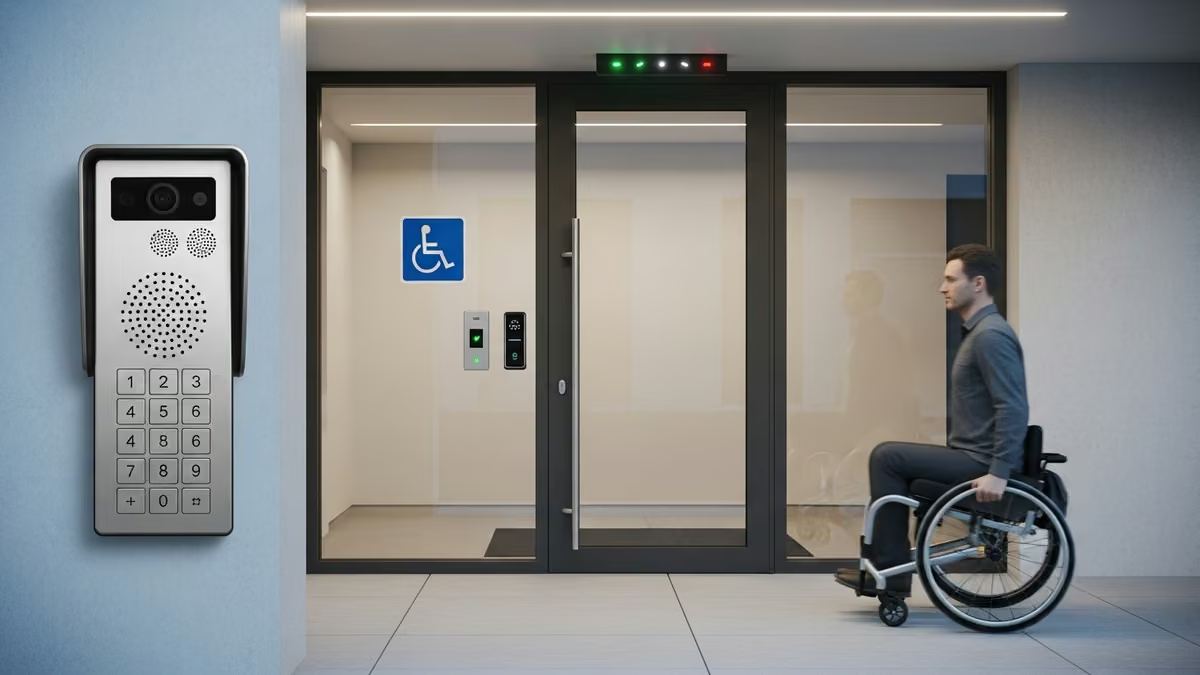
Building accessibility isn’t optional—it’s a legal requirement. ADA compliance smart building access control systems ensure that everyone, regardless of ability, can enter and navigate your property safely and independently. Whether you manage a commercial office, residential complex, or multi-dwelling property in Saskatchewan, modern access control technology makes compliance achievable while enhancing security and convenience for all users.
The Americans with Disabilities Act (ADA) sets clear standards for physical accessibility, including how people with disabilities interact with entry systems, intercoms, keypads, and smart locks. Non-compliance exposes your organization to legal liability, costly retrofits, and exclusion of potential tenants or customers. The good news: today’s smart building solutions integrate accessibility from the ground up, making ADA compliance smart building access control both practical and cost-effective.
What Is ADA Compliance in Smart Building Access Control?
ADA compliance smart building access control refers to electronic access systems—smart locks, intercoms, card readers, keypads, and integrated security platforms—designed and installed to meet Americans with Disabilities Act standards. These systems must accommodate users with mobility, visual, and hearing disabilities without requiring separate, inferior alternatives.
Key compliance areas include:
- Mounting height: Card readers, keypads, and intercoms must be positioned between 48 and 54 inches from the floor (ADA standard reach range)
- Operable force: Buttons and controls must require no more than 5 pounds of pressure to activate
- Clear floor space: At least 18 inches of accessible approach space in front of controls
- Visual and audio feedback: Systems must provide confirmation through lights, sounds, or displays
- Alternative access methods: Multiple ways to enter (keypad, card, mobile app, voice) ensure no single disability blocks access
- Emergency communication: Intercoms and call systems must be usable by people with hearing or speech disabilities
Accessible access control systems aren’t just about legal compliance—they improve usability for everyone, including parents with strollers, delivery personnel with packages, and aging residents.
Key ADA Standards for Access Control Systems
The ADA Accessibility Guidelines (ADAAG) and the 2010 ADA Standards provide specific technical requirements. Understanding these standards helps you design systems that work for everyone.
Mounting and Reach Requirements
All operable parts of access control systems must be within the ADA reach range. For side reach (approaching from the side), controls should be mounted 15 to 48 inches high. For forward reach (approaching head-on), the ideal range is 44 to 48 inches. This ensures wheelchair users, people of short stature, and those with limited reach can operate the system independently.
Smart intercoms, video doorbells, and card readers must be positioned accordingly. Many modern systems offer adjustable mounting brackets specifically designed for ADA compliance, eliminating guesswork during installation.
Activation Force and Tactile Feedback
Controls must require minimal pressure—no more than 5 pounds of force to activate. This accommodates people with limited hand strength, arthritis, or dexterity challenges. Additionally, buttons should have tactile feedback (a slight click or resistance) so users know they’ve pressed the control, even without visual confirmation.
Modern smart locks and electronic keypads are engineered to meet these standards, making them inherently more accessible than traditional mechanical locks.
Visual, Audio, and Tactile Indicators
Access control systems must communicate status through multiple sensory channels. A door unlock should trigger a visual light, an audible beep, and ideally a tactile vibration. This redundancy ensures people who are deaf, blind, or hard of hearing can confirm that their access request was successful.
Smart building systems with integrated software can customize these notifications, allowing facility managers to adjust audio volume, light intensity, and vibration patterns based on user needs.
Accessible Access Control Systems: Technology That Works for Everyone
Modern smart building technology makes ADA compliance smart building access control seamless. Here’s how different components contribute to accessibility:
Smart Locks and Keyless Entry
Smart locks eliminate the need for physical keys, which can be difficult for people with arthritis, tremors, or limited dexterity. Keyless entry options include:
- Mobile app access: Users unlock doors from their smartphone, ideal for people who struggle with keypads
- Voice control: Integration with voice assistants (Alexa, Google Home) allows hands-free entry
- Proximity cards or fobs: No button pressing required—just approach the reader
- Biometric systems: Fingerprint or facial recognition for users who can’t remember codes or carry cards
By offering multiple access methods, smart locks ensure that no single disability prevents entry.
Video Intercoms and Two-Way Communication
Video intercoms are essential for accessible entry. They allow visitors to communicate with residents or staff without requiring physical proximity to a speaker. For people who are deaf or hard of hearing, video intercoms with text-to-speech or live captioning features ensure they can understand incoming calls.
Modern intercom systems integrate with smart building platforms, enabling:
- Real-time video and audio communication
- Text messaging for non-voice communication
- Integration with hearing aids and cochlear implants
- Visual call indicators (flashing lights) for deaf users
Accessible Keypads and Card Readers
When keypads are necessary, they must meet ADA standards. Accessible keypads feature:
- High-contrast buttons (dark text on light background, or vice versa)
- Raised or recessed buttons with tactile markers
- Large, easy-to-read numerals
- Audible feedback for each key press
- Proper mounting height (48–54 inches)
Card readers should also be positioned at accessible heights and require minimal force to activate. Proximity readers (tap-to-unlock) are often more accessible than swipe readers, which require fine motor control.
Disability Accommodation Automation: Customizing Access for Individual Needs
One of the greatest advantages of smart building technology is the ability to customize access solutions for individual users. Disability accommodation automation allows facility managers to create personalized access profiles without compromising security.
Personalized Access Profiles
Smart building software can create custom access rules for users with specific needs:
- Extended unlock time: Doors remain unlocked longer for users who move slowly or use mobility aids
- Voice-activated entry: Users with limited mobility can unlock doors by voice command
- Automatic door openers: Integration with electric strikes and automatic door operators for wheelchair users
- Accessible routes: Software can guide users through accessible pathways, avoiding stairs or narrow corridors
- Emergency assistance: One-touch emergency call buttons connected to staff or emergency services
Multi-Modal Communication
Smart systems support multiple communication methods simultaneously. A visitor might use video intercom, text messaging, and visual call indicators—ensuring that deaf, blind, and hearing users can all communicate effectively with building staff.
This redundancy isn’t just compliant; it’s practical. During emergencies, multiple communication channels ensure critical information reaches everyone.
Compliant Smart Locks: Choosing the Right System
Not all smart locks are created equal. When selecting compliant smart locks for your property, prioritize these features:
Multi-Access Options
The best compliant smart locks offer at least three access methods:
- Mobile app or web portal
- Physical keypad or card reader
- Voice control or biometric option
This ensures that if one method fails or isn’t suitable for a user, alternatives are available.
Clear Status Feedback
Compliant smart locks must provide unambiguous confirmation that a door has unlocked. Look for systems with:
- Bright LED indicators (green for unlocked, red for locked)
- Audible confirmation (beep or chime)
- Tactile feedback (vibration or mechanical click)
Integration with Building Systems
The best compliant smart locks integrate seamlessly with your broader smart building platform. This allows centralized management, audit trails, and the ability to create custom access rules across your entire property.
Look for systems that support industry-standard protocols and can integrate with intercoms, security cameras, and emergency systems.
Universal Design Building Automation: Benefits Beyond Compliance
Universal design building automation goes beyond minimum ADA requirements. It’s about creating spaces that work intuitively for everyone—regardless of age, ability, or circumstance. This philosophy benefits your entire building community.
Improved User Experience for All
Accessible design features benefit far more people than those with disabilities:
- Voice control: Useful for anyone with hands full (parents, delivery personnel, workers carrying equipment)
- Large, high-contrast displays: Easier to read for aging residents and people with low vision
- Automatic door openers: Convenient for everyone, not just wheelchair users
- Clear wayfinding: Benefits visitors unfamiliar with your building
- Extended unlock times: Helpful for people moving slowly due to injury, age, or temporary conditions
Increased Property Value and Marketability
Properties with accessible, modern smart building systems attract more tenants and buyers. Accessibility is increasingly a selling point, especially for aging populations and families with members who have disabilities. Additionally, universal design reduces maintenance costs and improves operational efficiency.
Reduced Liability and Legal Risk
ADA compliance isn’t just ethical—it’s legally required. Failing to provide accessible access control exposes your organization to:
- Lawsuits and settlement costs (often $10,000–$50,000+ per violation)
- Department of Justice investigations
- Mandatory retrofits and system overhauls
- Reputational damage
Proactive compliance is far more cost-effective than reactive remediation.
Implementing ADA-Compliant Access Control: A Practical Roadmap
Ready to upgrade your property with ADA compliance smart building access control? Here’s how to approach the project:
Step 1: Audit Your Current Systems
Evaluate existing entry points, intercoms, keypads, and locks. Identify accessibility gaps:
- Are controls mounted at accessible heights?
- Do buttons require excessive force?
- Is there adequate clear floor space in front of controls?
- Do systems provide visual, audio, and tactile feedback?
- Are there alternative access methods for users with different disabilities?
Step 2: Consult with Accessibility Experts
Work with professionals who understand both ADA requirements and smart building technology. They can recommend solutions tailored to your property type (residential, commercial, multi-dwelling) and budget.
At Yanke Digital, we specialize in custom smart home and building automation solutions that prioritize accessibility. Our team designs systems that meet ADA standards while enhancing security and convenience.
Step 3: Design a Comprehensive Solution
A compliant system integrates multiple components:
- Smart locks: Multiple access methods (app, keypad, voice, biometric)
- Video intercoms: Clear communication with visual and audio options
- Accessible keypads and card readers: Proper mounting, tactile feedback, high contrast
- Emergency communication: One-touch call buttons, visual alerts
- Centralized management: Software platform for custom access rules and audit trails
Step 4: Professional Installation
Proper installation is critical. Components must be mounted at exact heights, wired correctly, and integrated with your building’s electrical and network systems. Professional installers ensure compliance and system reliability.
Step 5: Testing and Training
Before going live, test all access methods with users who have different disabilities. Provide staff training on system operation and troubleshooting. Ensure residents or tenants understand how to use the new system.
Step 6: Ongoing Maintenance and Support
Accessibility requires continuous attention. Regular maintenance ensures systems remain functional, and ongoing support helps address user issues quickly. Yanke Digital provides 24/7 system support and maintenance to keep your smart building running reliably.
Common ADA Compliance Mistakes to Avoid
Many property managers inadvertently create accessibility barriers. Here are common mistakes:
Incorrect Mounting Heights
The most frequent error is mounting controls too high or too low. Card readers and keypads mounted above 54 inches are inaccessible to wheelchair users. Those below 48 inches may be difficult for people of short stature or children to use. Always verify mounting heights during installation.
Single Access Method
Relying on a single access method (e.g., only a keypad) excludes users who can’t use that method. Provide at least two alternatives—ideally three or more.
Inadequate Feedback
If a door unlocks silently with no visual indicator, deaf users won’t know if their request succeeded. Always provide multiple feedback channels.
Insufficient Clear Floor Space
Wheelchair users need at least 18 inches of clear space in front of controls to approach and operate them. Ensure pathways aren’t blocked by furniture, plants, or other obstacles.
Ignoring Emergency Communication
Emergency call systems must be accessible to people with hearing and speech disabilities. Video intercoms with text-to-speech and live captioning are essential.
ADA Compliance for Different Property Types
Accessibility requirements vary slightly depending on your property type. Here’s how to approach ADA compliance smart building access control for different settings:
Residential Homes
Single-family homes aren’t subject to ADA requirements, but accessible design benefits aging residents and visitors with disabilities. Smart locks with multiple access methods and voice control are ideal for residential properties.
Multi-Dwelling Properties (Apartments, Condos)
Multi-family buildings must provide accessible common areas, entrances, and emergency communication. This includes:
- Accessible main entrances with video intercoms
- Accessible unit entry systems (smart locks, keypads)
- Emergency call systems in common areas
- Accessible parking and pathways
Yanke Digital specializes in multi-dwelling smart home solutions that integrate accessibility throughout the building.
Commercial Buildings
Commercial properties must provide accessible entry, emergency communication, and employee work areas. This includes:
- Accessible main and emergency exits
- Accessible employee entrances and break rooms
- Emergency communication systems (visual and audio)
- Accessible parking and loading areas
- Accessible restrooms and water fountains
Smart building systems can automate many of these requirements, improving both compliance and operational efficiency.
The Future of Accessible Smart Buildings
Technology is making accessibility easier and more affordable. Emerging trends in ADA compliance smart building access control include:
- AI-powered accessibility: Machine learning systems that adapt to individual user needs and preferences
- Biometric security: Facial recognition and fingerprint systems that don’t require physical interaction
- Voice and gesture control: Hands-free access for users with limited mobility
- Mobile-first design: Smartphone apps as the primary access method, with physical backups
- Integration with wearables: Smartwatches and health devices that communicate with building systems
- Real-time accessibility feedback: Systems that alert facility managers to accessibility issues before users encounter them
These innovations make it increasingly possible to design buildings that are both secure and universally accessible.
Why Choose Yanke Digital for ADA-Compliant Smart Building Solutions
At Yanke Digital, we understand that ADA compliance smart building access control isn’t just about meeting legal requirements—it’s about creating spaces where everyone belongs. Our approach combines technical expertise, accessibility knowledge, and a commitment to inclusive design.
Custom Design & Integration
We don’t install generic systems. Our team designs custom solutions tailored to your property’s unique needs, layout, and user demographics. Whether you’re retrofitting an existing building or planning new construction, we ensure accessibility is built in from the start.
Expert Installation
Proper installation is critical for compliance. Our certified technicians ensure every component—from smart locks to intercoms to emergency systems—is mounted correctly, integrated seamlessly, and tested thoroughly.
Comprehensive Support
We provide 24/7 system support and maintenance. If issues arise, our team responds quickly to minimize disruption and ensure your building remains accessible and secure.
Education & Training
We believe in simplification and education. Our team trains your staff and residents on how to use the system confidently, ensuring accessibility benefits are fully realized.
Proven Track Record
We’ve designed and installed accessible smart building solutions for residential, multi-family, and commercial properties across Saskatchewan. Our clients trust us to deliver compliant, reliable systems that enhance both security and accessibility.
Ready to Build an Accessible Smart Building?
Accessibility is not a luxury—it’s a necessity. Whether you’re upgrading existing systems or designing new ones, ADA compliance smart building access control is achievable with the right partner.
Yanke Digital specializes in creating smart buildings that work for everyone. From initial assessment to ongoing support, we handle every aspect of design, installation, and maintenance.
Let’s discuss how we can design a custom, accessible smart building solution for your property. Contact Yanke Digital today to schedule a consultation. Call us at 1-888-698-8001 or visit our website to learn more about our smart home and building automation services.
Your building should welcome everyone. Let’s make it happen.