
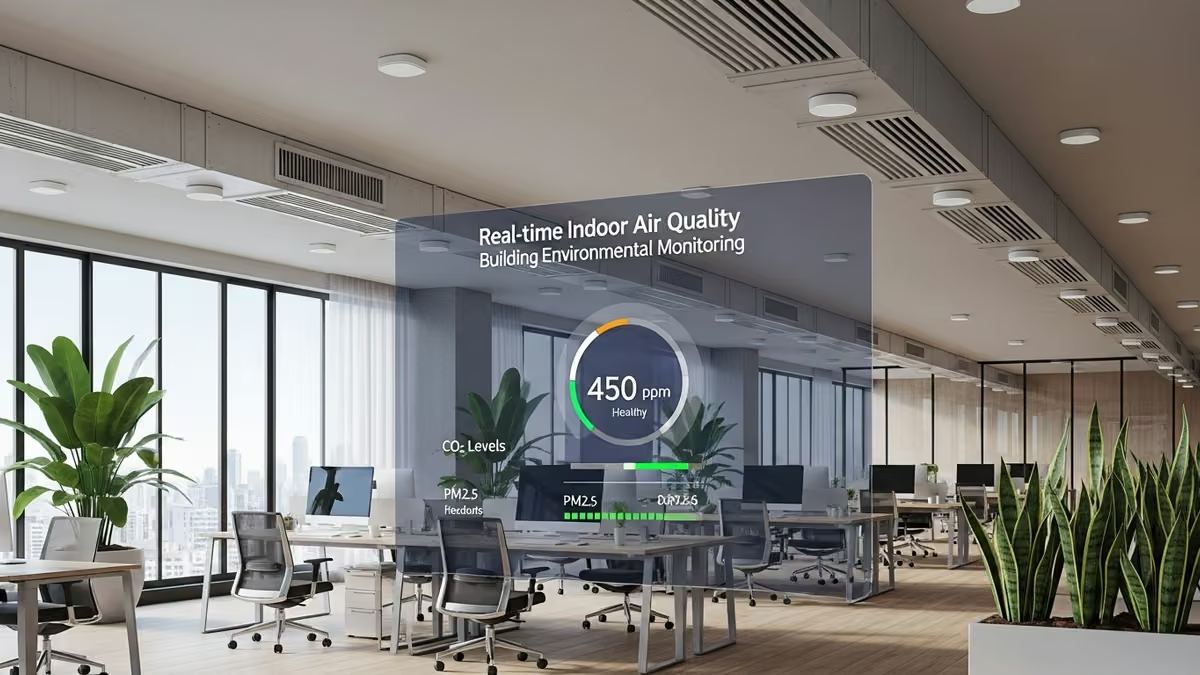
Indoor air quality has become a critical priority for commercial building managers, facility directors, and business owners. Environmental sensors and air quality monitoring systems are no longer luxury upgrades—they’re essential infrastructure for maintaining healthy, productive workspaces. Whether you manage an office tower, retail space, or multi-tenant building, real-time data from environmental sensors helps you understand what your occupants are breathing and take immediate action when air quality dips below safe levels.
At Yanke Digital, we’ve designed and installed comprehensive air quality monitoring solutions across Saskatchewan’s commercial properties. This guide explains why environmental sensors matter, what they measure, and how to implement a system that protects your building, your people, and your bottom line.
Why Environmental Sensors Matter in Modern Commercial Buildings
The average office worker spends 8+ hours per day indoors. Poor air quality directly impacts productivity, health, and employee retention. Studies consistently show that buildings with active air quality monitoring and control systems report:
- Improved employee focus and cognitive performance
- Reduced sick days and respiratory complaints
- Better tenant satisfaction and retention rates
- Lower HVAC operating costs through optimized ventilation
- Compliance with health and safety regulations
- Enhanced market value and competitive positioning
Environmental sensors provide the data backbone for these improvements. Without real-time monitoring, building managers operate blind—adjusting HVAC systems based on guesswork rather than actual air quality conditions.
What Environmental Sensors Measure: Key Pollutants and Parameters
A comprehensive air quality monitoring system tracks multiple environmental parameters simultaneously. Here’s what modern commercial sensors typically measure:
Carbon Dioxide (CO₂)
CO₂ levels directly correlate with ventilation effectiveness. High CO₂ (above 1,000 ppm) signals inadequate fresh air exchange and often precedes complaints about stuffiness, fatigue, and reduced cognitive function. Environmental sensors monitoring CO₂ allow you to adjust ventilation in real time.
Particulate Matter (PM2.5 and PM10)
Fine particles penetrate deep into the lungs. PM2.5 sensors detect dust, pollen, smoke, and industrial particles. Commercial buildings near traffic or in industrial areas benefit significantly from continuous particulate monitoring.
Volatile Organic Compounds (VOCs)
VOCs come from cleaning products, furniture off-gassing, paints, and adhesives. Environmental sensors detecting VOCs help identify sources of indoor air pollution and guide remediation efforts.
Temperature and Humidity
Comfort and air quality depend on proper temperature and humidity balance. Sensors monitoring these parameters prevent mold growth, reduce static electricity, and optimize HVAC efficiency.
Nitrogen Dioxide (NO₂) and Other Gases
Advanced environmental sensors can detect NO₂, ozone, and other harmful gases—particularly important for buildings near highways or in urban centers with high traffic pollution.
How Air Quality Monitoring Systems Work in Commercial Buildings
A properly designed air quality monitoring system integrates hardware, software, and building automation to create a closed-loop feedback system. Here’s the typical workflow:
1. Sensor Placement and Data Collection
Environmental sensors are strategically placed throughout your building—in common areas, conference rooms, mechanical spaces, and return air ducts. Sensors continuously measure air quality parameters and transmit data to a central hub or cloud platform.
2. Real-Time Monitoring and Alerts
Building managers access live dashboards showing air quality status across all zones. When environmental sensors detect pollution levels exceeding safe thresholds, automated alerts notify facility staff for immediate investigation and response.
3. Automated or Manual HVAC Adjustment
Advanced systems integrate air quality monitoring with HVAC controls. When CO₂ rises above target levels, the system automatically increases fresh air intake. When particulate matter spikes, filters activate or upgrade to higher efficiency modes.
4. Historical Data and Trend Analysis
Environmental sensors generate valuable historical data. Over time, you identify patterns—which zones have persistent air quality issues, which times of day see the worst pollution, how seasonal changes affect indoor air quality. This intelligence drives long-term improvements.
Key Benefits of Environmental Sensors for Commercial Properties
Occupant Health and Wellness
Poor indoor air quality causes headaches, respiratory irritation, allergies, and fatigue. Environmental sensors help you maintain conditions that support occupant health, reducing absenteeism and improving workplace wellness.
Regulatory Compliance
Building codes and health standards increasingly mandate air quality monitoring. Environmental sensors provide documented evidence of compliance with ASHRAE standards, local regulations, and tenant lease requirements.
Energy Efficiency and Cost Savings
HVAC systems account for 30-40% of commercial building energy use. By using environmental sensors to optimize ventilation—increasing fresh air only when needed, not continuously—you reduce energy waste and lower utility bills significantly.
Tenant Satisfaction and Retention
Tenants increasingly expect healthy indoor environments. Buildings with visible air quality monitoring and documented good air quality attract premium tenants, command higher rents, and experience lower turnover.
Competitive Market Advantage
In competitive real estate markets, environmental sensors and air quality monitoring systems differentiate your property. They’re a tangible wellness amenity you can market to prospective tenants and investors.
Choosing the Right Environmental Sensors for Your Building
Not all environmental sensors are created equal. When evaluating air quality monitoring solutions, consider these factors:
Accuracy and Calibration
Look for environmental sensors with third-party certifications and regular calibration protocols. Inaccurate data leads to poor decisions and wasted resources. Reputable sensors are calibrated against reference standards and recalibrated periodically.
Parameter Coverage
Determine which air quality parameters matter most for your building type. A healthcare facility needs different environmental sensors than a retail space. Your monitoring system should measure the pollutants most relevant to your occupants and operations.
Integration Capabilities
Environmental sensors should integrate seamlessly with your existing building automation system, HVAC controls, and management software. Look for systems supporting open standards like BACnet or Modbus, or native integration with platforms you already use.
Scalability and Flexibility
Your air quality monitoring system should grow with your building. Choose environmental sensors and platforms that allow you to add zones, upgrade sensors, or expand monitoring as needs evolve.
User Interface and Accessibility
Environmental sensors are only valuable if facility staff and building managers can easily understand and act on the data. Look for intuitive dashboards, mobile access, and clear alert mechanisms.
Implementation: Designing an Air Quality Monitoring System
Implementing environmental sensors requires thoughtful planning. Here’s the typical process:
Step 1: Assess Your Building and Needs
Evaluate your building’s size, layout, occupancy patterns, and existing HVAC system. Identify problem areas—zones with poor ventilation, high occupancy density, or known air quality issues. This assessment determines where environmental sensors are most critical.
Step 2: Define Monitoring Objectives
Are you primarily concerned with occupant health, energy efficiency, regulatory compliance, or all three? Your objectives guide which environmental sensors you select and how you configure your monitoring system.
Step 3: Select Appropriate Sensors and Platforms
Work with experienced integrators to choose environmental sensors and software that match your building’s needs and budget. Consider both hardware costs and ongoing maintenance, calibration, and support requirements.
Step 4: Plan Sensor Placement
Environmental sensors must be positioned to capture representative air quality data. Placement depends on building layout, occupancy patterns, and monitoring objectives. Poor placement leads to misleading data and ineffective responses.
Step 5: Integration with Building Systems
Connect environmental sensors to your building automation system, HVAC controls, and management software. Configure automated responses—increased ventilation when CO₂ rises, filter upgrades when particulates spike—to maximize efficiency.
Step 6: Staff Training and Ongoing Support
Your facility team needs to understand how to interpret air quality data, respond to alerts, and maintain environmental sensors. Proper training ensures your monitoring system delivers real value over time.
Common Air Quality Challenges in Commercial Buildings
Inadequate Ventilation
Many commercial buildings operate with minimal fresh air intake to reduce energy costs. Environmental sensors reveal when CO₂ levels indicate insufficient ventilation, allowing you to balance comfort with efficiency.
Uneven Air Distribution
Some zones receive adequate fresh air while others stagnate. Environmental sensors deployed across your building identify these dead zones, guiding HVAC adjustments or supplemental ventilation improvements.
Contamination from External Sources
Traffic pollution, nearby industrial operations, or construction can degrade outdoor air quality. Environmental sensors detecting high external pollution levels trigger increased filtration or reduced fresh air intake to protect indoor air quality.
Indoor Pollution Sources
Cleaning products, office equipment, furniture off-gassing, and occupant activities generate indoor pollutants. Environmental sensors help identify which activities or areas contribute most to air quality problems, enabling targeted solutions.
Seasonal and Weather Variations
Air quality fluctuates with seasons and weather patterns. Environmental sensors tracking these variations help you anticipate and prepare for seasonal challenges—pollen in spring, wildfire smoke in summer, heating-related pollution in winter.
How Yanke Digital Designs Custom Air Quality Monitoring Solutions
At Yanke Digital, we don’t just install environmental sensors—we design complete, integrated air quality monitoring systems tailored to your building’s unique needs. Our approach includes:
- Comprehensive site assessment: We evaluate your building layout, HVAC system, occupancy patterns, and air quality concerns to determine optimal sensor placement and system configuration.
- Custom software integration: We integrate environmental sensors with your existing building automation and management systems, creating a unified platform for monitoring and control.
- Automated response logic: We configure your system to automatically adjust ventilation, filtration, and other HVAC parameters based on real-time air quality data.
- Intuitive dashboards: We design user-friendly interfaces that make air quality data accessible and actionable for your facility team.
- Ongoing support: We provide continuous monitoring, maintenance, sensor calibration, and system optimization to ensure your air quality monitoring system performs reliably.
Whether you’re retrofitting an existing building or designing environmental sensors into new construction, we bring expertise in selecting, integrating, and optimizing air quality monitoring systems across residential, commercial, and multi-dwelling properties throughout Saskatchewan.
The Future of Environmental Sensors and Air Quality Monitoring
Air quality monitoring technology continues to evolve rapidly. Emerging trends include:
- AI-powered predictive analytics: Machine learning algorithms analyze historical air quality data to predict problems before they occur and optimize HVAC responses.
- Advanced sensor miniaturization: Smaller, more affordable environmental sensors enable denser monitoring networks and wider deployment across buildings.
- Integration with occupancy and activity data: Combining air quality monitoring with occupancy sensors and activity detection allows more precise, demand-driven ventilation control.
- Blockchain and transparency: Some systems now provide immutable records of air quality data, supporting tenant trust and regulatory compliance documentation.
- Mobile and wearable integration: Occupants increasingly expect access to real-time air quality information through mobile apps and wearable devices.
Future-proof your building by choosing environmental sensors and air quality monitoring systems designed with flexibility and scalability in mind.
Getting Started with Environmental Sensors for Your Commercial Building
If you’re ready to implement air quality monitoring in your commercial property, the first step is a professional assessment. A qualified system integrator will evaluate your building, identify air quality challenges, and recommend environmental sensors and monitoring solutions matched to your specific needs and budget.
Yanke Digital specializes in designing and installing custom air quality monitoring systems for commercial buildings across Saskatchewan. We work with you to understand your goals—whether improving occupant health, reducing energy costs, ensuring regulatory compliance, or all three—and create a solution that delivers measurable results.
Contact Yanke Digital today to schedule a consultation and discover how environmental sensors and air quality monitoring can transform your building into a healthier, more efficient, and more competitive commercial space.