
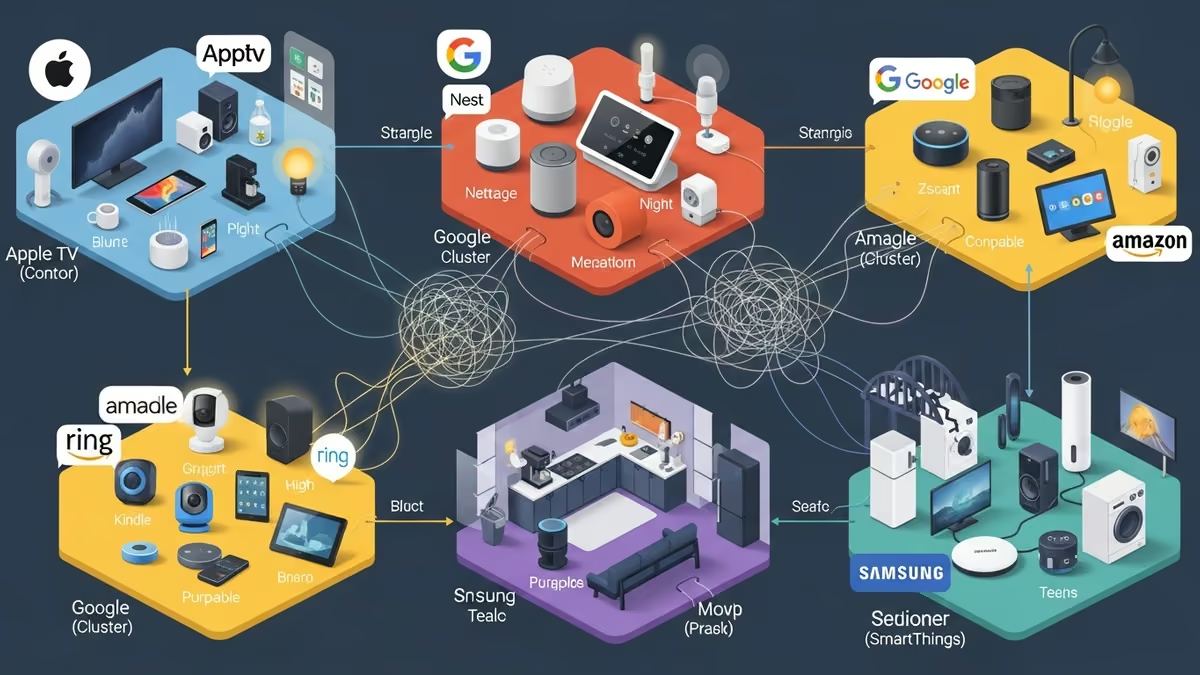
Smart home technology promises convenience, security, and efficiency—but only when your devices actually work together. The reality of smart home brand integration compatibility challenges is far more complex than most homeowners and business owners realize. When you mix devices from different manufacturers, you’re not just adding gadgets to your space; you’re creating a web of potential conflicts, security gaps, and frustrating limitations that can undermine your entire smart home investment.
At Yanke Digital, we’ve seen countless installations fail because clients didn’t understand the hidden costs of incompatibility. This guide breaks down why smart home brand integration matters, what goes wrong when brands don’t play nicely together, and how to build a unified system that actually works.
Why Smart Home Brand Integration Compatibility Challenges Matter More Than You Think
The smart home market is fragmented. Unlike traditional home systems where one company handles everything, today’s ecosystem includes hundreds of manufacturers—Amazon, Apple, Google, Samsung, Philips, and countless others—each with their own platforms, protocols, and priorities. This fragmentation creates the core smart home brand integration compatibility challenges that plague modern installations.
When devices can’t communicate seamlessly, you lose the core benefit of smart home technology: automation. Instead of a unified system, you get isolated islands of functionality. Your security system doesn’t talk to your climate control. Your cameras can’t trigger your smart locks. Your lighting doesn’t respond to occupancy sensors. The result? A frustrating, expensive collection of gadgets instead of an intelligent home.
The Hidden Cost of Incompatibility
Smart home brand integration compatibility challenges don’t just create inconvenience—they create real financial and security costs:
- Wasted investment: Devices that can’t integrate become expensive decorations. You’re paying for features you can’t use.
- Ongoing frustration: Managing multiple apps, platforms, and interfaces drains the joy out of smart living.
- Security vulnerabilities: Incompatible systems often have gaps in security coverage, leaving your home or business exposed.
- Maintenance headaches: Each isolated system requires separate support, updates, and troubleshooting.
- Limited automation: Without integration, you can’t create the sophisticated automations that make smart homes truly smart.
- Vendor lock-in: Once you’ve invested in one ecosystem, switching becomes prohibitively expensive.
Common Smart Home Device Integration Problems Explained
Understanding the specific ways that smart home brand integration compatibility challenges manifest helps you avoid them. Here are the most common problems we encounter:
Protocol Incompatibility
Devices communicate using different wireless protocols: WiFi, Zigbee, Z-Wave, Thread, Bluetooth, and proprietary systems. A device that only speaks Zigbee can’t directly communicate with a Z-Wave device. While hubs can sometimes bridge these gaps, the translation layer adds latency, complexity, and potential failure points. This is one of the most fundamental smart home brand integration compatibility challenges.
Ecosystem Conflicts
Apple HomeKit, Google Home, Amazon Alexa, and Samsung SmartThings each have their own ecosystems with different capabilities and limitations. A device certified for HomeKit might have limited functionality in Google Home. Automations that work perfectly in one ecosystem might not translate to another. These ecosystem conflicts create fragmented smart home brand integration compatibility challenges that force you to choose which platform gets priority.
API and Integration Limitations
Even when devices are theoretically compatible, manufacturers often limit what integrations they allow. A smart thermostat might integrate with your security system in one ecosystem but not another. Manufacturers change their APIs, deprecate features, or restrict third-party access—leaving your carefully designed system broken after a software update. These API limitations are a major source of ongoing smart home brand integration compatibility challenges.
Automation Limitations
You might want your security system to trigger your smart lights when motion is detected, or your flood sensors to shut off water valves automatically. But if these devices are from different manufacturers with incompatible platforms, these automations might be impossible or require expensive workarounds. This is where smart home brand integration compatibility challenges directly impact functionality.
User Experience Fragmentation
Managing multiple apps, dashboards, and control interfaces defeats the purpose of a smart home. Instead of one unified control system, you’re juggling three or four different apps, each with different designs, different response times, and different capabilities. This fragmentation is one of the most frustrating smart home brand integration compatibility challenges for end users.
Security Gaps Created by Incompatible Systems
One of the most serious smart home brand integration compatibility challenges is security. When devices don’t integrate properly, you create security gaps:
- Incomplete monitoring: Security cameras from one brand might not integrate with alarm systems from another, leaving blind spots in your security coverage.
- Inconsistent authentication: Different devices use different security standards, creating weak links in your security chain.
- Update fragmentation: When devices are isolated, security patches might not be applied consistently across your system.
- Access control gaps: Smart locks that don’t integrate with your security system can’t trigger alarms or notifications when unauthorized access is attempted.
- Data privacy concerns: Multiple incompatible systems mean your data is spread across multiple manufacturers’ servers with different privacy policies.
How to Avoid Smart Home Brand Integration Compatibility Challenges
The good news: smart home brand integration compatibility challenges are avoidable with proper planning. Here’s how to build a system that actually works:
1. Start With a Clear Vision and Unified Platform Strategy
Before buying a single device, decide on your primary platform. Will you build around Apple HomeKit, Google Home, Amazon Alexa, or a professional system integrator platform? This foundational decision prevents most smart home brand integration compatibility challenges. Your chosen platform becomes the hub that everything else integrates with.
2. Prioritize Devices With Multi-Platform Certification
Look for devices that are certified for multiple ecosystems. A smart thermostat that works with HomeKit, Google Home, and Alexa gives you flexibility and reduces smart home brand integration compatibility challenges. Check the device specifications before purchasing—don’t assume compatibility.
3. Use a Professional Hub or Gateway
Professional-grade hubs and gateways can bridge many smart home brand integration compatibility challenges. These systems act as translators between different protocols and ecosystems, allowing devices from different manufacturers to work together. This is where professional system integration becomes invaluable.
4. Plan Your Protocol Strategy
Decide which wireless protocols you’ll use (WiFi, Zigbee, Z-Wave, Thread) and stick with them. Mixing too many protocols creates unnecessary smart home brand integration compatibility challenges. Most professional installations standardize on one or two primary protocols with a hub that bridges them.
5. Work With a Professional System Integrator
This is the most effective way to avoid smart home brand integration compatibility challenges. Professional integrators like Yanke Digital understand the nuances of different platforms, know which devices actually work together, and can design systems that avoid compatibility pitfalls. We handle the complexity so you don’t have to.
Building a Unified Smart Home System: The Right Way
A truly integrated smart home requires more than just compatible devices—it requires thoughtful design. Here’s what a properly integrated system looks like:
Centralized Control
All devices connect to a central hub or platform that manages communication between them. This eliminates the smart home brand integration compatibility challenges that arise from devices trying to talk directly to each other. One control point means one interface, consistent automation, and unified security.
Intelligent Automation
When devices are properly integrated, you can create sophisticated automations: motion sensors trigger lights and unlock doors, temperature sensors adjust climate control, security cameras record when alarms are triggered, flood sensors shut off water valves. These automations are impossible when devices are isolated by smart home brand integration compatibility challenges.
Unified User Experience
One app, one dashboard, one interface for controlling your entire smart home. No more juggling multiple apps or remembering which device is on which platform. This is what smart home technology should feel like.
Comprehensive Security
When all your security devices—cameras, locks, sensors, alarms—are integrated into one system, you get complete coverage with no gaps. Security events trigger coordinated responses across your entire system.
Smart Home Brand Integration Compatibility Challenges in Different Property Types
Different properties face different smart home brand integration compatibility challenges:
Residential Homes
Single-family homes have the most flexibility in choosing platforms and devices. The challenge is avoiding the temptation to mix and match devices from different manufacturers. A cohesive strategy prevents most residential smart home brand integration compatibility challenges.
Multi-Dwelling Units
Apartments and condos face unique smart home brand integration compatibility challenges because individual units need to work independently while the building needs centralized management. Professional system integration is essential for managing this complexity.
Commercial Buildings
Commercial properties require enterprise-grade solutions that can scale across multiple zones, integrate with building management systems, and provide comprehensive security and environmental control. Smart home brand integration compatibility challenges in commercial settings demand professional expertise.
The Yanke Digital Approach to Solving Integration Challenges
At Yanke Digital, we’ve made solving smart home brand integration compatibility challenges our specialty. Here’s how we approach every project:
- Custom design: We design systems specifically for your needs, not generic solutions. We understand your goals and build a system that achieves them without compatibility headaches.
- Platform expertise: We’re certified integrators for major platforms and understand the nuances of each ecosystem. We know which devices actually work together and which combinations create smart home brand integration compatibility challenges.
- Professional installation: Proper installation is critical. We ensure every device is configured correctly, all integrations are tested, and your system works seamlessly from day one.
- Ongoing support: Smart home brand integration compatibility challenges don’t end at installation. We provide continuous support, handle updates, and adapt your system as your needs change.
- Future-proof design: We design systems with flexibility in mind, so you can add new devices and capabilities without recreating smart home brand integration compatibility challenges.
Key Takeaways: Avoiding Smart Home Integration Pitfalls
- Smart home brand integration compatibility challenges are real and costly if not addressed properly.
- Protocol incompatibility, ecosystem conflicts, and API limitations are the primary sources of integration problems.
- Incompatible systems create security gaps, wasted investment, and poor user experience.
- Planning your platform strategy before purchasing devices prevents most compatibility issues.
- Professional system integration is the most effective way to avoid smart home brand integration compatibility challenges.
- A properly integrated system delivers unified control, intelligent automation, and comprehensive security.
Ready to Build a Smart Home That Actually Works?
Don’t let smart home brand integration compatibility challenges derail your smart home vision. Yanke Digital specializes in designing and installing custom smart home solutions that work seamlessly from day one. Whether you’re building a new smart home or fixing an existing system plagued by compatibility issues, we have the expertise to solve your integration challenges.
Our team understands the complexities of modern smart home ecosystems. We’ll design a system tailored to your specific needs, install it properly, and provide ongoing support to keep everything running smoothly. No more incompatible devices. No more frustration. Just a smart home that works.
Schedule a consultation with Yanke Digital today. Let’s discuss your smart home goals and design a solution that eliminates integration challenges. Call us at 1-888-698-8001 or contact us online to get started.
Learn more about our residential smart home solutions and commercial automation services to see how we can transform your space.
Additional Resources on Smart Home Integration
For more information on smart home compatibility standards and best practices, check out KNX’s guide to device compatibility in smart homes and comprehensive compatibility tips from industry security experts.