
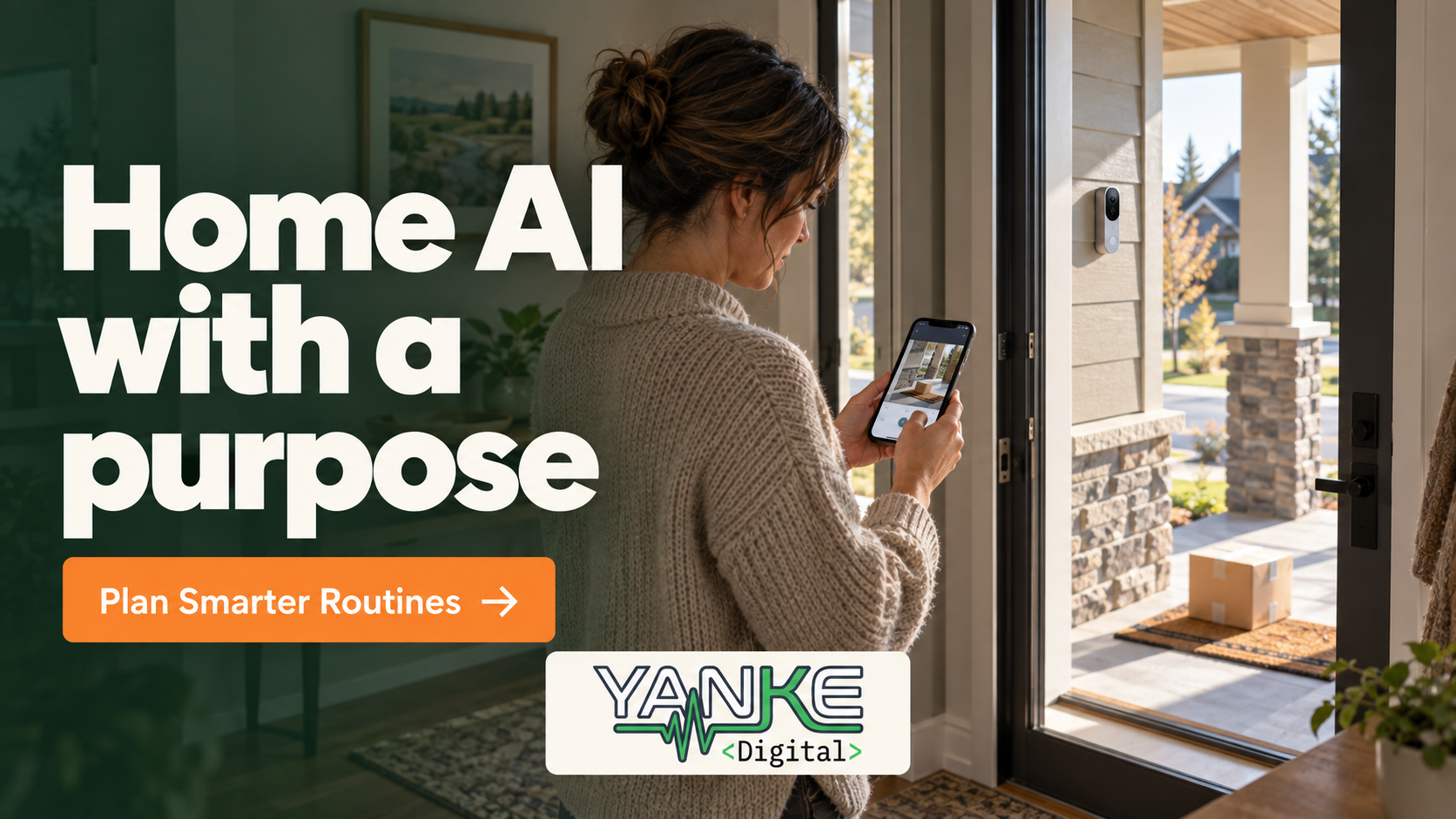
AI is moving into your home. Here’s what it can really do for you.
AI is now on the box of almost every smart device. Cameras, doorbells, thermostats, speakers and even light switches claim to be "intelligent." It’s fair to wonder what that actually means for daily life.
Here’s the short answer. Right now, AI in the home is best at three things: sorting through noise (like telling a person from a swaying branch on camera), understanding what you mean (more natural voice requests), and spotting patterns (like learning your heating habits). It’s much less reliable at making big decisions on its own.
Think of AI as a helpful assistant that filters and suggests, not a manager that runs your house.
There’s one thing that decides whether AI features help or annoy you, and it’s set long before you turn the feature on. We’ll come back to it.
Smarter camera alerts
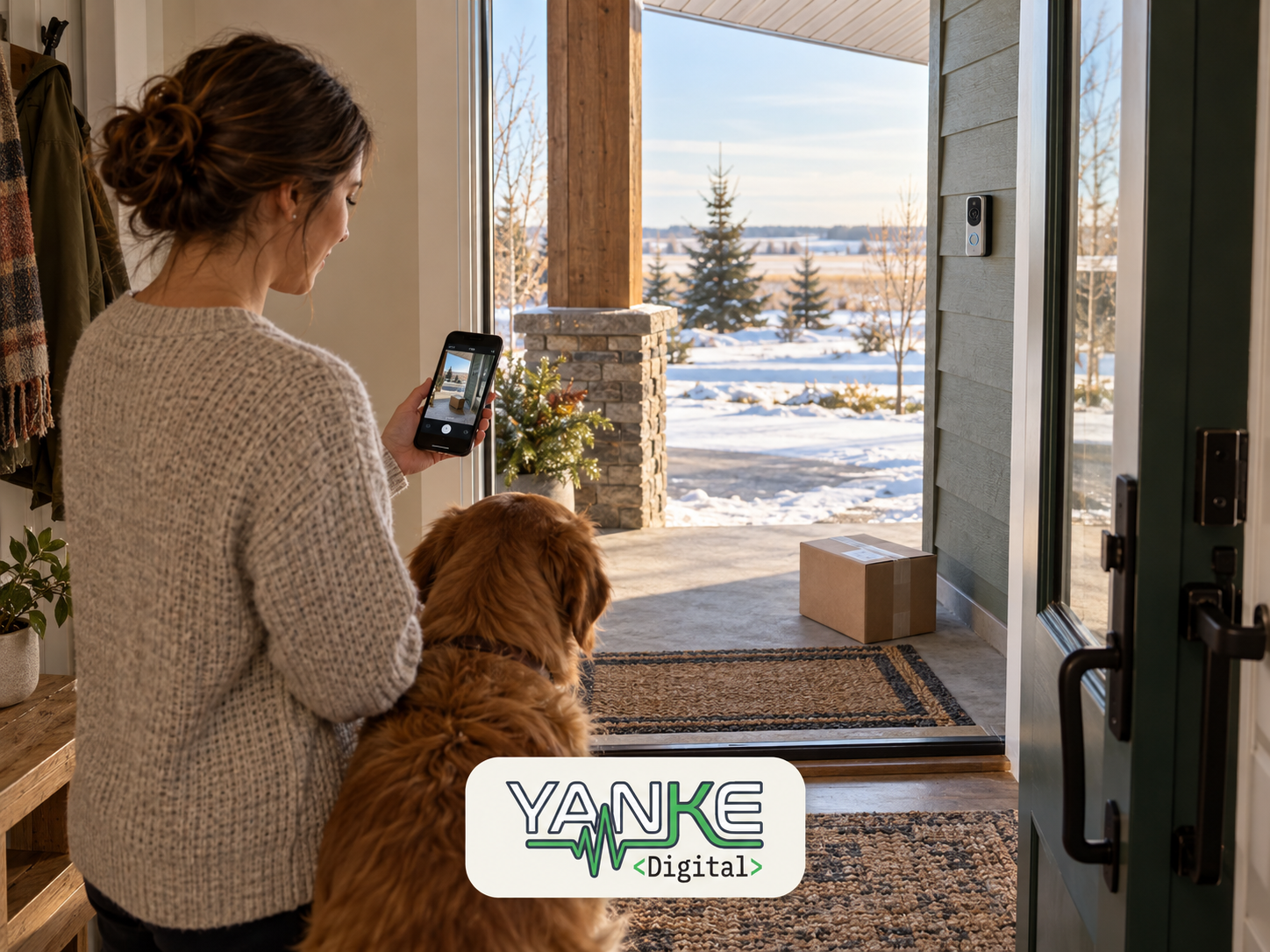
This is where AI has made the most practical difference. Many modern cameras can tell the difference between people, vehicles, animals and packages. Instead of a notification every time a shadow moves, you can choose to be alerted only when a person is at the door.
Some systems also let you search footage with simple descriptions, which beats scrubbing through hours of video.
Worth knowing:
- Some of these features run on the camera or a local recorder. Others need the cloud and a subscription.
- They aren’t perfect. Expect the occasional miss or false alert.
- Facial recognition features raise real privacy questions, especially when cameras can see neighbours, guests or the street. Use them thoughtfully.
More natural voice control
Voice assistants increasingly use newer AI models, which can make them better at understanding everyday language. Requests like "it’s a bit dark in here" or "turn everything off downstairs" are more likely to work than they used to be.
The assistant still needs a well-organized home behind it, though. Clear room names and device names make the AI’s job much easier.
Routines that adapt
Some thermostats and platforms learn from your behaviour, like when you usually adjust the heat or which lights go on in the evening. They may suggest a schedule or adjust on their own. Home Assistant and similar platforms can go further, combining sensors, time of day and presence to make routines feel more natural.
The best adaptive routines are the ones you barely notice: the hallway light at night that’s just bright enough, or heat that comes up before you’re out of bed.
Summaries and insights
Some systems can summarize what happened while you were away ("two deliveries, one visitor"), or point out unusual patterns, like a sensor that keeps reporting high humidity. This kind of help is still developing, but it can turn a stream of raw alerts into something useful.
What AI shouldn’t be trusted with (yet)
- Safety decisions on its own. Locks, garage doors and anything involving safety should have clear, predictable rules and a manual backup.
- Security guarantees. AI detection helps you notice things. It doesn’t replace good camera placement, good locks or good judgement.
- Your privacy, by default. Check where your data is processed and stored before turning features on.
The thing that decides whether AI helps
Here’s the deciding factor: the quality of the setup underneath it.
AI can only work with what it’s given. A camera pointed at a busy street, with the wrong detection zones, will flood you with alerts no matter how smart it is. A voice assistant can’t figure out "the kitchen" if half the kitchen devices are assigned to the wrong room. An adaptive thermostat learns the wrong habits if its sensor sits next to a heat vent.
Good placement, clear names, a reliable network and sensible rules are what make AI features feel intelligent. Skip that foundation and even the best AI feels random.
Putting AI to work, the practical way
At Yanke Digital, we’re interested in AI when it makes daily life easier, and we’re happy to tell you when a feature isn’t worth it. We start with what you have, including your cameras, assistants and devices, plus the alerts or habits that frustrate you, and work out what can stay.
Then we make the scope clear: which features are worth using, where processing happens, what needs a subscription, and how everything fits together across Home Assistant, Apple Home, Google Home or Amazon Alexa. We set up camera zones, detection settings, custom automation routines and voice controls, test them, and walk you through using them.
Want AI that actually helps?
Call us at 1-888-698-8001, or put together a starting point with our free project planner. You can use it without giving contact details.
Explore our home services or read about our approach.