
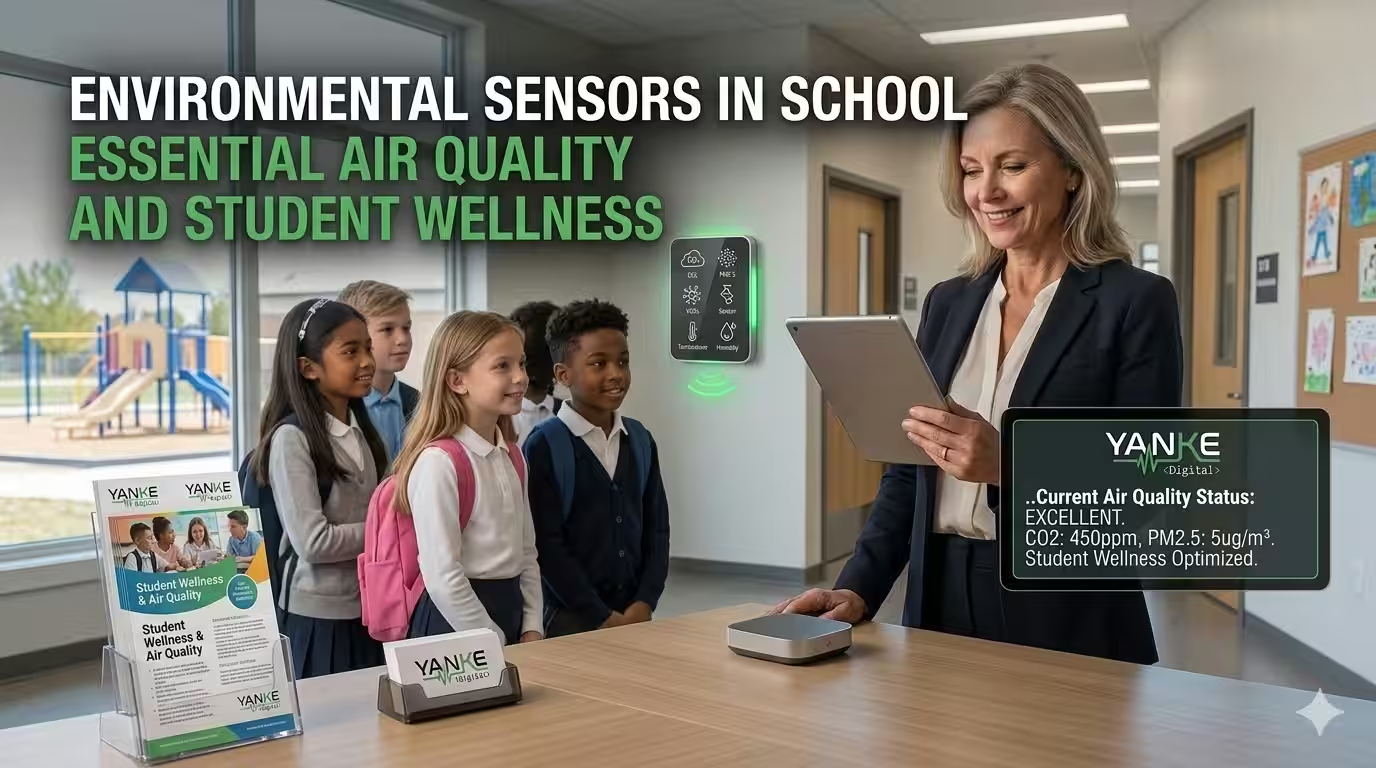
Environmental sensors in schools have become essential tools for maintaining healthy learning environments. As educators and facility managers increasingly recognize the connection between indoor air quality and student wellness, air quality monitoring systems are transforming how schools approach health and safety. Environmental sensors schools rely on today measure CO₂, humidity, temperature, and particulate matter—providing real-time data that directly impacts student wellness and academic performance.
Why Environmental Sensors Matter in Educational Facilities
The science is clear: indoor air quality directly affects student wellness, concentration, and learning outcomes. When CO₂ levels rise above 1,000 ppm in classrooms, cognitive function declines measurably. Poor ventilation contributes to increased absenteeism, reduced focus, and long-term health concerns for both students and staff.
Environmental sensors provide schools with objective data to make informed decisions about ventilation, facility upgrades, and daily operations. Rather than guessing whether a classroom needs better airflow, administrators can rely on continuous monitoring to optimize conditions in real time.
- Real-time visibility: Monitor air quality metrics 24/7 across multiple spaces
- Data-driven decisions: Identify problem areas and prioritize improvements
- Student wellness focus: Create healthier environments that support learning and development
- Compliance support: Meet ventilation standards and health guidelines
- Cost efficiency: Optimize HVAC operations based on actual air quality needs
Key Environmental Sensors for Schools: What to Monitor
Effective air quality monitoring in schools requires multiple sensor types working together. Each measures a critical aspect of the indoor environment that influences student wellness and classroom comfort.
CO₂ Sensors
Carbon dioxide levels are the primary indicator of ventilation adequacy. When CO₂ concentrations exceed 1,000 ppm, students experience reduced cognitive performance, increased fatigue, and difficulty concentrating. CO₂ sensors provide immediate feedback on whether a classroom is receiving sufficient fresh air exchange.
Particulate Matter (PM2.5 & PM10) Sensors
Fine particulate matter penetrates deep into the respiratory system, affecting student wellness and long-term health. Environmental sensors that detect PM2.5 and PM10 help schools identify when air filtration needs improvement or when outdoor air quality is compromised.
Temperature & Humidity Sensors
Thermal comfort directly impacts student focus and wellness. Optimal classroom temperatures (68–72°F) and humidity levels (30–50%) support concentration and reduce the spread of airborne pathogens. Environmental sensors monitor these variables to ensure consistent comfort across all learning spaces.
Volatile Organic Compound (VOC) Sensors
VOCs from cleaning products, furniture, and building materials can accumulate in poorly ventilated spaces. Detecting these compounds helps schools identify sources of indoor air quality issues and take corrective action to protect student wellness.
How Environmental Sensors Support Student Wellness
The connection between environmental sensors, schools’ air quality management, and student wellness is well-documented. When facilities implement comprehensive monitoring systems, measurable improvements follow.
Improved Academic Performance
Research demonstrates that students in well-ventilated classrooms with optimal CO₂ levels show improved test scores, better attendance, and enhanced cognitive function. Environmental sensors enable schools to maintain these conditions consistently.
Reduced Illness & Absenteeism
Poor air quality increases the transmission of respiratory viruses and allergens. By monitoring environmental conditions and responding to sensor data, schools reduce illness rates among students and staff, directly supporting student wellness and reducing lost instructional time.
Better Mental Health & Focus
Elevated CO₂ and poor air quality contribute to fatigue, headaches, and difficulty concentrating—all barriers to student wellness and learning. Environmental sensors help maintain conditions that support mental clarity and emotional well-being.
Equitable Learning Environments
Sensor data reveals disparities in air quality across different classrooms and buildings. Schools can use this information to prioritize improvements in under-resourced spaces, ensuring all students benefit from healthy learning environments regardless of location.
Implementing Environmental Sensors in Schools: A Practical Approach
Deploying environmental sensors schools use requires thoughtful planning. A successful implementation balances comprehensive coverage with budget constraints and technical integration.
Step 1: Assess Your Current Environment
Begin by identifying which spaces present the greatest air quality challenges. Classrooms, gymnasiums, cafeterias, and portable buildings often have the poorest ventilation. Environmental sensors should prioritize these high-impact areas first.
Step 2: Select Appropriate Sensor Technology
Choose environmental sensors that align with your school’s needs and infrastructure. Consider whether you need wireless or wired sensors, cloud-based or local data storage, and which metrics matter most for your facilities. Integration with existing building management systems simplifies deployment.
Step 3: Establish Baseline Measurements
Before making changes, collect baseline data on current air quality conditions. This allows you to measure the impact of improvements and identify specific problem areas. Environmental sensors provide the objective data needed to justify facility upgrades.
Step 4: Create Response Protocols
Establish clear procedures for responding to sensor alerts. When CO₂ exceeds safe thresholds or particulate matter spikes, staff should know whether to increase ventilation, open windows, or activate air purification systems. Environmental sensors are only valuable when paired with actionable protocols.
Step 5: Monitor, Analyze & Optimize
Continuously review data from your environmental sensors to identify trends and optimization opportunities. Schools that actively analyze sensor data can fine-tune HVAC schedules, improve maintenance practices, and demonstrate measurable improvements in student wellness.
Classroom Air Quality Control: Practical Solutions
Environmental sensors identify problems; now let’s explore solutions that schools implement to improve classroom air quality control based on sensor feedback.
Enhanced Ventilation & HVAC Optimization
Environmental sensors enable schools to optimize HVAC schedules based on actual occupancy and air quality needs rather than fixed schedules. Demand-controlled ventilation reduces energy waste while maintaining healthy conditions that support student wellness.
Portable Air Purification Units
In spaces where structural ventilation is limited, portable HEPA air purifiers provide immediate improvement. Environmental sensors help identify which classrooms benefit most from these units and verify their effectiveness.
Strategic Window & Door Management
When sensor data shows elevated CO₂ or particulate matter, opening windows provides quick relief (weather permitting). Environmental sensors help staff make informed decisions about when natural ventilation is beneficial versus when outdoor air quality is poor.
Maintenance & Filter Management
Environmental sensors reveal when air filters are becoming saturated and need replacement. Proactive maintenance based on sensor data ensures HVAC systems operate at peak efficiency, directly supporting student wellness and air quality control.
Technology Integration: Making Environmental Sensors Work for Your School
Modern environmental sensors integrate with building management systems, mobile apps, and dashboards that make air quality data accessible to administrators, teachers, and even students. This transparency drives engagement and accountability.
- Real-time dashboards: View air quality metrics across all monitored spaces instantly
- Mobile alerts: Receive notifications when conditions exceed safe thresholds
- Historical analytics: Identify patterns and seasonal trends in air quality
- Integration with HVAC: Automate ventilation adjustments based on sensor data
- Student education: Use sensor data to teach environmental science and health concepts
Measuring Success: Environmental Sensors & Student Wellness Outcomes
Schools implementing environmental sensors should establish metrics to track improvements in student wellness and facility performance. Measurable outcomes justify continued investment and guide future upgrades.
Health Metrics
Track changes in student absenteeism, nurse office visits, and reported respiratory symptoms. Schools with improved air quality typically see 5–10% reductions in absence rates within the first year.
Academic Performance
Monitor standardized test scores, classroom engagement, and teacher observations. Environmental sensors that maintain optimal CO₂ levels correlate with measurable improvements in academic outcomes.
Energy Efficiency
Environmental sensors enable demand-controlled ventilation, reducing HVAC energy consumption by 15–30%. Schools recover implementation costs through lower utility bills while improving student wellness.
Facility Maintenance
Sensor data guides preventive maintenance, extending equipment life and reducing emergency repairs. Environmental sensors provide objective evidence of system performance and maintenance needs.
Challenges & Solutions in School Air Quality Monitoring
While environmental sensors offer tremendous value, schools often face practical challenges during implementation. Understanding these obstacles helps ensure successful deployment.
Budget Constraints
Challenge: Comprehensive sensor systems require upfront investment.
Solution: Start with high-priority spaces (classrooms, cafeterias) and expand gradually. Many schools find that energy savings and reduced absenteeism offset sensor costs within 2–3 years. Grant funding and state health initiatives often support air quality improvements.
Technical Integration
Challenge: Connecting environmental sensors to existing building systems can be complex.
Solution: Work with experienced integrators who understand school infrastructure. Wireless sensors and cloud-based platforms simplify deployment without requiring extensive rewiring. Professional installation ensures reliable operation and proper calibration.
Staff Training & Buy-In
Challenge: Teachers and maintenance staff need to understand how to respond to sensor data.
Solution: Provide clear training on sensor interpretation and response protocols. When staff understand how environmental sensors support student wellness, they become advocates for the system and use data to make better decisions.
Data Privacy & Security
Challenge: Cloud-based sensor systems must protect school data and student privacy.
Solution: Choose vendors with strong security practices, encrypted data transmission, and compliance with FERPA and other privacy regulations. Environmental sensors should enhance safety without compromising privacy.
How Yanke Digital Supports School Air Quality Solutions
At Yanke Digital, we specialize in designing and integrating environmental sensors and smart building systems for educational facilities across Saskatchewan. We understand that schools need reliable, easy-to-use solutions that improve student wellness without adding complexity to facility management.
Our approach combines professional-grade environmental sensors with custom software integration, ensuring your school’s air quality monitoring system works seamlessly with existing infrastructure. We handle sensor selection, installation, calibration, and ongoing support—so your team can focus on education while we optimize your learning environment.
Whether you’re implementing air quality monitoring in a single school or managing a multi-building district, Yanke Digital provides the expertise and support to ensure success. We’ve helped schools across Saskatchewan establish baseline air quality data, identify improvement opportunities, and measure the impact of environmental upgrades on student wellness.
- Custom sensor design: We select and configure environmental sensors tailored to your school’s specific needs and spaces
- Professional installation: Expert technicians ensure proper sensor placement, calibration, and integration with building systems
- Software integration: We design custom dashboards and alert systems that make air quality data actionable for your staff
- Ongoing support: Our team provides continuous monitoring, maintenance, and optimization to keep your system performing reliably
- Educational support: We help staff understand sensor data and respond effectively to maintain optimal conditions
Ready to improve air quality and student wellness in your school? Contact Yanke Digital to discuss how environmental sensors can transform your learning environment. We also offer comprehensive smart building solutions that extend beyond air quality to include security, access control, and environmental monitoring across your entire facility.
The Future of School Air Quality Monitoring
Environmental sensors in schools represent an investment in long-term student wellness and facility excellence. As technology advances, sensor capabilities will expand—integrating AI-powered predictive analytics, automated response systems, and deeper integration with building operations.
Schools that implement environmental sensors today are positioning themselves to adapt to future requirements and emerging health standards. The data collected now provides a foundation for continuous improvement and evidence-based decision-making that benefits students, staff, and the entire school community.
Air quality monitoring is no longer a luxury—it’s an essential component of modern school infrastructure. By deploying environmental sensors, schools demonstrate a commitment to student wellness, operational efficiency, and creating learning environments where every student can thrive.
Key Takeaways: Environmental Sensors for Schools
- Environmental sensors provide objective data on CO₂, particulate matter, temperature, and humidity—critical factors affecting student wellness
- Schools using air quality monitoring systems see measurable improvements in attendance, academic performance, and health outcomes
- Classroom air quality control based on sensor data enables demand-controlled ventilation, reducing energy costs while improving conditions
- Implementation requires careful planning, staff training, and integration with building management systems
- Professional installation and ongoing support ensure environmental sensors deliver consistent value and reliability
- Data-driven facility management creates equitable learning environments and supports long-term student wellness