
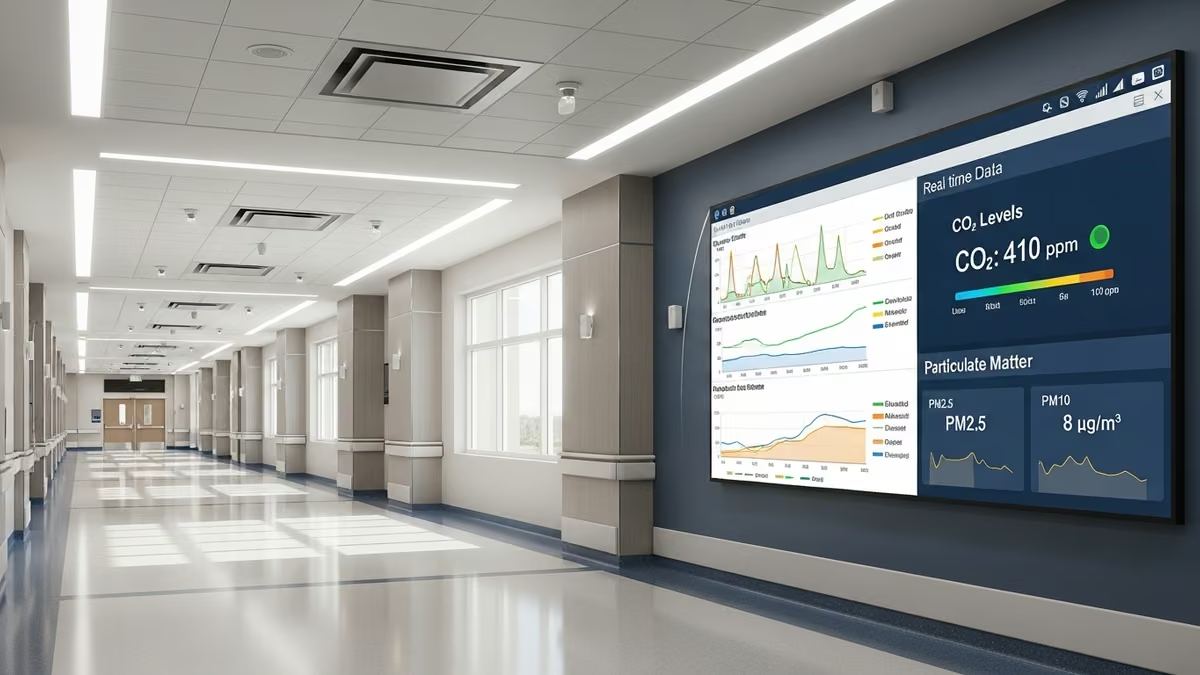
Indoor air quality in healthcare facilities is far more than a comfort issue—it’s a critical component of patient safety, staff wellness, and regulatory compliance. Environmental sensors for healthcare facilities have become essential tools for monitoring air quality, detecting contaminants, and preventing airborne disease transmission. Whether you operate a hospital, clinic, diagnostic center, or specialized medical facility, understanding how environmental sensors work and why they matter can directly impact your facility’s safety profile and operational efficiency.
Why Environmental Sensors Matter in Healthcare Settings
Healthcare environments face unique air quality challenges that standard commercial buildings don’t encounter. Hospitals, surgical suites, isolation wards, and patient care areas generate airborne contaminants including:
- Volatile organic compounds (VOCs) from disinfectants and cleaning products
- Particulate matter from HVAC systems and outdoor air intake
- Biological contaminants including bacteria, viruses, and fungal spores
- Anesthetic gases in operating rooms
- Odors and chemical residues from medical procedures
Environmental sensors continuously monitor these pollutants, providing real-time data that helps facility managers maintain safe conditions. This proactive approach reduces the risk of healthcare-associated infections (HAIs), protects vulnerable patients, and ensures staff work in a healthy environment.
Key Air Quality Parameters Environmental Sensors Track
Modern environmental sensors for healthcare facilities measure multiple air quality indicators simultaneously. Understanding what these sensors monitor helps you evaluate whether your facility has adequate coverage:
Particulate Matter (PM2.5 and PM10)
Fine particulate matter can carry bacteria, viruses, and allergens deep into the respiratory system. Environmental sensors detect PM2.5 (particles 2.5 micrometers or smaller) and PM10 (particles 10 micrometers or smaller), helping you maintain filtration standards required by healthcare regulations.
Carbon Dioxide (CO₂) Levels
CO₂ is a marker of ventilation effectiveness. High CO₂ levels indicate inadequate fresh air exchange, which can increase airborne pathogen concentration. Healthcare facilities typically maintain CO₂ below 800 ppm in patient care areas.
Volatile Organic Compounds (VOCs)
Disinfectants, sterilizing agents, and cleaning products release VOCs that can irritate respiratory systems and compromise air quality. Environmental sensors detect these compounds, allowing you to optimize cleaning schedules and ventilation timing.
Temperature and Humidity
Optimal temperature and humidity ranges (typically 68-72°F and 30-60% RH) inhibit pathogen survival and support HVAC efficiency. Environmental sensors ensure these conditions remain stable across different zones.
Pressure Differentials
Negative pressure rooms prevent contaminated air from spreading to adjacent areas. Environmental sensors monitor pressure differences to ensure isolation rooms maintain proper containment.
Infection Control & Disease Prevention Through Air Quality Monitoring
The COVID-19 pandemic underscored the critical link between indoor air quality and infection control. Environmental sensors have become integral to infection prevention strategies in healthcare facilities worldwide. Here’s how they support disease prevention:
Real-Time Contamination Detection
Rather than relying on periodic air sampling, continuous environmental sensors provide immediate alerts when air quality degrades. This allows facility staff to respond quickly—adjusting ventilation, increasing filtration, or implementing additional containment measures before contamination spreads.
Data-Driven HVAC Optimization
Environmental sensors generate actionable data about HVAC performance. Facility managers can identify when filters need replacement, when ventilation rates should increase, or when maintenance is required—preventing the air quality degradation that enables pathogen transmission.
Compliance with Healthcare Standards
Regulatory bodies including The Joint Commission, CDC, and local health departments establish specific air quality requirements for different healthcare spaces. Environmental sensors provide documented evidence of compliance, protecting your facility from citations and supporting accreditation efforts.
Isolation Room Verification
For facilities treating patients with airborne diseases, environmental sensors confirm that negative pressure isolation rooms maintain proper containment. This verification is essential for staff safety and regulatory compliance.
Healthcare Building Sensors: Integration With Smart Building Systems
Modern healthcare facilities benefit from integrated environmental sensors that connect to building management systems (BMS). This integration enables:
- Automated responses: When sensors detect poor air quality, systems automatically increase ventilation or trigger alerts
- Centralized monitoring: Facility managers view air quality across all zones from a single dashboard
- Historical data analysis: Trend data helps identify patterns and optimize long-term facility operations
- Predictive maintenance: Sensor data indicates when equipment maintenance is needed before failures occur
- Energy efficiency: Smart systems adjust ventilation and filtration based on actual air quality needs, reducing energy waste
For healthcare facilities in Saskatchewan and across Canada, Yanke Digital specializes in designing custom environmental monitoring systems that integrate with your existing building infrastructure. Our approach ensures your facility has real-time visibility into air quality while maintaining seamless operation with other building systems.
Specific Applications: Where Environmental Sensors Are Critical
Operating Rooms and Surgical Suites
Operating rooms require the highest air quality standards. Environmental sensors monitor particulate matter, ensure positive pressure containment, and detect anesthetic gas concentrations. These sensors protect surgical teams and prevent surgical site infections.
Intensive Care Units (ICUs)
ICU patients are immunocompromised and highly vulnerable to airborne infections. Environmental sensors track air quality continuously, ensuring ventilation systems maintain optimal conditions for the most critical patients.
Isolation and Negative Pressure Rooms
Facilities treating patients with tuberculosis, measles, or other airborne diseases depend on environmental sensors to verify negative pressure containment. These sensors confirm that contaminated air is properly exhausted and not recirculated.
Diagnostic and Laboratory Areas
Pathology labs, blood draw stations, and specimen processing areas generate biological aerosols. Environmental sensors help maintain biosafety levels and protect staff from occupational exposure.
Patient Care Floors and Waiting Areas
General patient care areas and waiting rooms see high foot traffic and disease exposure. Environmental sensors help identify when air quality is compromised and ventilation needs adjustment, reducing cross-contamination risk.
Regulatory Compliance & Air Quality Standards
Healthcare facilities must comply with multiple air quality standards and regulations. Environmental sensors provide the documentation and real-time monitoring required for compliance:
- ASHRAE 170: Ventilation of Health Care Facilities—establishes air changes per hour, filtration, and pressure requirements
- The Joint Commission Standards: Require facilities to maintain air quality and document compliance
- CDC Guidelines: Provide infection control recommendations including air quality parameters
- Local Health Authority Requirements: Provincial and regional regulations may establish additional standards
- OSHA Standards: Protect worker safety through air quality monitoring in healthcare settings
Environmental sensors generate continuous compliance documentation, reducing the burden of manual air quality testing and providing auditable records during inspections.
Choosing the Right Environmental Sensors for Your Healthcare Facility
Assess Your Facility’s Specific Needs
Different healthcare settings require different sensor configurations. A surgical suite needs different monitoring than a general patient care floor. Evaluate which areas require the most rigorous monitoring and which parameters matter most for your operations.
Ensure Sensor Accuracy and Calibration
Healthcare-grade environmental sensors must meet strict accuracy standards. Verify that sensors are calibrated regularly and that manufacturers provide documentation of measurement accuracy. Poor sensor data leads to poor decisions.
Verify Integration Capabilities
Your environmental sensors should integrate seamlessly with existing building management systems, HVAC controls, and facility monitoring platforms. Siloed sensor data limits effectiveness and increases operational complexity.
Plan for Ongoing Support and Maintenance
Environmental sensors require regular maintenance, calibration, and support. Partner with providers who offer system support and maintenance services to ensure your sensors remain accurate and functional long-term.
Implementation Best Practices for Healthcare Air Quality Monitoring
1. Conduct a Facility Assessment
Before installing environmental sensors, evaluate your facility’s current air quality, HVAC system condition, and compliance gaps. This assessment informs sensor placement and system design.
2. Develop a Sensor Placement Strategy
Strategic placement ensures sensors capture representative air quality data. High-risk areas like operating rooms and isolation rooms need dense sensor coverage, while general areas may require fewer sensors.
3. Establish Baseline Data and Alert Thresholds
Collect baseline air quality data to understand normal conditions. Set alert thresholds that trigger responses when air quality degrades, enabling proactive intervention.
4. Train Staff on System Use and Response Protocols
Environmental sensors are only effective if staff understand how to interpret data and respond appropriately. Comprehensive training ensures your team uses the system effectively.
5. Establish Maintenance and Calibration Schedules
Regular maintenance and calibration keep sensors accurate. Establish schedules and document all maintenance activities for compliance purposes.
The Business Case for Environmental Sensors in Healthcare
Beyond regulatory compliance and patient safety, environmental sensors deliver measurable business benefits:
- Reduced healthcare-associated infections: Better air quality directly reduces HAI rates, lowering treatment costs and improving patient outcomes
- Lower energy costs: Smart ventilation optimization reduces unnecessary HVAC operation while maintaining air quality
- Extended equipment life: Predictive maintenance based on sensor data prevents costly HVAC failures
- Improved staff retention: Healthier work environments reduce sick leave and improve employee satisfaction
- Enhanced reputation: Demonstrable commitment to air quality and infection control strengthens patient trust and referrals
Getting Started: Custom Environmental Monitoring Solutions for Your Facility
Implementing environmental sensors for healthcare facilities requires expertise in both air quality science and building systems integration. Yanke Digital brings both to the table. We design custom environmental monitoring systems tailored to your facility’s specific needs, ensuring you have the right sensors in the right places, integrated with systems that actually work.
Whether you’re upgrading an existing facility, opening a new healthcare space, or responding to regulatory requirements, our team understands the unique demands of healthcare environments. We handle the technical complexity so you can focus on patient care.
Schedule a consultation with our environmental monitoring specialists to discuss how custom environmental sensors can improve air quality, enhance infection control, and support regulatory compliance at your healthcare facility. We serve healthcare providers across Saskatchewan and beyond, delivering solutions that work as hard as your facility does.
Frequently Asked Questions About Environmental Sensors in Healthcare
What is the difference between environmental sensors and traditional air quality testing?
Traditional air quality testing involves periodic sampling and lab analysis, providing snapshots of conditions at specific moments. Environmental sensors provide continuous, real-time monitoring, enabling immediate response to air quality changes. This continuous approach is far more effective for infection control and regulatory compliance.
How often do environmental sensors need calibration?
Calibration frequency depends on sensor type and manufacturer specifications. Most healthcare-grade environmental sensors require calibration annually or semi-annually. Some sensors may need more frequent calibration based on usage patterns and environmental conditions.
Can environmental sensors detect specific pathogens like COVID-19 or influenza?
Environmental sensors don’t directly detect specific viruses. Instead, they monitor conditions that enable pathogen transmission—particulate matter, CO₂ levels, humidity, and air exchange rates. By maintaining optimal conditions, you reduce the likelihood of airborne disease transmission.
What’s the typical cost of implementing environmental sensors in a healthcare facility?
Costs vary significantly based on facility size, complexity, sensor types, and integration requirements. A small clinic might invest $5,000-$15,000, while a large hospital system could invest $50,000+. The investment typically pays for itself through reduced infections, energy savings, and avoided compliance penalties.
How do environmental sensors integrate with existing HVAC systems?
Modern environmental sensors connect to building management systems that can control HVAC equipment. When sensors detect poor air quality, the system automatically increases ventilation, adjusts filtration, or triggers alerts. Integration depends on your HVAC system’s capabilities and the sensor platform you choose.