
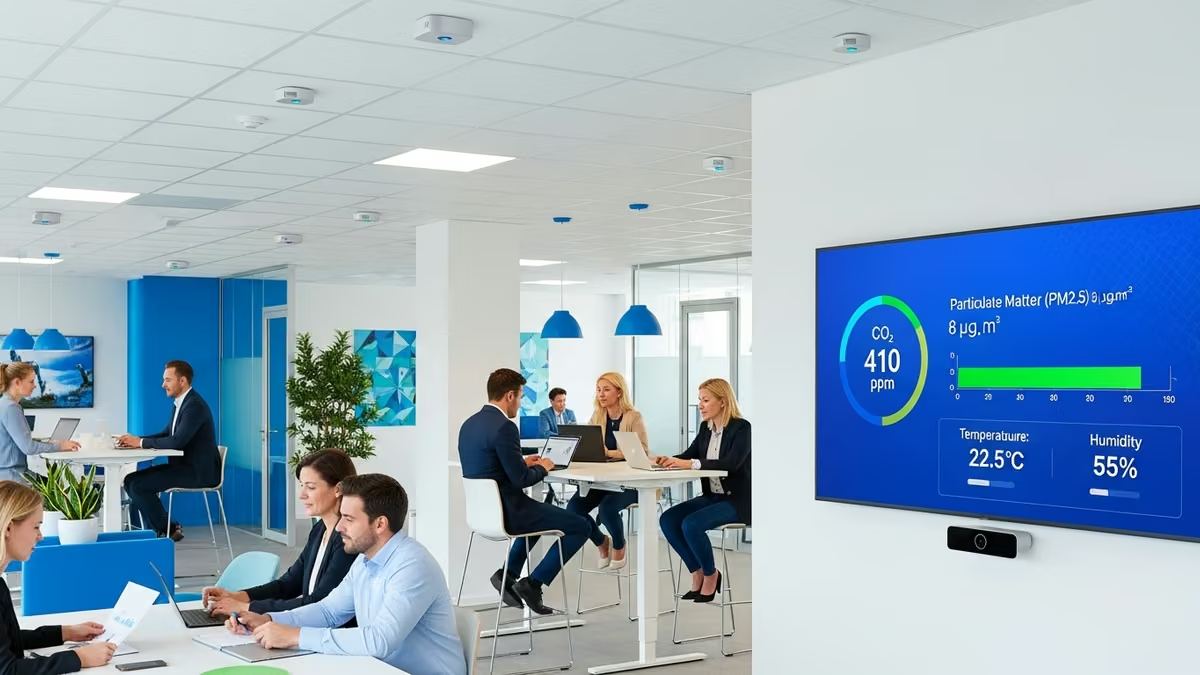
Indoor air quality has become a critical concern for commercial building managers, facility directors, and business owners. Environmental sensors and air quality monitoring systems are no longer optional upgrades—they’re essential infrastructure for modern workplaces. Whether you manage an office building, retail space, or multi-tenant facility, real-time data from environmental sensors helps you maintain healthy indoor environments, comply with regulations, and protect your occupants’ wellbeing. This guide explores why environmental sensors matter, what they measure, and how to implement a comprehensive air quality monitoring strategy for your commercial building.
Why Environmental Sensors Matter in Commercial Buildings
The average office worker spends 8+ hours daily in indoor environments. Poor air quality directly impacts productivity, health, and employee satisfaction. Environmental sensors provide the data needed to make informed decisions about ventilation, filtration, and climate control.
Post-pandemic workplace standards have elevated air quality expectations. Building occupants now expect transparency about the air they breathe. Environmental sensors deliver this transparency while helping facility managers optimize HVAC systems and reduce energy waste.
- Health & Safety: Monitor CO₂, particulate matter, and volatile organic compounds (VOCs) that affect occupant health
- Regulatory Compliance: Meet ASHRAE, EPA, and local building code requirements for indoor air quality
- Energy Efficiency: Optimize ventilation based on real-time data rather than fixed schedules
- Occupant Confidence: Display air quality metrics to build trust and demonstrate commitment to wellness
- Preventive Maintenance: Detect HVAC issues early before they impact air quality or cause costly repairs
What Environmental Sensors Measure: Key Metrics Explained
Modern air quality monitoring systems track multiple parameters simultaneously. Understanding what each metric means helps you interpret data and take appropriate action.
Carbon Dioxide (CO₂) Levels
CO₂ concentration is a primary indicator of ventilation effectiveness. Elevated CO₂ levels (above 1000 ppm) correlate with reduced cognitive function, decreased productivity, and occupant discomfort. Environmental sensors that monitor CO₂ help ensure adequate fresh air intake and proper HVAC operation.
Particulate Matter (PM2.5 & PM10)
Fine particulates penetrate deep into the respiratory system, causing long-term health effects. Air quality monitoring systems that track PM2.5 and PM10 help identify when filtration systems need upgrading or when outdoor air quality is affecting indoor spaces.
Volatile Organic Compounds (VOCs)
VOCs come from cleaning products, furniture, carpeting, and office equipment. Environmental sensors that detect VOCs help identify sources of indoor air pollution and guide decisions about product selection and ventilation strategies.
Temperature & Humidity
Temperature and humidity directly affect comfort and air quality. Optimal ranges (68-72°F, 30-50% humidity) prevent mold growth, reduce airborne virus transmission, and support occupant wellbeing. Environmental sensors provide the data needed to maintain these conditions automatically.
Nitrogen Dioxide (NO₂) & Other Pollutants
Advanced air quality monitoring systems track additional pollutants including nitrogen dioxide, ozone, and formaldehyde. These metrics are particularly important for buildings near highways, industrial areas, or in regions with poor outdoor air quality.
Types of Environmental Sensors for Commercial Buildings
Different sensor technologies serve different purposes. A comprehensive air quality monitoring strategy typically combines multiple sensor types.
Fixed Wall-Mounted Sensors
Permanently installed environmental sensors provide continuous monitoring in specific zones. These are ideal for conference rooms, open office areas, and common spaces. Wall-mounted sensors integrate with building management systems for automated HVAC control.
Portable Air Quality Monitors
Mobile environmental sensors allow facility teams to assess air quality in different areas and identify problem zones. Portable monitors are valuable for troubleshooting, validating fixed sensor readings, and conducting air quality audits.
HVAC-Integrated Sensors
Some environmental sensors integrate directly with HVAC systems, enabling demand-controlled ventilation (DCV). These sensors automatically adjust fresh air intake based on real-time air quality data, optimizing both comfort and energy efficiency.
Multi-Parameter Sensor Arrays
Advanced environmental sensors measure multiple parameters simultaneously—CO₂, PM2.5, temperature, humidity, and VOCs in a single device. These comprehensive sensors provide a complete picture of indoor air quality with minimal installation complexity.
Implementing Air Quality Monitoring in Your Commercial Building
A successful air quality monitoring strategy requires careful planning and professional integration. Here’s how to approach implementation.
Step 1: Assess Your Building’s Needs
Not all commercial buildings require identical monitoring strategies. Consider your building type, occupancy levels, HVAC system age, and existing air quality concerns. A baseline air quality audit helps identify which areas need sensors and which metrics matter most.
Step 2: Choose the Right Environmental Sensors
Select sensors that measure the parameters most relevant to your building. For most commercial spaces, CO₂, PM2.5, temperature, and humidity provide essential baseline data. Buildings with specific concerns (chemical manufacturing, healthcare facilities) may need additional pollutant monitoring.
Step 3: Plan Sensor Placement
Strategic placement of environmental sensors ensures accurate readings and actionable data. Sensors should be located away from direct sunlight, air vents, and walls. High-traffic areas, conference rooms, and spaces with vulnerable occupants (children, elderly, immunocompromised) warrant priority placement.
Step 4: Integrate with Building Management Systems
Environmental sensors deliver maximum value when integrated with your building management system (BMS). Integration enables automated HVAC adjustments, real-time alerts, historical data analysis, and occupant-facing dashboards that display air quality metrics.
Step 5: Establish Monitoring & Response Protocols
Define what air quality readings trigger action. Establish thresholds for alerts, maintenance procedures, and communication protocols. Train facility staff to interpret data and respond appropriately to air quality issues.
Air Quality Monitoring Systems: Integration with Smart Building Technology
Modern air quality monitoring systems extend beyond standalone sensors. When integrated with smart building platforms, environmental sensors become part of a comprehensive ecosystem that optimizes comfort, health, and operational efficiency.
Automated HVAC Control
Demand-controlled ventilation systems use environmental sensor data to automatically adjust fresh air intake. When CO₂ levels rise, the system increases ventilation. When air quality improves, it reduces ventilation to save energy. This dynamic approach maintains optimal air quality while minimizing energy waste.
Occupant-Facing Dashboards
Display air quality metrics on lobby screens, office dashboards, or mobile apps. Transparency builds occupant confidence and demonstrates your commitment to health and wellness. Some buildings use color-coded indicators (green/yellow/red) for quick visual assessment.
Predictive Maintenance
Environmental sensor data reveals patterns that indicate HVAC maintenance needs. Declining air quality despite normal operation suggests filter degradation or system issues. Predictive analytics help schedule maintenance before problems impact occupants.
Energy Optimization
Air quality monitoring systems that integrate with HVAC controls can reduce energy consumption by 10-30% compared to fixed-schedule ventilation. The system provides only the ventilation needed, reducing heating and cooling loads.
Compliance & Standards for Commercial Building Air Quality
Multiple regulatory frameworks govern indoor air quality in commercial buildings. Environmental sensors help ensure compliance with these standards.
- ASHRAE 62.1: Ventilation and Indoor Air Quality standard that defines minimum fresh air requirements based on occupancy and building type
- EPA Indoor Air Quality Guidelines: Recommendations for maintaining healthy indoor environments and monitoring key pollutants
- LEED Certification: Green building certification that awards points for indoor air quality monitoring and control
- Local Building Codes: Many jurisdictions have adopted specific air quality requirements, particularly post-pandemic
- WELL Building Standard: Certification focused on occupant health that includes comprehensive air quality requirements
Environmental sensors provide the documentation needed to demonstrate compliance with these standards. Historical data shows regulators and auditors that your building maintains appropriate air quality levels.
Common Air Quality Monitoring Challenges & Solutions
Challenge: Sensor Accuracy & Calibration
Solution: Invest in quality environmental sensors from established manufacturers. Schedule regular calibration checks (typically annually) to ensure accuracy. Compare readings from multiple sensors in the same area to validate data.
Challenge: Data Overload & Interpretation
Solution: Implement air quality monitoring systems with intuitive dashboards and automated alerts. Focus on key metrics rather than tracking every possible parameter. Train facility staff to interpret data and take appropriate action.
Challenge: Integration with Legacy HVAC Systems
Solution: Work with experienced system integrators who understand both environmental sensors and HVAC systems. Retrofit solutions can add monitoring and control capabilities to older buildings without complete system replacement.
Challenge: Cost Justification
Solution: Calculate ROI based on energy savings, reduced maintenance costs, improved occupant productivity, and potential regulatory compliance benefits. Many buildings recover sensor investment within 2-3 years through energy optimization alone.
The Business Case for Environmental Sensors in Commercial Buildings
Beyond health and compliance, environmental sensors deliver measurable business benefits.
Improved Occupant Productivity
Research consistently shows that poor indoor air quality reduces cognitive function and productivity. Maintaining optimal air quality through environmental sensor monitoring can improve employee performance and reduce absenteeism.
Tenant Retention & Leasing Value
Commercial tenants increasingly prioritize healthy indoor environments. Buildings with documented air quality monitoring systems command premium lease rates and experience lower tenant turnover. Environmental sensors become a competitive advantage in the commercial real estate market.
Insurance & Liability Protection
Environmental sensor data demonstrates that you’ve taken reasonable steps to maintain healthy indoor environments. This documentation protects against liability claims and may qualify for insurance premium reductions.
Operational Efficiency
Air quality monitoring systems that integrate with HVAC controls reduce energy consumption, extend equipment life, and minimize emergency repairs. Facility managers gain visibility into system performance and can optimize operations based on real data.
Getting Started with Environmental Sensors: Next Steps
Implementing environmental sensors and air quality monitoring in your commercial building is a strategic investment in occupant health, operational efficiency, and business value. The technology is proven, the benefits are measurable, and the regulatory landscape increasingly requires it.
The key is working with experienced system integrators who understand both environmental sensor technology and commercial building systems. Yanke Digital specializes in designing and installing comprehensive air quality monitoring solutions for commercial buildings, multi-tenant facilities, and office spaces across Saskatchewan. We assess your building’s specific needs, select appropriate environmental sensors, integrate them with your existing systems, and provide ongoing support to ensure optimal performance.
Whether you’re upgrading an existing building or planning new construction, environmental sensors should be part of your strategy. Contact Yanke Digital today for a consultation about implementing air quality monitoring in your commercial building. We’ll help you understand your options, calculate ROI, and design a system that meets your specific requirements.
For more information about smart building technology and environmental control systems, explore our complete smart home and commercial automation solutions.