Multi-unit residential buildings in Saskatchewan face unique security challenges that demand more than basic locks and keys. Modern access control systems for multi-unit buildings provide property managers and residents with intelligent solutions that enhance security, streamline operations, and create a safer living environment. Whether you manage apartments, condos, or mixed-use residential properties, understanding how contemporary access control technology works—and how it integrates with your existing infrastructure—is essential for making informed decisions about your building’s security future.
What Are Access Control Systems for Multi-Unit Buildings?
An access control system is a comprehensive security solution that manages who can enter specific areas of your building and when. Unlike traditional locks and keys, modern access control systems use digital credentials—keycards, mobile apps, biometric data, or PIN codes—to grant or deny entry. For multi-unit residential buildings, this means centralized management of dozens or hundreds of access points while maintaining individual unit security.
These systems go beyond simple door locks. They create an audit trail of every entry and exit, integrate with intercoms and surveillance cameras, and allow property managers to adjust permissions instantly without rekeying locks. In Saskatchewan’s competitive rental market, this level of control and transparency is increasingly expected by both property owners and tenants.
Core Components of Modern Access Control
- Smart locks and electronic door hardware – Replace traditional mechanical locks with networked devices that respond to digital credentials
- Credential readers – Keypads, card readers, mobile app interfaces, or biometric scanners that authenticate users
- Central management software – A unified dashboard where property managers control permissions, monitor activity, and respond to security events
- Network infrastructure – Secure WiFi or hardwired connections that link all devices and enable real-time communication
- Integration with other systems – Seamless connection to intercoms, security cameras, alarm systems, and emergency protocols
Why Multi-Unit Buildings Need Dedicated Access Control Systems
Managing security in multi-unit residential buildings is fundamentally different from securing a single-family home. You’re responsible for protecting common areas, individual units, parking facilities, and often amenity spaces—all while respecting tenant privacy and complying with local regulations. Traditional key-based systems simply cannot scale to meet these demands.
Operational Efficiency
When a tenant moves out, you don’t need to rekey dozens of locks. When a guest needs temporary access, you don’t need to cut a new key. Property managers can instantly grant, modify, or revoke access from a central dashboard—saving time and reducing the risk of lost or copied keys circulating in your building.
Enhanced Security and Accountability
Every access event is logged with timestamps and user identification. This creates accountability and helps investigate security incidents. If something goes missing from a common area, you have a precise record of who entered and when. This level of transparency deters unauthorized access and provides evidence if disputes arise.
Tenant Convenience and Modern Expectations
Today’s renters expect keyless entry, mobile app access, and the ability to grant temporary access to guests or service providers without physical keys. Buildings equipped with modern access control systems are more attractive to quality tenants and can command higher rents in Saskatchewan’s competitive market.
Compliance and Insurance Benefits
Many insurance providers offer reduced premiums for buildings with documented access control systems. Additionally, maintaining detailed access logs helps demonstrate due diligence in case of liability claims or regulatory inquiries.
Types of Access Control Systems for Multi-Unit Buildings
Smart Lock Systems
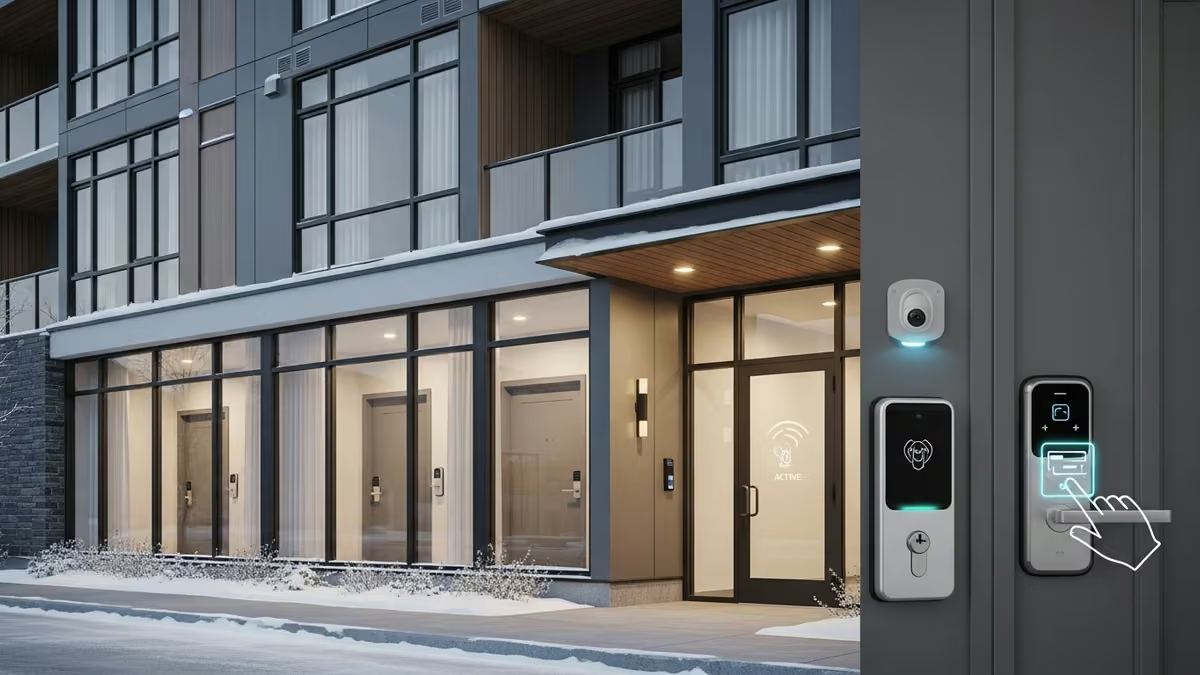
Smart locks replace traditional deadbolts on individual unit doors and common area entrances. Residents unlock doors using mobile apps, PIN codes, or proximity cards. These systems are ideal for buildings where you want to maintain individual unit autonomy while centralizing management. Smart locks integrate with your building’s WiFi and can send alerts when doors are unlocked or if someone attempts unauthorized entry.
Card and Credential-Based Systems
Traditional access card systems issue proximity cards or key fobs to residents and staff. Card readers at entry points authenticate credentials and grant or deny access. While less convenient than mobile apps, card systems are reliable, work offline, and are familiar to most users. Many buildings use hybrid approaches—cards for primary access, mobile apps as a secondary option.
Biometric Access Control
Fingerprint, facial recognition, or iris scanning systems provide the highest security level. Biometric access control eliminates the risk of lost or stolen credentials and cannot be shared. However, these systems are more expensive and may raise privacy concerns among residents. They’re most common in high-security commercial buildings or luxury residential properties in Saskatchewan.
Integrated Multi-Technology Systems
The most effective modern access control systems for multi-unit buildings combine multiple technologies. Residents might use mobile apps as their primary method, with backup PIN codes and physical cards available. This redundancy ensures access is always available, even if one system fails or a resident forgets their phone.
Key Features to Look for in an Access Control System
Scalability and Flexibility
Your building may expand, or you may want to add access control to additional entry points. Choose a system that grows with your needs without requiring complete replacement. The best access control systems use modular architecture that allows you to add readers, locks, and software licenses incrementally.
Integration with Security Ecosystem
Access control should work seamlessly with your security cameras, alarm systems, intercoms, and emergency protocols. When someone enters the building, the system should automatically trigger camera recording and log the event. If an alarm is triggered, the system should know who was in the building at that time.
Mobile App and Remote Management
Property managers should be able to manage access from anywhere—granting emergency access to contractors, monitoring entry activity, and responding to security alerts from their phone. A robust mobile app and cloud-based dashboard are essential for modern property management.
Offline Functionality and Backup Power
Internet outages happen. Your access control system should continue functioning if your WiFi goes down. Look for systems with local processing capability and battery backup on electronic locks. This ensures residents can always access their units, even during emergencies.
User-Friendly Interface
Both property managers and residents need to understand how to use the system. Overly complex interfaces lead to support calls and frustration. The best systems have intuitive dashboards, clear instructions, and responsive customer support.
Audit Trails and Reporting
Detailed logs of every access event are critical for security and accountability. Your system should generate reports showing who accessed which areas and when, with the ability to export data for investigations or insurance purposes.
How Access Control Systems Work in Practice
Understanding the workflow of a modern access control system helps you evaluate whether it meets your building’s needs.
Credential Issuance
When a new resident moves in, the property manager issues credentials—typically a mobile app login, a physical card, or both. The system stores the resident’s identity and assigns permissions (e.g., access to their unit and common areas, but not the roof or mechanical rooms).
Authentication and Entry
When the resident approaches a controlled door, they present their credential—tapping their phone, swiping a card, or entering a PIN. The reader communicates with the central system (or processes locally if offline) to verify the credential is valid and the user has permission to access that area at that time.
Access Grant or Denial
If the credential is valid, the electronic lock receives a signal to unlock. The door opens, and the system logs the access event. If the credential is invalid or the user lacks permission, the lock remains secured and an alert may be sent to the property manager.
Logging and Monitoring
Every access event is recorded in the system’s database with timestamp, user identity, location, and result. Property managers can review this data in real-time through the management dashboard or generate reports for security audits.
Access Control Systems in Saskatchewan: Local Considerations
Saskatchewan’s climate, building codes, and rental market create specific requirements for access control systems in multi-unit buildings.
Cold Weather Performance
Saskatchewan winters are harsh. Electronic locks and readers must function reliably in extreme cold. Look for systems rated for temperatures well below -20°C. Battery-powered devices need sufficient capacity to survive extended cold periods without maintenance. Wireless systems must maintain strong signal strength even when snow and ice affect antenna performance.
Building Code Compliance
Saskatchewan’s National Building Code compliance requires that emergency exits remain accessible. Your access control system must allow occupants to exit without credentials during emergencies, even if power is lost. This is non-negotiable and must be verified during system design and installation.
Rental Market Expectations
In Saskatoon and Regina, modern renters increasingly expect keyless entry and mobile app access. Buildings without these features may struggle to attract quality tenants. Conversely, buildings with state-of-the-art access control systems can differentiate themselves and justify premium rents.
Internet Reliability
While Saskatchewan has good internet coverage in urban areas, rural properties may experience connectivity challenges. Choose a system that functions reliably even with intermittent internet and can synchronize data when connection is restored.
Implementation: From Design to Installation
Implementing an access control system in a multi-unit building requires careful planning and professional execution.
Assessment and Design Phase
A qualified system integrator evaluates your building’s layout, identifies all access points that need control, and designs a system architecture that meets your security goals and budget. This includes assessing network infrastructure, power requirements, and integration with existing systems.
Hardware Installation
Electronic locks, readers, and network infrastructure are installed at each controlled access point. This may require coordination with residents, especially if work occurs during occupied hours. Professional installers ensure all devices are properly mounted, wired, and tested.
Software Configuration
The management software is configured with your building’s structure, resident information, and access policies. This is where the system’s flexibility shines—you can create different access levels for residents, staff, contractors, and emergency personnel.
User Training and Rollout
Property managers and residents need training on how to use the system. A phased rollout—starting with common areas, then expanding to individual units—helps identify issues and allows users to adapt gradually. Clear documentation and responsive support are essential during this phase.
Ongoing Support and Maintenance
After installation, your system requires regular maintenance—firmware updates, battery replacements, credential reissuance, and troubleshooting. A reliable service provider offers 24/7 support and proactive monitoring to prevent issues before they affect residents.
Cost Considerations for Multi-Unit Buildings
The cost of implementing access control systems for multi-unit buildings varies widely based on system complexity, building size, and integration requirements. Understanding the cost structure helps you make informed decisions.
Initial Hardware and Installation
Expect to invest $500–$2,000 per access point (door) depending on lock type and reader technology. A 50-unit building with 60 controlled access points might invest $30,000–$120,000 in hardware and installation. This is a significant upfront cost, but it’s a one-time investment that adds value to your property.
Software and Licensing
Most modern systems use cloud-based management software with monthly or annual licensing fees. Budget $50–$200 per month depending on the number of users and features. Some systems charge per-door or per-user, so clarify the pricing model before committing.
Ongoing Maintenance and Support
Plan for annual maintenance contracts ($2,000–$5,000 per year) that include firmware updates, battery replacements, and technical support. This ensures your system remains secure and functional throughout its lifespan.
Return on Investment
While the upfront cost is substantial, the ROI is compelling. Reduced rekeying costs, improved tenant retention, higher rental rates, lower insurance premiums, and enhanced security all contribute to payback within 3–5 years. Additionally, modern access control systems increase property value and appeal to potential buyers or investors.
Common Challenges and How to Overcome Them
Resident Resistance to Change
Some residents may resist new technology, especially if they’ve used traditional keys for years. Overcome this through clear communication about benefits, hands-on training, and responsive support. Offering multiple access methods (app, card, PIN) gives residents choices and reduces friction.
System Integration Complexity
Integrating access control systems with existing security infrastructure can be technically challenging. Work with experienced system integrators who understand your building’s specific setup and can ensure seamless integration without disrupting current operations.
Credential Loss and Replacement
Residents will lose access cards or forget PIN codes. Your system should have simple processes for credential replacement and temporary access. Mobile app-based systems reduce this issue since residents always have their phone.
Power and Connectivity Failures
Internet outages and power failures are inevitable. Ensure your system has battery backup on all locks and local processing capability so access continues even during outages. Test backup systems regularly to verify they function when needed.
The Future of Access Control in Multi-Unit Buildings
Technology is rapidly evolving, and access control systems are becoming more sophisticated and integrated.
AI and Predictive Analytics
Next-generation systems use artificial intelligence to detect unusual access patterns and alert property managers to potential security threats. Machine learning algorithms can identify when someone is attempting to gain unauthorized access or when a credential has been compromised.
Mobile-First Architecture
The future of access control is mobile. Residents expect to unlock doors with their smartphone, grant temporary access to guests through an app, and receive real-time notifications of access events. Systems designed with mobile-first architecture are more intuitive and future-proof.
Integration with Smart Building Ecosystems
Access control is becoming part of broader smart building systems that include climate control, lighting, energy management, and occupancy monitoring. Integrated systems provide better security, efficiency, and resident experience.
Blockchain and Decentralized Security
Emerging blockchain-based access control systems offer enhanced security and transparency. These systems create immutable records of access events and eliminate single points of failure, making them attractive for high-security applications.
Choosing the Right Partner for Your Access Control System
Implementing an effective access control system for your multi-unit building requires partnering with experienced professionals who understand both the technology and your specific needs.
Look for Proven Expertise
Choose a system integrator with documented experience designing and installing access control systems in multi-unit residential buildings. Ask for references from similar properties in Saskatchewan and verify their track record.
Verify Local Knowledge
A partner familiar with Saskatchewan’s climate, building codes, and rental market will design systems optimized for local conditions. They’ll understand cold-weather performance requirements, emergency egress regulations, and what features appeal to Saskatchewan tenants.
Ensure Comprehensive Support
Your partner should offer 24/7 technical support, proactive system monitoring, regular maintenance, and training for your staff. The relationship shouldn’t end at installation—ongoing support is critical for long-term success.
Demand Transparency on Costs
Understand the complete cost structure—hardware, installation, software licensing, and ongoing support. Avoid partners who hide costs or use unclear pricing models. A reputable integrator provides detailed quotes and explains what’s included.
Prioritize System Flexibility
Your building’s needs will evolve. Choose a partner who designs systems with flexibility and scalability in mind. The system should grow with your building without requiring complete replacement.
Ready to Secure Your Multi-Unit Building?
Modern access control systems for multi-unit buildings in Saskatchewan are no longer luxury features—they’re essential infrastructure that enhances security, improves operations, and increases property value. Whether you manage a small apartment building or a large residential complex, the right system can transform how you operate and how residents experience your property.
At Yanke Digital, we specialize in designing and installing custom access control systems tailored to your building’s unique needs. We understand Saskatchewan’s climate and regulatory environment, and we’re committed to delivering systems that are secure, reliable, and user-friendly. Our team handles everything from initial assessment and design through installation, configuration, and ongoing support.
If you’re ready to upgrade your building’s security and operations, contact Yanke Digital today for a consultation. We’ll assess your current setup, discuss your goals, and design a system that meets your needs and budget. You can also learn more about our smart home and commercial security solutions to see how we help properties across Saskatchewan.
Don’t let outdated security systems hold back your property. Modern access control systems are an investment in your building’s future—and your residents’ peace of mind.