
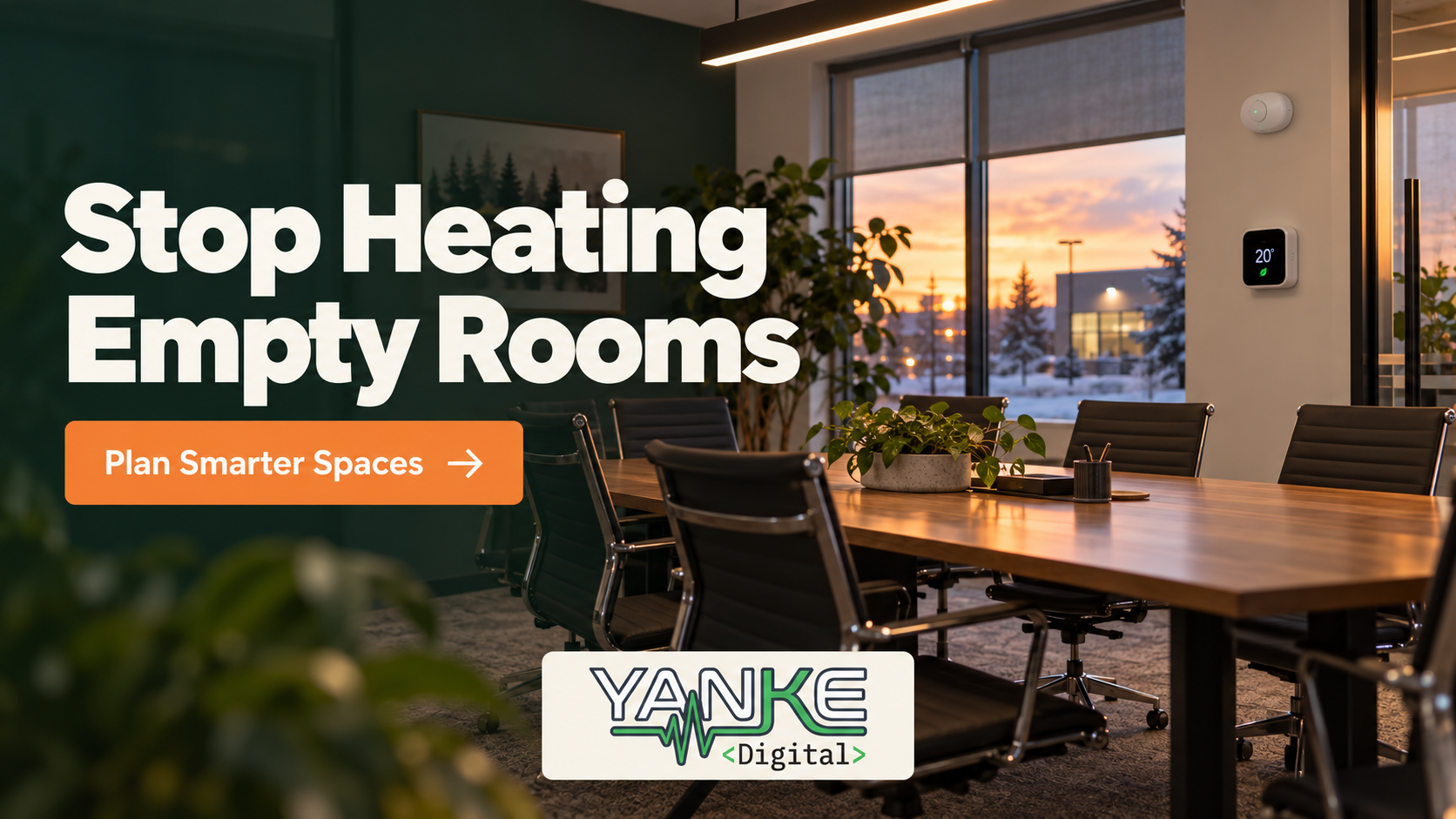
You’re heating and lighting an empty building every night.
It’s an easy thing to miss. The last person leaves, and the building carries on as if the workday never ended. Lights in the back hallway. A thermostat holding a comfortable temperature for nobody. A storage room heated to office standards.
Automation addresses this directly. When lighting and climate respond to schedules, occupancy and actual conditions, the building stops spending energy on empty space. You don’t have to rely on someone remembering to walk through and switch everything off.
The short version: the biggest waste usually isn’t during business hours. It’s in the hours no one is there, and in rooms no one is using.
But there’s a reason many energy projects disappoint even when the technology is sound. It comes down to something people rarely plan for, and we’ll come back to it.
Where the waste usually hides
Every building is different, but the same patterns show up often:
- After-hours lighting: Interior lights left on overnight or through the weekend.
- Fixed thermostat settings: Climate held at daytime comfort levels around the clock.
- Rarely used rooms: Boardrooms, storage areas and washrooms lit and conditioned as if they’re always occupied.
- Seasonal drift: Schedules set once and never adjusted when hours change.
- Manual overrides that stick: Someone bumps the heat for an early meeting and it stays that way for weeks.
None of these feels dramatic on a given day. Over a Saskatchewan winter, they add up.
The building blocks of commercial energy automation
You don’t need a huge system to make progress. The common pieces are:
- Scheduled lighting scenes that follow your actual hours, with exterior and security lighting kept separate.
- Occupancy and environmental sensors that know when a space is in use and what the conditions are, including temperature and humidity.
- Smart climate control that moves to an unoccupied setting after hours and returns to comfort before staff arrive.
- Automated shades that help manage sun and heat in rooms that get strong light.
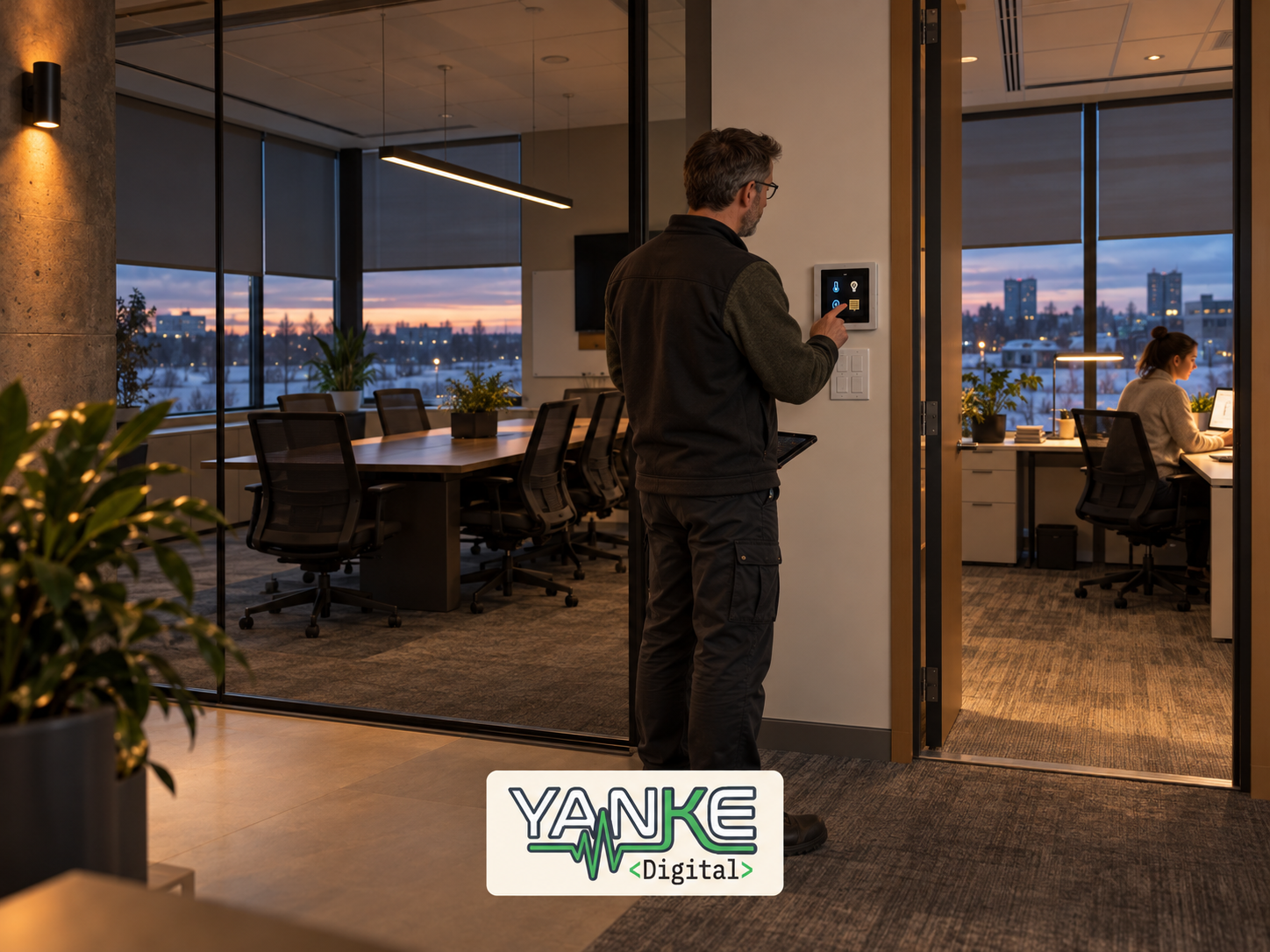
- One place to see and adjust it all, so changes don’t require a site visit.
We work with your existing heating and cooling equipment where it’s compatible. Yanke Digital handles the controls and sensors, not mechanical HVAC repair, so if your equipment needs service, your HVAC contractor is the right call.
A simple way to start
If you’re not sure where to begin, try this:
- Walk the building an hour after closing. Note every light that’s on and every room that feels warm.
- Check your thermostats. Are they on schedules? Do those schedules match your current hours?
- List the rooms that are used only part of the day.
- Ask staff where they’re uncomfortable. Comfort complaints often point to where the system is working against itself.
That walk-through alone usually turns up a handful of easy wins. We won’t put a number on the savings, because it depends heavily on your building, equipment and habits, but cutting energy use in empty spaces is about as sensible a starting point as there is.
Why good automation gets switched off
Here’s the part we promised. The most common reason energy automation fails isn’t the hardware. It’s that the system fights the people in the building.
Lights shut off on someone working late. The heat drops before the last meeting ends. A sensor doesn’t see someone sitting still at a desk. Each small annoyance leads to an override, then a workaround, and eventually someone disables the schedule entirely. The building goes right back to heating and lighting itself for nobody.
The fix is designing for real use: sensible grace periods, easy temporary overrides that expire on their own, sensors placed where people actually sit, and schedules built around how your business runs, not a generic template. Then it’s testing those settings with the people who use the space, and adjusting after a few weeks.
Automation that respects people stays on. Automation that doesn’t gets unplugged.
How Yanke Digital approaches energy automation
Yanke Digital helps businesses across Saskatoon and Saskatchewan put lighting, climate and sensors to work on a schedule that fits. People first, technology second.
We start with what you have, reviewing your building, existing controls, wiring and the comfort complaints your team already knows by heart. We make the scope clear, covering equipment, compatibility, installation and pricing together, so the changes with the most impact come first. You don’t have to do everything at once.
Then we connect it and test it against your real hours, adjust what needs adjusting, and walk your team through the controls so overrides are simple and temporary. Ongoing support is available as your needs change.
Stop paying to heat and light empty rooms
Call 1-888-698-8001 to talk it through, or build a starting point with our free online project planner. No contact details required. Learn more about our commercial services.