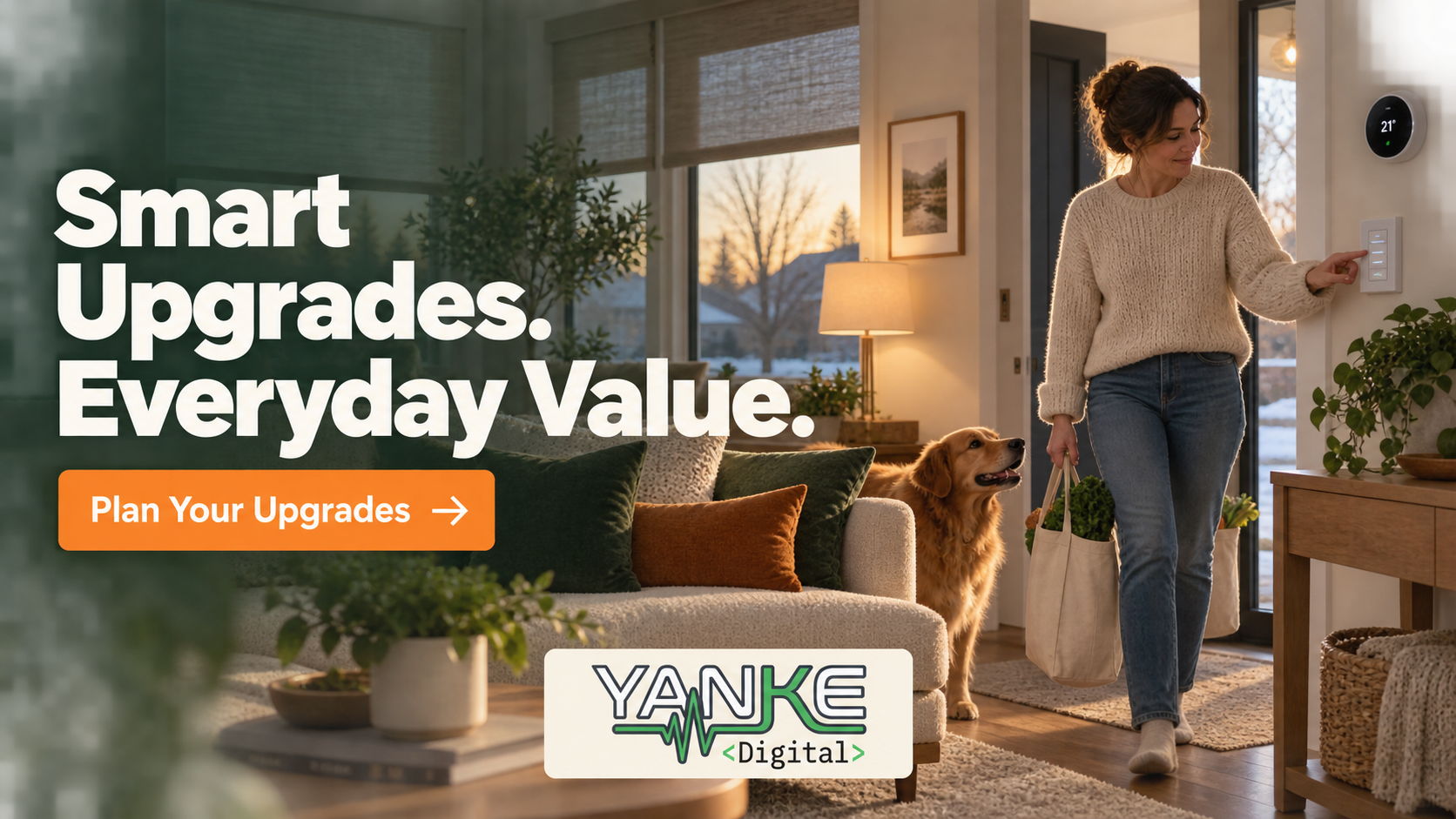
Will a smart home raise your home’s value, or just your power bill?
The honest answer: it depends on what you install and why. A smart home isn’t a guaranteed boost to your sale price, and anyone who promises a specific return is guessing. But the right technology can make a home easier to live in, help you use energy more carefully, and protect it from expensive problems.
The value usually shows up in three places: how the home feels to live in, what it costs to run, and what it’s protected from. Resale appeal is a fourth, but it’s the least predictable.
There’s also a quieter factor that decides whether any of this pays off. It isn’t the price of the devices. We’ll come back to it.
Value you live with every day
Start with the return that’s easiest to see: comfort and convenience.
- Lights that come on as you walk in with groceries
- A thermostat that warms the house before you wake up, not all night
- Doors you can lock from bed, or unlock for a family member who forgot their key
- Shades that close on hot afternoons without anyone remembering
None of this shows up on an appraisal. But it’s the reason most people are glad they did it. If a feature makes your day smoother, it’s earning its keep.
Energy: where smart tech can help, and where it can’t
Saskatoon winters are long and cold, and heating is a real part of household costs. Smart climate control can help by heating the house when you’re home and easing off when you’re not. Zoning, schedules and occupancy sensors can reduce waste in rooms nobody is using.
Lighting can help too. Automations that switch lights off in empty rooms, or dim them in the evening, cut down on hours of unnecessary use.
But be realistic. Smart devices use a little power themselves, and they only save energy if they’re set up well and actually used. A smart thermostat on a manual schedule that nobody understands won’t do much. The savings come from good configuration, not just the hardware.
Protection: the value you hope never to see
This is where smart technology can matter most, and it’s often overlooked.
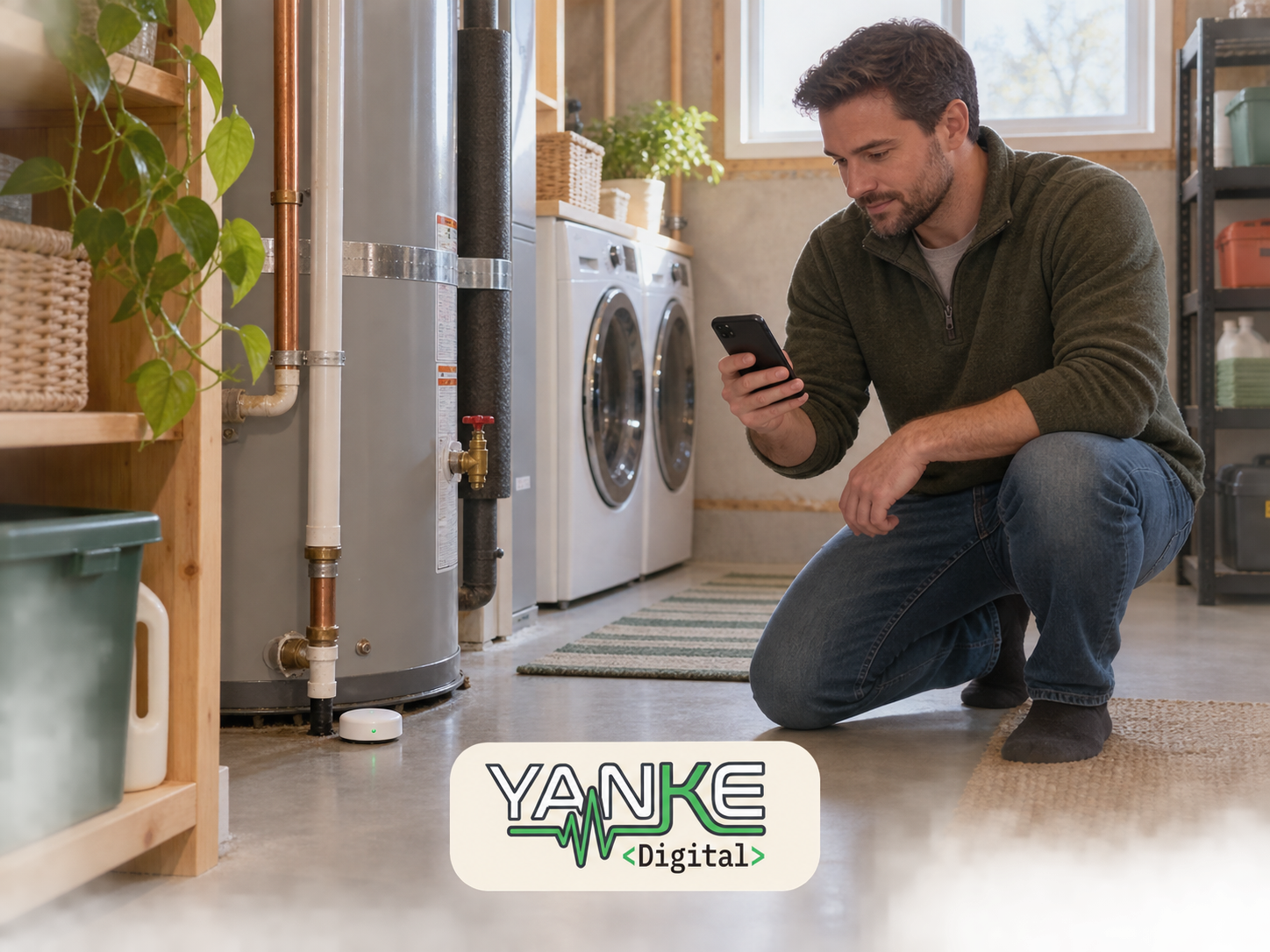
- Water detection. Sensors near the water heater, washing machine, sump pit and under sinks can alert you to a leak early. Some systems can shut off the water automatically.
- Freeze and temperature alerts. If the furnace quits while you’re away in January, knowing quickly matters.
- Security cameras and access control. Knowing who came and went, and being able to check in from anywhere.
Water damage and frozen pipes can be costly and disruptive. Catching a problem early is a very different outcome from finding it days later. Some insurers recognize leak detection or monitoring, but policies vary, so check with your insurer about what applies to you.
Does it help when you sell?
Sometimes. Buyers increasingly expect good WiFi coverage, a smart thermostat or a video doorbell. A well-organized network, a tidy equipment rack and solid wiring can be selling points, especially in a newer or renovated home.
What doesn’t help is a tangle of devices tied to someone else’s accounts, with no instructions and half of them offline. To a buyer, that’s not a feature. It’s a project.
If resale is on your mind, focus on infrastructure and widely used features, and make sure everything can be handed over cleanly.
The factor that decides whether it pays off
So what’s the quiet factor we mentioned at the start?
It’s whether the system actually gets used. A smart home only returns value if the people in it understand it and trust it. If the routines are confusing, the app is buried, or the WiFi drops the devices every few days, people stop relying on it. The lights go back to manual. The thermostat gets overridden. The leak sensor’s battery dies and nobody notices.
The real return comes from a system that’s planned around your household, set up properly, and simple enough that everyone uses it without thinking. That’s less about which brand you buy and more about how it’s put together.
A simple way to judge any upgrade
Before adding something, ask:
- Does it solve a real, recurring frustration?
- Will it reduce waste or protect against a costly problem?
- Will everyone in the house be able to use it?
- Does the network support it reliably?
- Can it be handed over if you sell?
If the answer is yes to most of these, it’s probably worth it.
Getting real value with Yanke Digital
We’re a Saskatoon system integrator, and we build smart homes around how people actually live. We start by looking at your home, your existing equipment and wiring, and the things that frustrate you, then work out what can stay. We talk through equipment, compatibility, installation and pricing together, so the upgrades with the most practical value come first.
Then we connect and test everything, including the WiFi it relies on, and walk your household through how to use it. Ongoing support is available if you want someone to call.
You can start with one priority, like water detection, climate control or better WiFi, and build from there.
Talk it through
Curious which upgrades make sense for your home? Call 1-888-698-8001, or try our free project planner to map out a starting point. You don’t need to share contact details to use it.
See more on our smart home services page.