
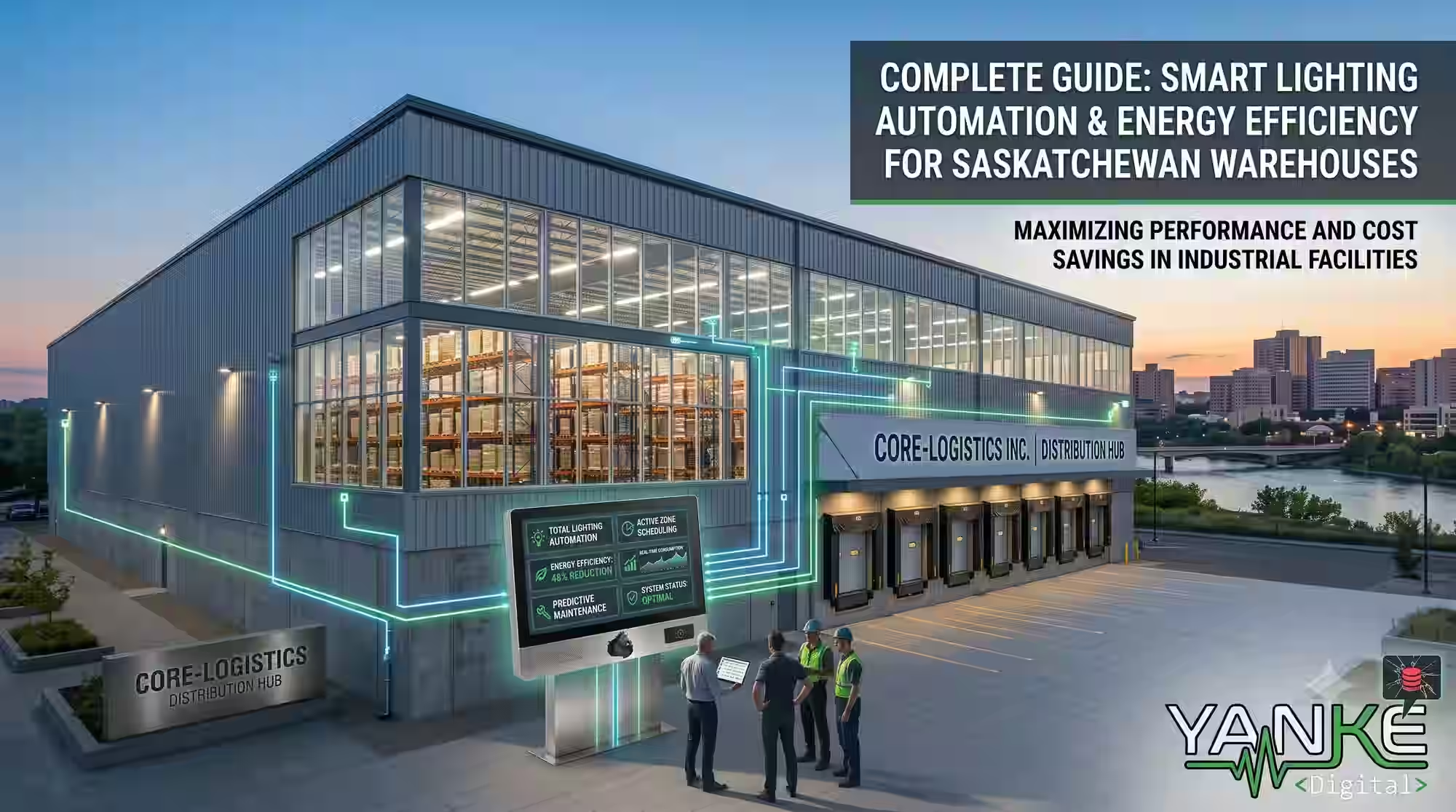
Warehouse operators across Saskatchewan face mounting pressure to reduce operational costs while maintaining safe, productive work environments. Lighting automation and energy efficiency represent one of the most cost-effective solutions available today. In fact, lighting typically accounts for 65% of warehouse energy demand—making it a prime target for optimization. Modern occupancy-based lighting control systems can reduce energy consumption by up to 87%, translating to significant savings on utility bills and carbon footprint reduction.
This guide explores how Saskatchewan warehouse operators can leverage smart lighting automation to cut costs, improve safety, and future-proof their facilities. Whether you manage a small distribution center or a large industrial complex, understanding these technologies is essential for competitive operations.
Why Lighting Automation Matters for Saskatchewan Warehouses
Warehouses operate around the clock, often with inconsistent occupancy patterns. Traditional fixed lighting systems waste enormous amounts of energy in empty aisles, storage areas, and loading zones. Lighting automation energy efficiency systems respond dynamically to actual space usage, delivering light only where and when it’s needed.
Beyond cost savings, automated lighting systems deliver measurable operational benefits:
- Reduced energy consumption: Motion sensors and daylight harvesting eliminate wasted lighting hours
- Improved worker safety: Consistent, optimized lighting reduces accidents and eye strain
- Extended equipment life: Fewer operating hours mean longer LED fixture lifespans
- Simplified maintenance: Centralized control systems reduce manual adjustments and troubleshooting
- Environmental compliance: Lower carbon footprint supports sustainability goals and corporate responsibility
How Occupancy-Based Lighting Control Works
Occupancy-based lighting control is the foundation of modern warehouse energy management. These systems use motion sensors, daylight sensors, and intelligent controllers to automatically adjust lighting levels based on real-time conditions.
Motion and Presence Sensors
Advanced motion sensors detect worker presence and activity patterns. When an area is unoccupied, lights dim or turn off completely. As soon as movement is detected, the system restores full or partial illumination. This technology is particularly effective in warehouses with variable occupancy—loading docks, break rooms, storage aisles, and office spaces.
Daylight Harvesting
Daylight sensors measure natural light levels and automatically reduce artificial lighting when sufficient sunlight is available. In Saskatchewan’s seasonal climate, this feature delivers significant savings during long summer days while maintaining optimal light levels year-round.
Intelligent Dimming and Scheduling
Smart controllers allow facility managers to set custom schedules and dimming profiles for different zones. High-traffic areas maintain brighter levels, while low-activity zones operate at reduced brightness. Time-based scheduling ensures lights align with actual operational hours.
LED Technology: The Foundation of Warehouse Energy Efficiency
LED lighting is non-negotiable for modern warehouse energy management. Compared to traditional fluorescent or HID fixtures, LEDs deliver superior efficiency, longer lifespan, and better light quality—all critical for warehouse operations.
- Energy efficiency: LEDs consume 50-75% less energy than traditional fixtures
- Longevity: 50,000+ hour lifespans reduce replacement frequency and maintenance costs
- Instant on: No warm-up time, unlike fluorescent or HID systems
- Dimming capability: LEDs dim smoothly without efficiency loss, enabling advanced control strategies
- Light quality: Superior color rendering improves visibility and worker safety
The combination of LED fixtures with occupancy-based control systems creates a powerful efficiency multiplier. A warehouse that upgrades to LEDs and implements warehouse lighting automation can expect total energy reductions of 70-87%.
Industrial Facility Energy Savings: Real-World Impact
The financial impact of industrial facility energy savings through lighting automation is substantial. Consider a typical 50,000 sq ft warehouse operating 16 hours daily:
- Annual lighting energy cost (traditional system): ~$18,000
- Annual lighting energy cost (LED + automation): ~$2,500
- Annual savings: ~$15,500
- 5-year savings: ~$77,500
- ROI timeline: 2-3 years (accounting for installation and equipment costs)
These figures vary based on facility size, current lighting infrastructure, local electricity rates, and operational hours. However, the pattern is consistent: automated lighting systems pay for themselves quickly while delivering ongoing operational benefits.
Motion-Activated Lighting for Warehouses: Practical Applications
Motion-activated lighting warehouses benefit from zone-based control strategies tailored to specific operational areas. Different zones require different automation approaches:
Loading Docks and Receiving Areas
High-traffic zones with variable occupancy. Motion sensors trigger full illumination when trucks arrive or workers are present. Lights dim or turn off during idle periods. Daylight harvesting reduces energy use during daytime operations.
Storage Aisles and Racking Areas
Typically low-occupancy zones with periodic activity. Aisle-specific motion sensors activate lights only when workers are picking or restocking. This zone-based approach delivers dramatic energy savings in large storage areas.
Administrative and Break Areas
Predictable occupancy patterns allow time-based scheduling combined with occupancy sensors. Lights activate during shift hours and turn off automatically after hours, eliminating forgotten-light scenarios.
Parking Lots and Exterior Spaces
Motion sensors and dusk-to-dawn controls optimize outdoor lighting. Lights activate only when vehicles or personnel approach, reducing nighttime energy consumption while maintaining security.
Warehouse Energy Management: Integration with Smart Building Systems
Modern warehouse energy management extends beyond lighting. The most effective systems integrate lighting automation with HVAC, security, access control, and monitoring systems into a unified smart building platform.
At Yanke Digital, we design custom smart home and commercial automation solutions that bring all building systems into one intelligent ecosystem. For warehouses, this means:
- Unified control dashboard: Facility managers monitor and adjust all systems from one interface
- Occupancy-driven automation: Lighting, climate, and security respond to actual building usage patterns
- Real-time energy monitoring: Track consumption by zone and identify optimization opportunities
- Predictive maintenance: System alerts notify managers of equipment issues before failures occur
- Mobile access: Manage systems remotely via smartphone or tablet
Implementation Strategy: Getting Started with Lighting Automation
Upgrading to automated lighting systems doesn’t require a complete facility overhaul. A phased approach allows you to prioritize high-impact areas and manage costs effectively.
Phase 1: Energy Audit and Assessment
Begin with a professional energy audit to identify current consumption patterns, inefficiencies, and optimization opportunities. This assessment reveals which zones offer the highest ROI potential and informs your implementation roadmap.
Phase 2: High-Impact Zone Upgrades
Start with areas that consume the most energy or have the most variable occupancy. Loading docks, storage aisles, and parking lots typically deliver the fastest payback. Upgrading these zones first demonstrates value and builds momentum for facility-wide implementation.
Phase 3: System Integration and Optimization
Once initial zones are operational, expand the system to remaining areas and integrate with other building systems. This phase includes fine-tuning sensor settings, establishing optimal schedules, and training staff on system operation.
Phase 4: Monitoring and Continuous Improvement
Ongoing monitoring ensures systems perform as designed. Regular reviews of energy data reveal optimization opportunities and identify any equipment issues. Most facilities achieve additional 10-15% savings through continuous refinement.
Choosing the Right Lighting Automation System for Your Warehouse
Not all lighting automation systems are created equal. When evaluating solutions, consider these critical factors:
- Scalability: Can the system grow as your facility expands or changes?
- Sensor accuracy: Do motion and daylight sensors perform reliably in your specific environment?
- Integration capability: Will the system work with your existing building infrastructure?
- User interface: Can facility staff easily understand and adjust settings?
- Support and maintenance: Does the provider offer ongoing technical support and system optimization?
- Future-proof design: Is the system flexible enough to accommodate new technologies and operational changes?
Yanke Digital specializes in custom design and integration of smart building systems for warehouses, commercial facilities, and multi-tenant properties across Saskatchewan. We work with industry-leading platforms and devices to create solutions tailored to your specific operational needs.
Regulatory Compliance and Incentive Programs
Saskatchewan and Canadian federal programs offer incentives for energy efficiency upgrades. Many utilities provide rebates for LED conversions and lighting automation installations, reducing your upfront investment.
Additionally, energy-efficient facilities may qualify for:
- Provincial energy efficiency tax credits
- Utility company rebate programs
- Federal green building certifications
- Improved property valuations for commercial real estate
A professional system integrator can help you identify available incentives and ensure your installation meets all regulatory requirements.
Common Challenges and How to Overcome Them
While lighting automation delivers substantial benefits, implementation can present challenges. Understanding these issues helps ensure successful deployment:
Sensor False Triggers and Dead Zones
Improperly positioned sensors may trigger lights unnecessarily or fail to detect occupancy in certain areas. Solution: Professional installation with careful sensor placement and calibration ensures reliable performance across all zones.
Worker Resistance to Change
Staff accustomed to traditional lighting may find automated systems frustrating if not properly configured. Solution: Thorough training and user-friendly interfaces help workers understand and trust the system. Adjustable settings allow customization for different preferences.
Integration Complexity
Connecting lighting automation with existing building systems can be technically challenging. Solution: Partner with experienced system integrators who understand your facility’s infrastructure and can design seamless integration.
Maintenance and Support
Without proper ongoing support, systems may drift out of optimal performance. Solution: Establish a maintenance plan with your system provider, including regular monitoring, adjustments, and equipment servicing.
The Future of Warehouse Lighting Automation
Lighting automation technology continues to evolve rapidly. Emerging trends include:
- AI-powered optimization: Machine learning algorithms learn occupancy patterns and automatically optimize lighting schedules
- Visible light communication: Lighting fixtures transmit data and positioning information, enabling advanced indoor navigation and asset tracking
- Human-centric lighting: Dynamic color temperature adjustments support worker circadian rhythms and productivity
- IoT integration: Lighting systems communicate with inventory management, security, and environmental systems for comprehensive facility intelligence
- Renewable energy integration: Smart lighting systems coordinate with solar and battery storage for maximum efficiency
Investing in a future-proof lighting automation system today ensures your warehouse can adapt to these emerging technologies without requiring complete replacement.
Getting Professional Help: Why System Integration Matters
While some warehouse operators attempt DIY lighting upgrades, professional system integration delivers superior results. Experienced integrators bring:
- Technical expertise: Deep knowledge of lighting technologies, control systems, and integration best practices
- Site-specific design: Custom solutions tailored to your facility’s unique layout, operations, and challenges
- Quality installation: Professional installation ensures optimal sensor placement, wiring, and system configuration
- Ongoing support: Continuous monitoring, maintenance, and optimization keep systems performing at peak efficiency
- Compliance assurance: Proper installation meets all electrical codes and safety standards
Yanke Digital provides expert integration and ongoing support for smart building systems across Saskatchewan. Our team designs custom solutions that simplify complex technology and deliver measurable results.
Ready to Transform Your Warehouse with Lighting Automation?
Lighting automation and energy efficiency represent a proven path to reduced operational costs, improved safety, and sustainable warehouse operations. Whether you’re managing a small distribution center or a large industrial complex, the time to act is now.
Yanke Digital specializes in designing and installing custom smart building solutions for warehouses, commercial facilities, and multi-tenant properties throughout Saskatchewan. We’ll work with you to assess your current systems, identify optimization opportunities, and implement solutions that deliver measurable results.
Schedule a consultation with our team today. Let’s discuss how lighting automation can reduce your energy costs, improve worker safety, and future-proof your facility. Call us at 1-888-698-8001 or visit our website to get started.
Your warehouse’s energy efficiency transformation begins with a single conversation. We’re ready to help.