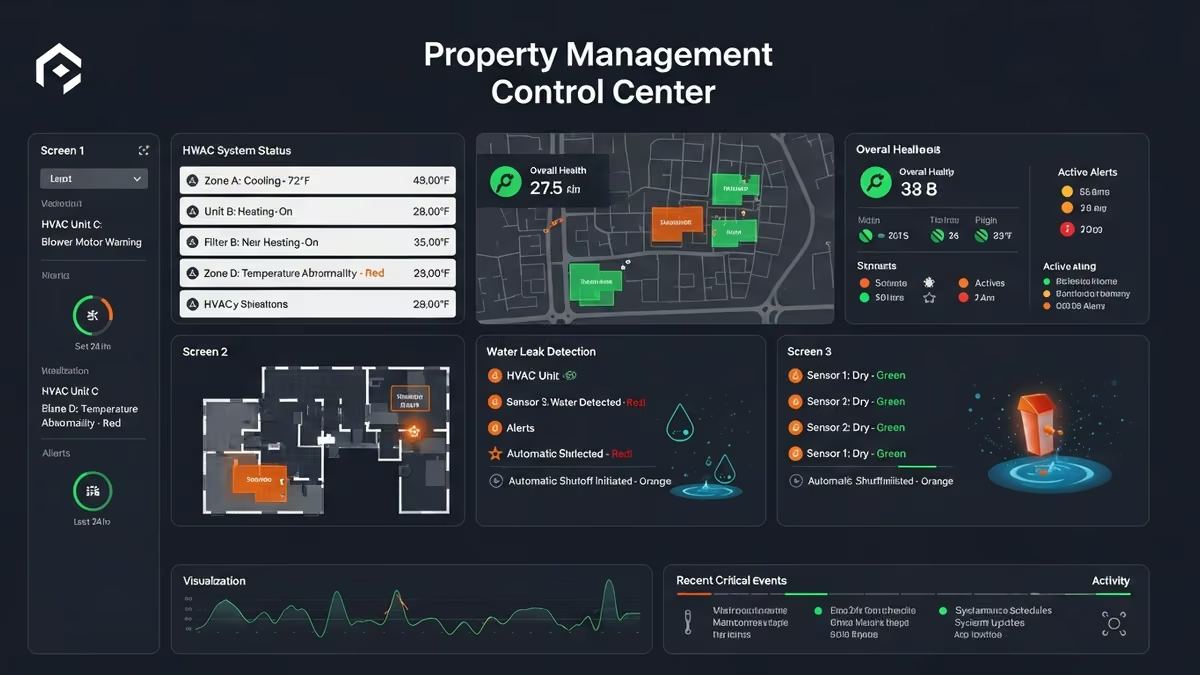
Smart building maintenance powered by predictive alerts is transforming how property managers protect their assets and budgets. Instead of waiting for equipment to fail, modern smart building maintenance systems monitor your HVAC, plumbing, electrical, and structural systems in real time—alerting you to problems before they become costly emergencies. For property managers overseeing residential, multi-family, or commercial properties, predictive maintenance technology delivers measurable ROI by reducing unplanned downtime, extending equipment life, and keeping tenants satisfied.
What Is Smart Building Maintenance with Predictive Alerts?
Smart building maintenance combines IoT sensors, building management systems (BMS), and AI-powered analytics to monitor equipment health continuously. Predictive alerts notify property managers of potential failures before they happen—not after a tenant loses heat in winter or water damage occurs.
Unlike reactive maintenance (fixing things after they break) or scheduled maintenance (replacing parts on a calendar), predictive maintenance uses real-world equipment data to determine exactly when service is needed. This approach is particularly valuable for property managers juggling multiple buildings, limited maintenance staff, and tight budgets.
How Predictive Alerts Work in Smart Buildings
- Continuous Monitoring: Sensors track temperature, humidity, pressure, vibration, and electrical consumption across all major systems
- Data Analysis: AI algorithms compare real-time data against baseline performance and historical patterns
- Early Warning: The system flags anomalies—rising compressor temperature, unusual vibration patterns, declining efficiency—before failure occurs
- Actionable Alerts: Property managers receive prioritized notifications with recommended actions and urgency levels
- Integration: Alerts feed into your existing work order and maintenance management systems for seamless response
Why Smart Building Maintenance Matters for Property Managers
Property managers face constant pressure: keep costs down, maintain tenant satisfaction, comply with regulations, and ensure equipment reliability. Smart building maintenance predictive alerts address all four challenges simultaneously.
Cost Savings Through Prevention
Emergency repairs are expensive. A failed HVAC compressor in July or a burst pipe in January can cost thousands in emergency service calls, parts, and tenant compensation. Predictive maintenance catches problems early—when repairs are planned, scheduled, and significantly cheaper. Studies show predictive maintenance reduces maintenance costs by 25–30% compared to reactive approaches.
Extended Equipment Life
Equipment fails faster when operating under stress. A compressor running inefficiently due to low refrigerant wears out faster than one maintained at optimal conditions. Smart building maintenance keeps systems operating at peak efficiency, extending equipment lifespan by years and deferring expensive replacements.
Tenant Satisfaction & Retention
Tenants expect reliable climate control, hot water, and secure access. Predictive alerts prevent the service interruptions that drive complaints and lease non-renewals. Proactive maintenance demonstrates professional property management and justifies competitive rental rates.
Compliance & Risk Management
Many jurisdictions require documented maintenance schedules for HVAC, fire suppression, and electrical systems. Smart building maintenance creates an auditable record of all monitoring, alerts, and actions—simplifying compliance audits and reducing liability exposure.
Key Systems That Benefit from Predictive Maintenance Alerts
HVAC Systems
HVAC is often the largest energy consumer and most critical system in any building. Predictive alerts monitor compressor health, refrigerant levels, filter pressure, and thermostat accuracy. Early warnings about declining efficiency or rising discharge temperatures allow you to schedule maintenance before a complete failure.
Plumbing & Water Systems
Water damage is one of the costliest property emergencies. Smart building maintenance includes flood detection and water monitoring systems that alert you to leaks, pressure anomalies, and temperature variations in real time. Catching a slow leak before it causes structural damage saves tens of thousands in repairs.
Electrical Systems
Electrical faults create safety hazards and downtime. Predictive monitoring tracks voltage stability, circuit load, and power quality. Alerts about unusual consumption patterns or voltage fluctuations help prevent fires, equipment damage, and service interruptions.
Fire Suppression & Safety Systems
Fire suppression systems must be reliable when needed. Smart building maintenance monitors pump pressure, valve status, and system integrity continuously. Predictive alerts ensure systems are always ready and compliant with inspection schedules.
Access Control & Security Systems
Smart locks, intercoms, and security systems are critical for tenant safety and property protection. Predictive monitoring detects battery degradation, connectivity issues, and access anomalies before they compromise security or lock tenants out of their units.
Building a Smart Building Maintenance Strategy
Step 1: Assess Your Current Systems
Start by documenting all critical equipment: HVAC units, water heaters, electrical panels, fire suppression systems, and security infrastructure. Identify which systems cause the most downtime, complaints, or emergency repairs. These are your highest-priority candidates for predictive monitoring.
Step 2: Choose Compatible Sensors & Platforms
Smart building maintenance requires sensors that integrate with your existing BMS or property management software. Look for platforms that support industry-standard protocols (Modbus, BACnet, MQTT) and work with equipment you already own. Avoid proprietary systems that lock you into one vendor.
Step 3: Define Alert Thresholds & Workflows
Not every alert requires immediate action. Work with your maintenance team to define thresholds for different alert levels: critical (immediate action), high (within 24 hours), medium (within a week), and informational (for trend analysis). Establish clear workflows for who gets notified, how they respond, and how actions are logged.
Step 4: Train Your Team
Smart building maintenance systems are only effective if your team understands them. Invest in training so maintenance staff and property managers can interpret alerts, prioritize responses, and use the system’s data to make informed decisions. Many vendors offer training as part of implementation.
Step 5: Monitor, Analyze & Optimize
After the first few months, review your alert data. Which alerts led to actual problems? Which were false positives? Use this feedback to refine thresholds and improve your maintenance strategy over time. Smart building maintenance gets smarter as your system learns your building’s unique patterns.
Smart Building Maintenance for Different Property Types
Residential Homes
Homeowners benefit from smart building maintenance through automated monitoring of HVAC, water heaters, and security systems. Predictive alerts help prevent costly emergency repairs and extend the life of major appliances. Integration with smart thermostats and leak detectors provides peace of mind and energy savings.
Multi-Family & Apartment Buildings
Multi-family properties face complex maintenance challenges: shared HVAC systems, centralized plumbing, and dozens of units with different needs. Smart building maintenance predictive alerts help property managers prioritize maintenance across the entire building, reduce emergency calls, and maintain tenant satisfaction across multiple units.
Commercial Buildings & Offices
Commercial properties demand high reliability and compliance. Smart building maintenance systems monitor energy consumption, occupancy patterns, and equipment health to optimize operations, reduce downtime, and support sustainability goals. Predictive alerts help facility managers maintain service level agreements and reduce operational costs.
Integrating Smart Building Maintenance with Your Existing Systems
One of the biggest concerns for property managers is compatibility. Will new smart building maintenance technology work with legacy equipment? The answer is usually yes—with the right integration approach.
BMS Integration
If you already have a building management system, new sensors and analytics can integrate directly into it. Modern BMS platforms support multiple data sources and can aggregate information from different manufacturers into a single dashboard.
Property Management Software Integration
Smart building maintenance alerts can feed directly into your property management software, automatically creating work orders, assigning tasks, and tracking completion. This eliminates manual data entry and ensures nothing falls through the cracks.
Custom Software Solutions
For complex properties with unique requirements, custom software design can unify data from multiple systems into a single, purpose-built platform. Yanke Digital specializes in custom software design and system integration that brings all your smart building systems together seamlessly, eliminating silos and creating one intelligent ecosystem for your property.
Common Challenges & How to Overcome Them
Alert Fatigue
Too many alerts overwhelm your team and cause important warnings to be ignored. Solution: Start with a few critical systems, define clear thresholds, and tune alerts based on real-world results. Quality over quantity.
Data Quality & Sensor Reliability
Inaccurate sensor data leads to false alerts and missed problems. Solution: Choose industrial-grade sensors, install them correctly, and perform regular calibration checks. Partner with experienced integrators who understand sensor placement and maintenance.
Integration Complexity
Connecting new smart building maintenance systems to legacy equipment can be technically challenging. Solution: Work with system integrators experienced in your building type and equipment. They can navigate compatibility issues and design solutions that work with what you have.
Cost Justification
Initial investment in sensors, software, and integration can seem high. Solution: Calculate your current emergency repair costs, equipment replacement frequency, and tenant turnover costs. Most property managers see ROI within 12–24 months through reduced emergency repairs and extended equipment life.
The Future of Smart Building Maintenance
Smart building maintenance technology continues to evolve. Emerging trends include:
- AI & Machine Learning: Systems that learn your building’s unique patterns and predict failures with increasing accuracy
- Autonomous Response: Automated adjustments to HVAC, lighting, and other systems based on predictive data—without human intervention
- Sustainability Integration: Predictive maintenance linked to energy management and decarbonization goals
- Mobile & Remote Access: Property managers monitoring and responding to alerts from anywhere, in real time
- Cybersecurity: Enhanced encryption and security protocols to protect building data and prevent system compromise
Getting Started with Smart Building Maintenance Predictive Alerts
Smart building maintenance with predictive alerts is no longer a luxury—it’s a competitive necessity for property managers who want to reduce costs, improve reliability, and keep tenants satisfied. The technology is proven, the ROI is clear, and implementation is more accessible than ever.
Whether you manage a single residential property, a multi-family complex, or a commercial building, predictive maintenance technology can transform how you maintain your assets. Start by identifying your highest-priority systems, choose compatible sensors and platforms, and partner with experienced integrators who understand your specific needs.
Yanke Digital provides custom smart building solutions including system design, integration, and ongoing support for residential, multi-family, and commercial properties across Saskatchewan. Our team specializes in bringing together security, climate control, monitoring, and maintenance systems into one intelligent ecosystem tailored to your property’s unique requirements.
Ready to Transform Your Building’s Maintenance Strategy?
Contact Yanke Digital today for a consultation. We’ll assess your current systems, identify opportunities for predictive maintenance, and design a custom solution that fits your budget and goals. Let’s turn reactive maintenance into proactive intelligence.
Call us at 1-888-698-8001 or visit our website to schedule your smart building consultation.