
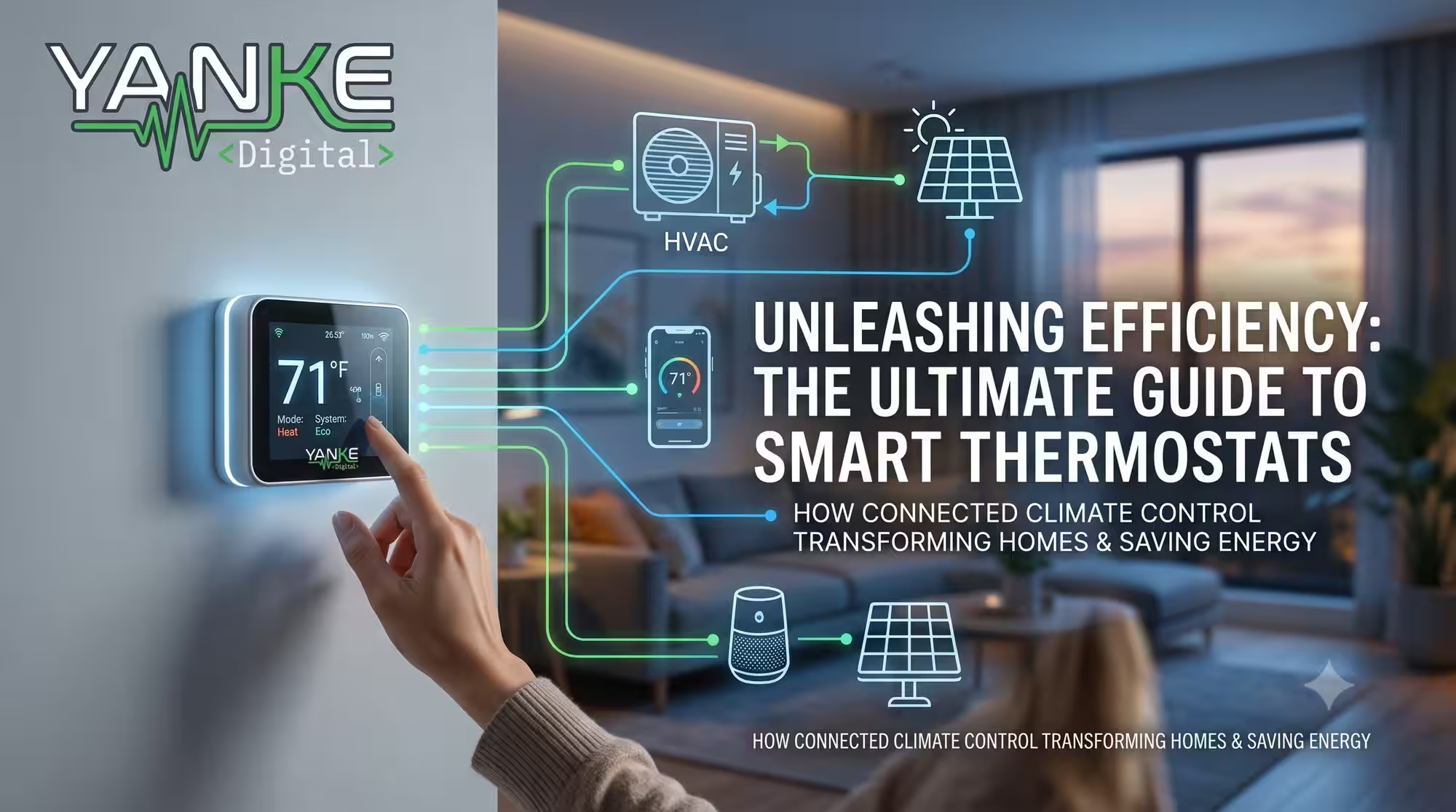
Multi-family property managers face constant pressure to reduce operational costs while maintaining tenant satisfaction. One of the most effective ways to achieve both goals is investing in smart thermostat systems. Smart thermostat ROI in multi-family buildings has become a proven strategy for lowering energy consumption, reducing HVAC costs, and improving resident comfort—often delivering payback within 2-3 years. This comprehensive guide explores how smart thermostats deliver measurable returns, what to expect from implementation, and how to maximize ROI across your entire property.
Understanding Smart Thermostat ROI in Multi-Family Properties
When property managers evaluate smart thermostat ROI, they’re looking at a straightforward calculation: upfront installation costs versus ongoing energy savings and operational efficiencies. For multi-family buildings, this equation typically favors smart thermostats within the first few years of deployment.
The average multi-family building spends 40-50% of its total energy budget on heating and cooling. Smart thermostats address this directly by:
- Reducing energy waste through occupancy-based scheduling
- Preventing temperature setpoint conflicts between units
- Enabling remote monitoring and predictive maintenance
- Providing granular data for informed operational decisions
- Automating demand-response programs for utility rebates
Industry research shows that multi-family properties implementing smart thermostat systems see energy reductions of 10-25%, translating to $500-$2,000 in annual savings per unit, depending on climate, building age, and system configuration.
Key Financial Drivers: Why Smart Thermostat ROI Works
1. Direct Energy Cost Reduction
Smart thermostats optimize heating and cooling schedules based on actual occupancy patterns rather than fixed time-based programming. In multi-family buildings where units have varying occupancy schedules, this flexibility is critical. A unit occupied only on weekends doesn’t need the same climate control as a full-time residence.
Modern smart thermostat systems learn tenant behavior and adjust setpoints automatically, reducing energy waste during unoccupied periods. This alone can cut HVAC energy consumption by 10-15% annually.
2. Reduced Maintenance & Service Calls
Predictive maintenance is a hidden ROI driver that many property managers overlook. Smart thermostats continuously monitor HVAC system performance and alert maintenance teams to potential issues before they become expensive failures.
Early detection of:
- Refrigerant leaks
- Compressor inefficiency
- Airflow obstructions
- Thermostat calibration drift
…can prevent emergency service calls that cost $500-$2,000 per incident. For a 100-unit building, avoiding just 2-3 emergency HVAC failures annually pays for a significant portion of the smart thermostat investment.
3. Utility Rebates & Demand Response Programs
Many utility providers offer rebates and incentives for multi-family buildings that implement smart climate control. In Saskatchewan and across Canada, programs like SaskPower’s commercial rebate programs can offset 20-40% of smart thermostat installation costs.
Additionally, smart thermostats enable participation in demand-response programs, where buildings reduce energy consumption during peak hours in exchange for utility credits. For multi-family properties, this can generate $1,000-$5,000 in annual rebate income.
4. Improved Tenant Retention & Satisfaction
While harder to quantify, tenant comfort directly impacts retention rates and rental rates. Buildings with superior climate control and responsive HVAC systems command premium rents and experience lower turnover. A 5% reduction in tenant turnover can save $10,000-$50,000 annually in leasing and unit turnover costs.
Calculating Smart Thermostat ROI for Your Building
To estimate your specific smart thermostat ROI, use this framework:
Step 1: Calculate Current Annual HVAC Costs
Review your utility bills for the past 12 months and identify heating/cooling expenses. For multi-family buildings, HVAC typically represents 35-50% of total energy costs.
Example: 100-unit building with $150,000 annual energy costs = $60,000-$75,000 in HVAC expenses.
Step 2: Estimate Energy Savings
Apply conservative energy reduction estimates (10-15% for most multi-family buildings):
$60,000 × 12% = $7,200 annual energy savings
Step 3: Factor in Maintenance Savings
Estimate avoided emergency service calls and extended equipment life:
2-3 prevented emergency calls × $1,000 average = $2,000-$3,000 annually
Step 4: Include Utility Rebates
Check with your local utility provider for available rebates and incentive programs. Many offer $100-$500 per unit or 20-30% of total installation costs.
Step 5: Calculate Total Installation Cost
Smart thermostat installation for multi-family buildings typically costs $150-$400 per unit, including hardware, integration, and labor. For a 100-unit building: $15,000-$40,000 total investment.
Step 6: Determine Payback Period
Total annual savings (energy + maintenance + rebates) ÷ Total installation cost = Payback period in years
Example calculation:
($7,200 energy savings + $2,500 maintenance savings + $5,000 rebates) ÷ $25,000 installation = 0.53 years (approximately 6 months to full payback, then pure savings)
Multi-Family Energy Savings: Real-World Performance
Research from the University of Toronto and industry studies on multi-unit residential buildings shows consistent results:
- Energy consumption reduction: 10-25% depending on baseline efficiency and climate
- Peak demand reduction: 15-30% during utility demand-response periods
- Thermal comfort improvement: 85-92% of tenants report improved temperature consistency
- Maintenance cost reduction: 20-35% fewer HVAC service calls
- Equipment lifespan extension: 3-5 additional years of HVAC system life
For apartment climate control specifically, smart thermostats eliminate the “thermostat wars” common in multi-unit buildings. Centralized control with individual unit overrides prevents tenants from cranking heat or AC to extreme levels, which wastes energy and creates comfort conflicts.
HVAC Automation Cost Savings: Beyond Energy Bills
HVAC automation delivers cost savings across multiple operational categories:
Labor & Operational Efficiency
Smart thermostats reduce the time maintenance staff spends on manual temperature adjustments, tenant comfort complaints, and reactive troubleshooting. Automated scheduling and remote monitoring mean fewer on-site visits and faster issue resolution.
Equipment Replacement Deferral
By optimizing HVAC runtime and reducing peak demand stress, smart thermostats extend equipment lifespan by 3-5 years. For a 100-unit building, deferring a $50,000 HVAC replacement by 4 years represents significant capital savings.
Tenant Turnover Reduction
Consistent, responsive climate control improves tenant satisfaction and reduces turnover. Lower turnover means:
- Reduced leasing commissions and marketing costs
- Lower unit turnover and renovation expenses
- More stable rental income
- Reduced vacancy periods
Tenant Comfort Control: The Satisfaction Factor
While ROI calculations focus on costs, tenant comfort is equally important for multi-family property success. Smart thermostats deliver tangible comfort improvements:
Individual Unit Control
Modern smart thermostat systems allow individual tenants to adjust temperature within a defined range while maintaining building-wide efficiency. This balance between personal control and energy optimization significantly improves satisfaction scores.
Faster Response Times
Smart systems detect temperature deviations and adjust HVAC operation automatically, eliminating the lag time of traditional thermostats. Tenants experience faster heating/cooling response and more stable indoor temperatures.
Seasonal Optimization
Smart thermostats automatically adjust setpoints and schedules based on seasonal changes, outdoor temperature, and occupancy patterns. This eliminates the need for manual seasonal adjustments and ensures optimal comfort year-round.
Implementation Strategy: Maximizing Smart Thermostat ROI
Phase 1: Assessment & Planning
Before implementation, conduct a thorough energy audit and HVAC system assessment. Identify:
- Current energy consumption patterns
- HVAC system age and condition
- Existing thermostat types and control capabilities
- Tenant occupancy patterns
- Available utility rebate programs
Phase 2: System Selection & Integration
Choose smart thermostat systems compatible with your existing HVAC infrastructure. For multi-family buildings, centralized management platforms that allow individual unit control are essential. Integration with your building management system (BMS) enables automated scheduling and data analytics.
At Yanke Digital, we specialize in custom smart home and building automation solutions that integrate seamlessly with your existing systems. Our team designs climate control systems tailored to your building’s specific needs and tenant profiles.
Phase 3: Tenant Communication & Training
Successful smart thermostat implementation requires tenant buy-in. Provide clear communication about:
- How the new system works
- How to adjust temperature settings
- Expected comfort improvements
- Energy savings benefits (lower utility costs)
- Support resources and contact information
Phase 4: Monitoring & Optimization
After installation, continuously monitor system performance and energy data. Use analytics to identify optimization opportunities, such as:
- Adjusting setpoint schedules based on actual occupancy
- Fine-tuning demand-response participation
- Identifying units with unusual consumption patterns
- Scheduling preventive HVAC maintenance
Choosing the Right Smart Thermostat System for Multi-Family Buildings
Not all smart thermostats are created equal. For multi-family buildings, prioritize systems with these features:
Centralized Management Platform
A unified dashboard that allows property managers to monitor and control all units from a single interface is essential. This enables quick response to tenant requests and building-wide optimization.
Individual Unit Overrides
Tenants need the ability to adjust temperature within defined limits. This balance between control and efficiency prevents tenant frustration while maintaining energy savings.
Integration Capabilities
The system should integrate with your building management system, security systems, and occupancy sensors. This enables automated scheduling based on actual unit occupancy rather than fixed time-based programming.
Predictive Maintenance Alerts
Look for systems that monitor HVAC performance and alert maintenance teams to potential issues before they become expensive failures.
Utility Rebate Compatibility
Ensure the system qualifies for available utility rebates and demand-response programs in your region. This can significantly improve ROI.
Common Challenges & How to Overcome Them
Challenge: Tenant Resistance to Change
Solution: Invest in clear communication and training. Highlight comfort improvements and potential utility savings. Provide responsive support during the transition period.
Challenge: Integration with Legacy HVAC Systems
Solution: Work with experienced system integrators who understand multi-family HVAC infrastructure. Some older systems may require intermediate control modules or gradual upgrades.
Challenge: Inconsistent Energy Savings Across Units
Solution: Use data analytics to identify units with unusual consumption patterns. Investigate causes (tenant behavior, HVAC issues, insulation problems) and address them individually.
Challenge: Upfront Capital Investment
Solution: Explore utility rebates, energy efficiency financing programs, and phased implementation approaches. Many properties implement smart thermostats in stages to spread costs.
Smart Thermostat ROI: Long-Term Value Beyond Year One
While initial ROI calculations often focus on the first 2-3 years, smart thermostats deliver sustained value over their 10-15 year lifespan:
Year 1-3: Rapid Payback
Energy savings, maintenance cost reduction, and utility rebates typically recover the initial investment within 2-3 years.
Year 4-7: Pure Operational Savings
After payback, all energy and maintenance savings flow directly to the bottom line. Annual savings of $5,000-$10,000 for a 100-unit building are typical.
Year 8+: Equipment Lifecycle Extension
Extended HVAC system lifespan defers major capital replacement costs. For a building facing a $50,000-$100,000 HVAC replacement, deferring it by 4-5 years represents significant financial benefit.
Getting Started with Smart Thermostat Implementation
Ready to evaluate smart thermostat ROI for your multi-family building? Here’s how to move forward:
1. Schedule an Energy Audit
A professional energy audit identifies your current HVAC costs, efficiency opportunities, and realistic savings potential.
2. Research Utility Rebate Programs
Contact your local utility provider to understand available rebates and incentive programs. This can offset 20-40% of installation costs.
3. Consult with System Integrators
Work with experienced integrators who understand multi-family building automation. They can assess your current systems, recommend appropriate solutions, and provide accurate cost estimates.
Yanke Digital specializes in custom smart home and commercial automation solutions for multi-family properties. Our team designs integrated climate control systems that maximize energy efficiency and tenant comfort. Contact us for a consultation to discuss your building’s specific needs.
4. Develop an Implementation Plan
Work with your integrator to create a phased implementation plan that minimizes disruption and spreads costs across multiple budget cycles if needed.
5. Plan Tenant Communication
Develop a clear communication strategy that explains the benefits, addresses concerns, and provides training and support.
Conclusion: Smart Thermostat ROI Is a Smart Investment
For multi-family property managers, smart thermostat ROI represents one of the most straightforward paths to improved operational efficiency and tenant satisfaction. With payback periods of 2-3 years and sustained savings thereafter, smart thermostats deliver compelling financial returns while enhancing the resident experience.
The combination of direct energy savings, reduced maintenance costs, utility rebates, and improved tenant retention creates a powerful business case. Whether you’re managing a small apartment building or a large multi-family complex, smart thermostat implementation should be a priority in your energy efficiency strategy.
Start with a thorough assessment of your current HVAC costs and efficiency opportunities. Then partner with experienced system integrators who understand multi-family building automation to design and implement a solution tailored to your property’s needs. The result: measurable ROI, happier tenants, and a more sustainable building operation.