
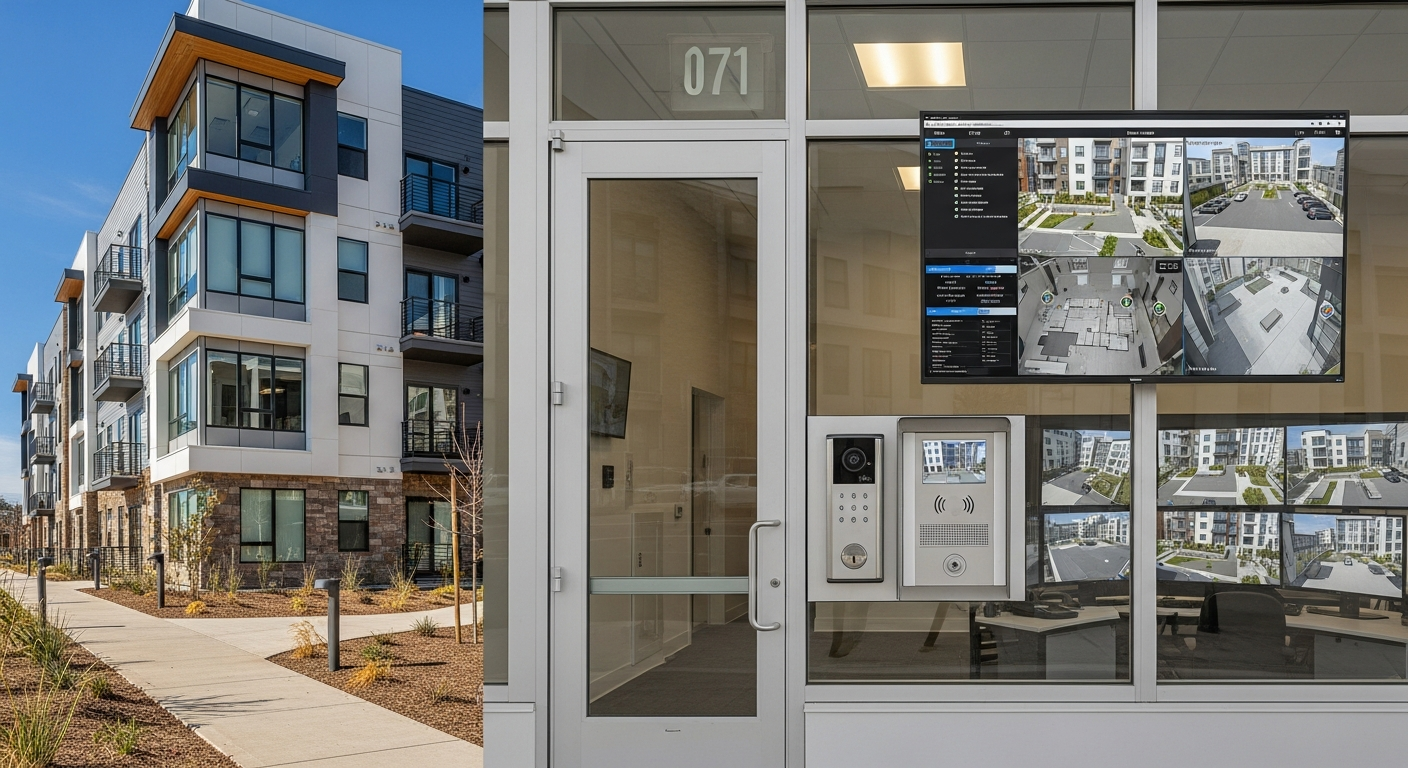
Multi-family properties and condos face unique security challenges that demand more than off-the-shelf solutions. A comprehensive security system design for condos and multi-family properties requires careful planning, integrated technology, and expert installation to protect tenants, assets, and common areas. At Yanke Digital, we specialize in designing custom security systems that address the specific vulnerabilities of residential communities in Saskatoon and across Saskatchewan.
Whether you manage a small condo building or a large multi-family complex, your security needs extend beyond simple cameras and alarms. You need coordinated access control, professional monitoring, visitor management, and systems that enhance—not complicate—tenant experience. This guide walks you through the essential components of effective security system design for condos, best practices for multi-family properties, and how to implement solutions that work seamlessly across your entire property.
Why Multi-Family Properties Need Custom Security System Design
Multi-family residential properties operate differently than single-family homes. You’re managing multiple entry points, shared common areas, visitor traffic, package deliveries, and tenant turnover. A generic security system won’t address these complexities effectively.
The stakes are higher too. A security breach in a condo or apartment building affects dozens of residents, creates liability concerns, and damages property value. Tenants expect modern security amenities as part of their rental or ownership experience. Property managers need systems that reduce operational burden while improving safety.
Custom security system design for multi-family properties solves these challenges by:
- Integrating multiple security layers (access control, surveillance, alarms, intercoms)
- Creating centralized monitoring and management across all units and common areas
- Enabling tenant-friendly features like mobile access and visitor management
- Scaling efficiently as your property grows or changes
- Meeting insurance and regulatory requirements for residential buildings
- Reducing false alarms and operational costs through intelligent automation
Key Components of Effective Condo & Multi-Family Security System Design
Access Control Systems
Access control is the foundation of any multi-family security system. Smart locks, key card readers, and mobile access solutions control who enters your building and when. For condos and apartments, this means:
- Main entrance control: Keyless entry systems that eliminate lost keys and unauthorized access
- Unit-level smart locks: Residents control their own access; property managers can remotely grant or revoke access
- Common area access: Gym, pool, parking garage, and storage areas can have separate access rules
- Visitor management: Temporary codes or mobile invitations for guests, delivery personnel, and service providers
- Audit trails: Complete logs of who accessed what, when—critical for security investigations and liability protection
The best access control systems integrate with your overall security ecosystem, so access events trigger cameras, lighting, or alerts as needed.
Professional Surveillance & Video Monitoring
Video surveillance is non-negotiable for multi-family properties. Strategic camera placement deters crime, documents incidents, and provides evidence if disputes arise. Effective security system design for condos includes:
- Entrance and exit monitoring: High-definition cameras at all building entries, parking areas, and loading zones
- Common area coverage: Lobbies, hallways, elevators, stairwells, and recreational spaces
- Perimeter surveillance: Exterior cameras covering grounds, parking lots, and building approaches
- Package delivery zones: Dedicated monitoring for mail rooms and delivery areas to prevent theft
- Cloud or on-site storage: Reliable video retention (typically 30-90 days) with secure backup
- Mobile access: Property managers can view live feeds and recorded footage from anywhere
Modern surveillance systems use intelligent analytics to detect unusual activity, flag loitering, and alert staff to potential threats in real time.
Integrated Alarm & Intrusion Detection
Alarm systems protect individual units and common areas from unauthorized entry. For multi-family properties, integration is critical:
- Perimeter sensors: Door and window sensors on all exterior entry points
- Motion detection: Interior sensors in common areas, stairwells, and mechanical rooms
- Glass break sensors: Detect forced entry attempts on windows
- Professional monitoring: 24/7 monitoring center response to alarms, with police dispatch when needed
- Tenant notifications: Alerts sent to residents if their unit alarm is triggered
- Integration with access control: Alarms trigger when unauthorized access is detected
A well-designed system minimizes false alarms while ensuring rapid response to genuine threats.
Intercom & Visitor Management Systems
Intercoms are often overlooked but essential for multi-family security. Modern video intercom systems allow residents to screen visitors before granting access, reducing unwanted entry and package theft.
- Video doorbells at unit entrances and main building entry
- Two-way audio communication with visitors
- Mobile notifications so residents can answer from anywhere
- Integration with access control to unlock doors remotely
- Call logging and recording for security documentation
Environmental & Safety Monitoring
Beyond intrusion detection, comprehensive security system design for multi-family properties includes environmental monitoring:
- Fire detection: Smoke and heat sensors with integrated alarm systems
- Flood detection: Water sensors in basements, mechanical rooms, and around water heaters to prevent costly damage
- Carbon monoxide monitoring: Protects residents from dangerous gas leaks
- Air quality sensors: Monitor ventilation and air quality in common areas
Planning Your Multi-Family Security System Design: Step-by-Step
1. Conduct a Comprehensive Security Audit
Before designing any system, assess your current vulnerabilities. Walk through your property and identify:
- All entry and exit points (main entrance, side doors, loading areas, emergency exits)
- Common areas that need monitoring (lobbies, hallways, elevators, parking)
- High-risk zones (mechanical rooms, storage, roof access)
- Current security gaps and past incidents
- Tenant and staff concerns about safety
- Insurance or regulatory requirements specific to your property
2. Define Your Security Objectives
What are you trying to protect? Your goals shape your security system design:
- Prevent unauthorized entry and burglary
- Deter package theft and mail theft
- Reduce liability from accidents or incidents
- Improve tenant confidence and satisfaction
- Streamline property management operations
- Meet insurance or legal requirements
3. Choose Compatible, Scalable Technology
Select systems that integrate seamlessly and grow with your property. Look for platforms that support:
- Multiple device types (cameras, locks, sensors, intercoms) from different manufacturers
- Cloud-based management for remote access and updates
- Mobile apps for tenants and staff
- API integration with property management software
- Expansion without replacing core infrastructure
4. Plan for Installation & Connectivity
Technical planning is critical for multi-family properties:
- Network infrastructure: Ensure adequate bandwidth for cameras, access control, and monitoring
- Power requirements: Plan backup power (UPS systems) for critical security components
- Cabling: Determine whether to use existing conduits or run new cable runs
- Wireless vs. wired: Balance convenience with reliability and security
- Professional installation: Improper installation compromises system effectiveness and creates liability
5. Implement Professional Monitoring & Support
A system is only as good as its monitoring and maintenance. Ensure your design includes:
- 24/7 professional monitoring center with police dispatch capability
- Regular system testing and maintenance schedules
- Staff training on system operation and emergency procedures
- Ongoing technical support and system updates
- Annual security reviews to adapt to new threats
Common Challenges in Multi-Family Security System Design & How to Solve Them
Challenge: Balancing Security with Tenant Privacy
Residents expect privacy in their units while accepting security in common areas. Your design should:
- Never install cameras inside individual units
- Limit hallway and common area camera angles to avoid unit windows
- Clearly communicate security policies to tenants
- Restrict access to video footage to authorized personnel only
- Comply with provincial privacy laws and regulations
Challenge: Managing System Complexity
Multi-family properties often have legacy systems that don’t integrate well. Solutions include:
- Choosing a unified platform that consolidates multiple functions
- Using professional integrators who specialize in multi-family systems
- Implementing phased upgrades rather than replacing everything at once
- Investing in staff training so your team can manage the system confidently
Challenge: Minimizing False Alarms
False alarms waste resources and frustrate tenants. Reduce them by:
- Properly calibrating sensors during installation
- Using intelligent motion detection that filters out pets and environmental triggers
- Requiring dual verification (two sensors triggered) before alerting
- Training staff and tenants on proper system use
- Reviewing alarm logs regularly to identify patterns
Challenge: Ensuring Reliable Connectivity
Network failures compromise security. Protect against this by:
- Installing redundant internet connections (primary and backup)
- Using cellular backup for critical systems
- Implementing local storage so cameras record even if cloud connection fails
- Regular network testing and maintenance
- Documenting all system dependencies and failover procedures
Security System Design for Different Multi-Family Property Types
Small Condo Buildings (5-20 Units)
Smaller condos can use streamlined security system design focused on essentials:
- Smart locks on main entrance and unit doors
- Cameras at entry, parking, and common areas
- Basic alarm system with professional monitoring
- Video intercom at main entrance
- Flood and fire detection in mechanical areas
Cost is lower, but integration and professional monitoring remain critical.
Mid-Size Apartment Buildings (20-100 Units)
Larger buildings require more sophisticated systems:
- Multi-zone access control with different permission levels
- Comprehensive camera network covering all common areas and perimeter
- Integrated alarm system with zone-specific responses
- Mobile app for tenants and staff
- Integration with property management software
- Dedicated security office or monitoring station
Large Multi-Family Complexes (100+ Units)
Enterprise-level properties need advanced, fully integrated solutions:
- Enterprise access control platform with role-based permissions
- High-definition camera network with AI-powered analytics
- Advanced alarm system with predictive threat detection
- Integrated visitor management and package tracking
- Real-time dashboard for security operations center
- Integration with building automation, HVAC, and emergency systems
- Dedicated security staff and 24/7 on-site monitoring
Industry Standards & Compliance for Multi-Family Security
Your security system design for condos and multi-family properties must meet legal and industry standards:
- National Building Code of Canada: Sets minimum fire and life safety requirements
- Provincial privacy legislation: Governs video surveillance and data collection (check Saskatchewan-specific regulations)
- Insurance requirements: Your property insurer may mandate specific security features
- Accessibility standards: Ensure security systems are accessible to residents with disabilities
- Electrical codes: All wiring and power systems must meet Canadian electrical standards
- Professional monitoring standards: Verify that your monitoring center meets industry certifications
Working with experienced integrators ensures your system meets all applicable codes and standards.
How Yanke Digital Designs Custom Security Systems for Multi-Family Properties
At Yanke Digital, we’ve designed and installed security system design solutions for residential, multi-family, and commercial properties across Saskatoon and Saskatchewan. Our approach combines technical expertise, industry best practices, and a deep understanding of multi-family property operations.
Here’s how we work:
- Comprehensive assessment: We audit your property, identify vulnerabilities, and understand your specific security goals
- Custom design: We create a tailored system plan that integrates access control, surveillance, alarms, and environmental monitoring
- Technology selection: We choose proven, compatible platforms that scale with your property and integrate with your existing systems
- Professional installation: Our certified technicians install and configure every component to manufacturer specifications
- Staff training: We ensure your team understands how to operate, maintain, and troubleshoot the system
- Ongoing support: We provide 24/7 technical support, regular maintenance, and system updates to keep everything running reliably
We work with industry-leading platforms and devices, ensuring your system is future-proof and can grow as your property changes.
The Business Case for Investing in Professional Security System Design
Investing in comprehensive security system design for your condo or multi-family property delivers measurable returns:
- Reduced crime: Professional systems deter theft, break-ins, and vandalism, reducing losses and insurance claims
- Lower insurance premiums: Many insurers offer discounts for properties with certified security systems
- Increased property value: Modern security is a desirable amenity that attracts tenants and buyers
- Improved tenant retention: Residents feel safer and more satisfied, reducing turnover costs
- Operational efficiency: Integrated systems reduce manual security tasks and enable remote management
- Liability protection: Video documentation and access logs protect you in disputes and legal proceedings
- Peace of mind: 24/7 professional monitoring means you’re protected even when you’re not on-site
Getting Started: Next Steps for Your Multi-Family Security System Design
Ready to design a comprehensive security system for your condo or multi-family property? Here’s how to begin:
- Schedule a consultation: Contact Yanke Digital to discuss your property, security concerns, and goals
- Receive a custom proposal: We’ll conduct an on-site assessment and provide a detailed design and cost estimate
- Review and refine: We’ll walk you through the proposal, answer questions, and adjust the design as needed
- Professional installation: Our certified technicians will install and configure your system with minimal disruption
- Training and handoff: We’ll train your staff and provide documentation so you can manage the system confidently
- Ongoing support: We’ll monitor your system, perform regular maintenance, and provide 24/7 technical support
Don’t settle for generic security solutions. Your multi-family property deserves a custom security system design that addresses your specific needs, integrates seamlessly, and protects your residents and assets.
Contact Yanke Digital today at 1-888-698-8001 or schedule a consultation to discuss how we can design the perfect security system for your condo or multi-family property in Saskatoon.
Related Resources
Learn more about smart home and security solutions for residential properties: