
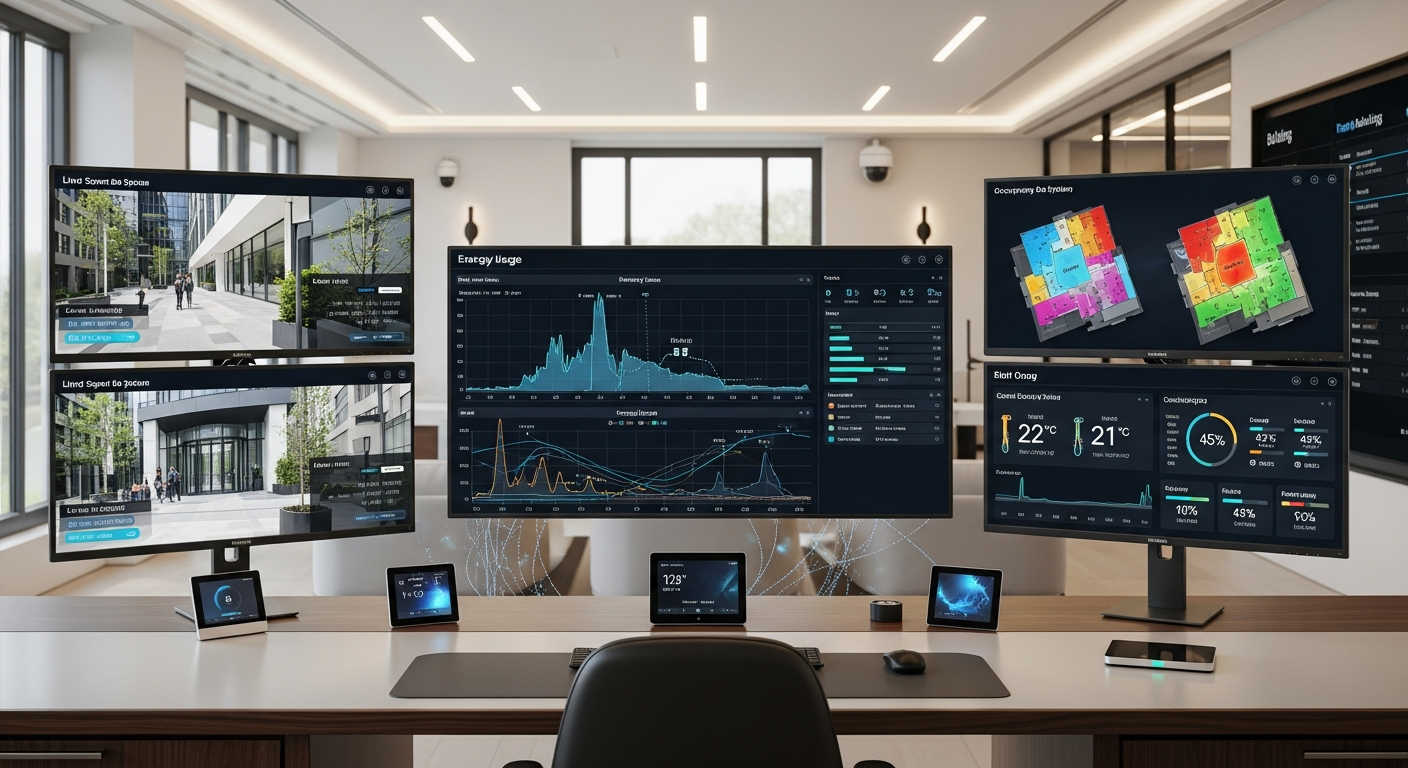
How Commercial Buildings Benefit from Integrated Smart Building Systems
Modern commercial buildings face mounting pressure to operate efficiently, reduce costs, and meet sustainability goals—all while maintaining secure, comfortable environments for tenants and employees. Integrated smart building systems address these challenges head-on by connecting security, climate control, energy management, and operational systems into one intelligent ecosystem.
Unlike fragmented technology deployments where systems operate in isolation, integrated smart building systems create a unified platform that enables real-time monitoring, automated responses, and data-driven decision-making. For property managers, facility directors, and building owners across Saskatchewan and beyond, this integration delivers measurable returns on investment.
At Yanke Digital, we specialize in designing and deploying custom integrated smart building solutions that transform how commercial properties operate. Here’s what you need to know about the benefits and implementation of these systems.
What Are Integrated Smart Building Systems?
An integrated smart building system connects multiple building technologies—security, HVAC, lighting, access control, surveillance, and environmental monitoring—through a centralized software platform. Rather than managing separate systems with different interfaces and vendors, facility teams gain a single dashboard view of building operations.
Key components typically include:
- IoT sensors and devices that collect real-time data on occupancy, temperature, humidity, air quality, and security events
- Centralized control software that processes data and enables automated responses
- Network infrastructure that connects all devices securely and reliably
- Analytics and reporting tools that identify trends and optimization opportunities
- Access control and security systems that work seamlessly with other building functions
The integration is the critical difference. A smart building isn’t just a collection of smart devices—it’s a cohesive system where each component communicates with others to optimize overall building performance.
Key Benefits of Integrated Smart Building Systems for Commercial Properties
1. Significant Energy Efficiency and Cost Savings
Energy costs represent one of the largest operating expenses for commercial buildings. Integrated smart building systems reduce consumption through multiple mechanisms:
- Automated HVAC optimization: Systems adjust heating and cooling based on real-time occupancy, weather, and time of day, eliminating waste from conditioning empty spaces
- Intelligent lighting control: Occupancy sensors and daylight harvesting reduce lighting energy by 20-40% compared to traditional systems
- Fault detection and diagnostics: Sensors identify equipment inefficiencies before they become costly problems
- Data-driven insights: Analytics reveal consumption patterns and pinpoint high-use areas for targeted efficiency improvements
Commercial buildings typically see 15-30% reductions in energy costs after implementing integrated smart systems, with payback periods of 3-7 years depending on building size and existing infrastructure.
2. Enhanced Security and Access Control
Integrated security systems provide comprehensive protection that fragmented solutions cannot match:
- Unified access control: Smart locks, intercoms, and badge readers work together, allowing facility managers to grant or revoke access instantly across the entire building
- Coordinated surveillance: Security cameras integrate with access control and alarm systems, automatically recording and alerting when unauthorized access is detected
- Real-time threat response: When a security event occurs, the system can automatically lock doors, alert security personnel, and provide video feeds to the right people immediately
- Audit trails and compliance: Complete records of who accessed which areas and when support regulatory compliance and incident investigation
For multi-tenant buildings, offices, and facilities handling sensitive operations, this level of integrated security is essential.
3. Improved Occupant Comfort and Productivity
When climate, lighting, and air quality are optimized automatically, occupants experience better comfort without thinking about it:
- Responsive temperature control: Systems maintain optimal comfort zones based on occupancy and preferences
- Air quality monitoring: Environmental sensors track CO₂, humidity, and pollutants, triggering ventilation adjustments automatically
- Adaptive lighting: Circadian-rhythm lighting and occupancy-based controls reduce eye strain and support employee wellbeing
- Noise and distraction reduction: Integrated systems can coordinate to minimize disruptions during critical work periods
Studies show that improved environmental conditions correlate with 5-15% increases in occupant productivity and satisfaction.
4. Streamlined Operations and Reduced Maintenance Burden
Facility teams spend less time on reactive maintenance and more time on strategic improvements:
- Predictive maintenance: Sensors detect equipment degradation early, allowing scheduled maintenance before failures occur
- Automated alerts: The system notifies maintenance staff of issues immediately, reducing response time
- Centralized monitoring: One dashboard replaces multiple vendor platforms, reducing training and operational complexity
- Performance reporting: Automated reports show system health, energy performance, and maintenance history
Facility directors report 20-30% reductions in maintenance costs and significantly fewer emergency service calls after implementing integrated systems.
5. Data-Driven Decision Making
Integrated systems generate valuable insights that inform strategic decisions:
- Space utilization analytics: Understand which areas are used most, informing layout and redesign decisions
- Energy benchmarking: Compare your building’s performance against industry standards and similar properties
- Occupancy patterns: Identify peak times and usage trends to optimize staffing and resource allocation
- Sustainability tracking: Monitor progress toward carbon reduction and ESG goals with accurate, real-time data
This data becomes a competitive advantage, enabling property managers to demonstrate value to ownership and tenants.
6. Scalability and Future-Proof Design
Well-designed integrated systems grow with your building’s needs:
- Modular architecture: Add new sensors, devices, or capabilities without replacing core infrastructure
- API integrations: Connect third-party systems and emerging technologies as they become available
- Cloud-ready infrastructure: Leverage cloud analytics and remote management without major upgrades
- Vendor flexibility: Modern systems support devices from multiple manufacturers, avoiding vendor lock-in
How Integrated Smart Building Systems Work
Understanding the architecture helps clarify why integration matters:
Data Collection Layer
IoT sensors throughout the building continuously collect data on temperature, humidity, occupancy, light levels, air quality, security events, and equipment performance. These sensors communicate wirelessly or via hardwired connections to a central hub or network.
Processing and Intelligence Layer
The central software platform receives data from all sensors, applies rules and algorithms, and makes decisions. For example, if occupancy sensors show a conference room is empty and temperature sensors indicate the space is 2 degrees above setpoint, the system automatically reduces HVAC output to that zone.
Control and Automation Layer
Based on processing decisions, the system sends commands to actuators—smart thermostats, lighting controllers, door locks, and other devices—to adjust building operations in real time.
Analytics and Reporting Layer
Historical data is aggregated and analyzed to identify trends, inefficiencies, and opportunities. Dashboards and reports provide facility teams with actionable insights.
User Interface Layer
Facility managers, security personnel, and authorized occupants access the system through web dashboards, mobile apps, or voice interfaces, enabling monitoring and manual overrides when needed.
Integrated Smart Building Systems for Different Commercial Property Types
Office Buildings
Office environments benefit from occupancy-based climate control, adaptive lighting, and integrated security. Tenants appreciate responsive comfort, while property managers see energy savings and reduced maintenance costs. Access control integration enables flexible hot-desking and secure visitor management.
Multi-Tenant and Multi-Dwelling Properties
Apartment buildings and condominiums require robust access control, package management, and emergency communication systems. Integrated platforms allow centralized management of common areas while respecting tenant privacy. Leak detection and water monitoring protect against costly damage in multi-unit buildings.
Retail and Commercial Spaces
Retail environments use integrated systems for security, climate control, and customer experience optimization. Occupancy analytics inform staffing decisions and inventory management. Integrated surveillance and access control protect merchandise and staff.
Industrial and Warehouse Facilities
Industrial buildings benefit from environmental monitoring (temperature, humidity, air quality), equipment performance tracking, and safety systems integration. Predictive maintenance reduces unplanned downtime, while integrated security protects valuable assets.
Implementation: From Planning to Deployment
Assessment and Planning
The first step is understanding your building’s current systems, operational challenges, and goals. A professional system integrator conducts a thorough audit, identifying:
- Existing infrastructure and compatibility
- Energy consumption patterns and inefficiencies
- Security vulnerabilities and compliance requirements
- Operational pain points and staff needs
- Budget constraints and ROI expectations
Design and Technology Selection
Based on the assessment, a custom system design is developed that specifies:
- Sensor placement and device selection
- Network architecture and connectivity solutions
- Software platform and integration approach
- Automation rules and control logic
- User interfaces and reporting dashboards
- Phased implementation timeline
The design prioritizes your specific needs rather than a one-size-fits-all approach.
Installation and Integration
Professional installation ensures all devices are properly configured, networked, and integrated with your software platform. This phase includes:
- Network infrastructure setup and security hardening
- Sensor and device installation throughout the building
- Software configuration and automation rule programming
- System testing and performance validation
- Staff training on system operation and maintenance
Ongoing Support and Optimization
After deployment, continuous monitoring and optimization ensure the system delivers expected benefits:
- 24/7 system monitoring and technical support
- Regular performance reviews and analytics analysis
- Automation rule refinement based on operational data
- Software updates and security patches
- Expansion and integration of new capabilities
Security and Cybersecurity Considerations
Integrated smart building systems create new security responsibilities. A well-designed system includes:
- Network segmentation: Building systems operate on isolated networks separate from corporate IT, reducing vulnerability to corporate network breaches
- Encryption: All data in transit and at rest is encrypted to prevent unauthorized access
- Access controls: Role-based permissions ensure staff can only access systems and data relevant to their responsibilities
- Regular updates: Firmware and software are kept current with security patches
- Monitoring and logging: All system access and changes are logged for audit and incident investigation
- Disaster recovery: Backup systems and failover mechanisms ensure critical functions continue if primary systems fail
Professional system integrators implement these security measures as standard practice, protecting your building and data from cyber threats.
ROI and Financial Benefits
The financial case for integrated smart building systems is compelling:
Energy Savings
A 20,000 sq ft office building spending $2.50/sq ft annually on energy ($50,000/year) could save $10,000-$15,000 annually with a 20-30% reduction. Over 10 years, that’s $100,000-$150,000 in savings, often exceeding the system cost.
Maintenance Cost Reduction
Predictive maintenance and reduced emergency service calls typically save 20-30% on maintenance budgets. For a building with $30,000 annual maintenance costs, that’s $6,000-$9,000 in annual savings.
Operational Efficiency
Reduced facility staff burden, faster issue resolution, and optimized space utilization contribute additional value that’s harder to quantify but significant in practice.
Risk Mitigation
Enhanced security, improved compliance documentation, and reduced liability from environmental issues (water damage, air quality problems) protect against costly incidents.
Property Value and Marketability
Buildings with modern integrated systems command premium rents and attract quality tenants. This intangible benefit often exceeds the direct operational savings.
Choosing the Right System Integrator
The success of your integrated smart building system depends heavily on the expertise and approach of your system integrator. Look for:
- Proven experience: A track record of successful deployments in buildings similar to yours
- Technology expertise: Deep knowledge of sensors, platforms, networking, and security best practices
- Custom design capability: Willingness to design solutions tailored to your building rather than pushing a standard package
- Vendor independence: Ability to select best-of-breed components rather than being locked into one manufacturer
- Ongoing support: Commitment to long-term monitoring, optimization, and support after installation
- Local presence: A team that understands your building, climate, and operational environment
- Education and transparency: Clear communication about what the system can do, realistic timelines, and honest cost estimates
Getting Started with Integrated Smart Building Systems
If you’re considering an integrated smart building system for your commercial property, the first step is a professional assessment. A qualified system integrator will evaluate your building’s current state, understand your operational goals, and recommend a custom solution that delivers measurable value.
At Yanke Digital, we specialize in designing and deploying integrated smart building systems for commercial properties across Saskatchewan. Our approach combines deep technical expertise with a commitment to understanding your specific needs and constraints. We don’t just install products—we design complete systems that simplify operations, reduce costs, and enhance security.
Ready to explore how an integrated smart building system can transform your commercial property? Contact Yanke Digital today for a free consultation. We’ll assess your building, discuss your goals, and outline a custom solution designed for your success.
Call us at 1-888-698-8001 or visit our website to schedule your consultation. Let’s discuss how integrated smart building systems can deliver measurable benefits for your property.